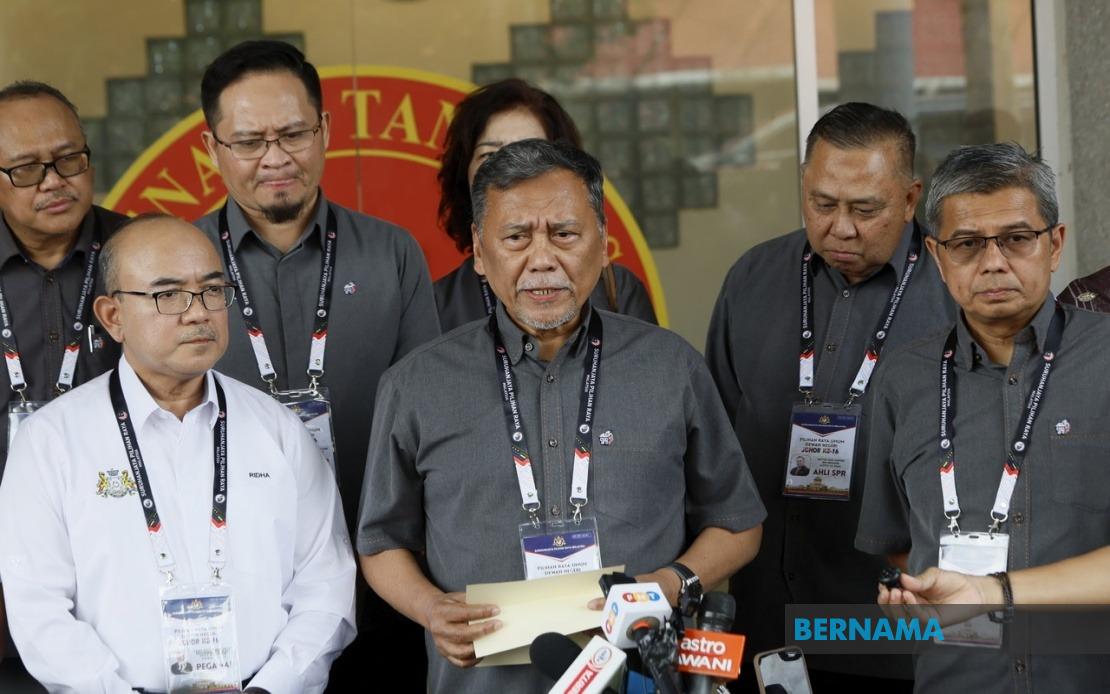
Malaysia's Election Commission has set an ambitious 96 per cent turnout target for early voting in the Johor state election, drawing on successful participation rates achieved in previous electoral cycles. EC chairman Datuk Seri Ramlan Harun disclosed the projection during a press conference held at Kem Mahkota in Kluang after monitoring the early voting proceedings, indicating confidence that voters would meet this historically benchmarked expectation.
The commission's optimism reflects consistent patterns observed across prior elections, where early voters—primarily from uniformed services and their families—have demonstrated high levels of civic engagement. This demographic, which includes members of the Malaysian Armed Forces and police personnel, typically displays greater participation rates than the general voting population, providing the foundation for the 96 per cent figure.
Operations commenced at 8 am across 62 early voting centres distributed throughout Johor state, with staggered closing times designed to accommodate different voting schedules. Twenty-nine centres were scheduled to close at midday, five additional locations would shut at 2 pm, while the remaining 28 would operate until 5 pm, allowing flexibility for voters with varying shifts and duties.
The early voting exercise encompassed 20,607 eligible electors drawn from two main constituencies: 8,544 personnel from the Malaysian Armed Forces alongside their spouses, and 12,063 police officers and their family members. This restricted electorate represents those whose operational duties on the main polling day would make standard voting logistically challenging, necessitating alternative voting arrangements.
Ballot security has been prioritized through established protocols, with early voting ballot boxes to be deposited at police stations immediately following the closure of voting centres. This custodial arrangement ensures that cast votes remain protected and sealed until the official counting process begins, maintaining electoral integrity and public confidence in the democratic process.
Vote tallying will commence on Saturday—the designated polling day—from 5 pm onwards, with the EC projecting that comprehensive results could be available by 10 pm, though officials acknowledged that midnight might be required to finalise all counts. This timeline depends on voter turnout numbers and the efficiency of counting operations across multiple centres, factors that could either accelerate or extend the announcement of final results.
With approximately 2.7 million ordinary voters eligible to participate in the main election, EC officials have issued an emphatic appeal for substantial turnout on Saturday. Ramlan emphasized that voting represents a fundamental civic obligation and a tangible mechanism through which citizens contribute meaningfully to Malaysia's democratic system, framing participation as both a right and a responsibility.
The 16th Johor State Election carries significance beyond the immediate state context, as results may influence broader political calculations within peninsular Malaysia and reflect voter sentiment on state governance. High turnout rates, if achieved, would provide an undisputed mandate for the victorious coalition and strengthen the legitimacy of the incoming administration's governing authority.
The timing of early voting on the eve of the main election serves a practical administrative function while also maintaining the spirit of universal suffrage by accommodating those whose professional commitments to national security and public order would otherwise prevent their participation. This arrangement underscores the democratic principle that all eligible citizens deserve voting opportunities regardless of their occupational circumstances.
Election management agencies across Southeast Asia increasingly recognize that credible elections depend on both process transparency and genuine accessibility for voters from all walks of life. Malaysia's provision of early voting for essential service personnel reflects international best practices in inclusive electoral administration, though logistical complexities in a multi-ethnic, geographically dispersed state require careful coordination and planning.
The early voting results, once counted and added to Saturday's general polling figures, will provide the first concrete indicator of voter preference and engagement levels for this electoral cycle. Whether the 96 per cent early voting target materializes will offer valuable data for assessing participation patterns and may influence future election planning across Malaysian states and federal territories.

