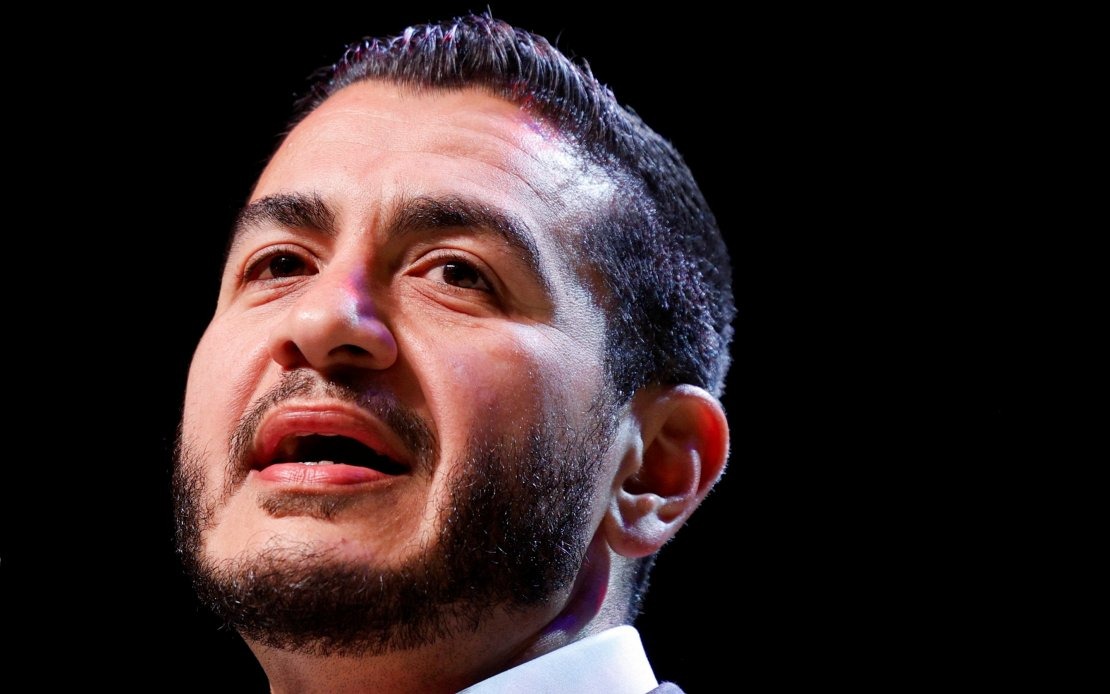
Abdul El-Sayed has emerged with a narrow advantage in Michigan's fiercely contested Democratic Senate primary, according to results from early Wednesday with 91 per cent of ballots counted. His lead over US Representative Haley Stevens in this high-stakes matchup highlights the intensifying ideological divide within America's Democratic Party, though the Associated Press has not yet officially called the race. The outcome will significantly shape Michigan's Senate dynamics as the winner advances to face Republican Mike Rogers, who ran unopposed in his party's primary and is positioned to challenge the seat currently held by retiring Democratic Senator Gary Peters.
The Michigan primary contest revealed a stark clash between competing Democratic factions. Stevens benefited from endorsements by establishment figures including the outgoing Senator Peters, reflecting traditional party machinery support. In contrast, El-Sayed garnered backing from progressive heavyweights such as Senator Bernie Sanders and Representatives Alexandria Ocasio-Cortez and Rashida Tlaib, signalling grassroots energy within the Democratic base. For Malaysian observers watching American political dynamics, this split underscores how even in advanced democracies, tension between centrist and progressive wings shapes electoral outcomes and governing philosophies.
Palestinian rights and United States policy toward Israel emerged as defining issues throughout Michigan's Democratic primary. The campaign centred significantly on America's support for Israel's military operations in Gaza, reflecting broader concerns among progressive Democrats and Arab-American communities, particularly concentrated in Michigan. This issue resonated powerfully with voters seeking to distinguish candidates on foreign policy grounds, demonstrating how Middle Eastern geopolitics penetrates deeply into domestic American electoral contests.
Beyond the Senate race, Michigan voters determined nominees in several congressional districts. Republican Jack Bergman secured his party's nomination in the 1st District with a commanding 74.3 per cent of the vote against two challengers, while fellow Republican Bill Huizenga dominated the 4th District primary, defeating Philip Tanis with 85 per cent support. Huizenga will subsequently confront Democratic nominee Sean McCann, who emerged from a competitive Democratic primary with 67.2 per cent of the vote against Diop Harris II.
Kansas witnessed decisive Republican victories as Senator Roger Marshall overwhelmingly defeated challenger Pond Naramore with 79.9 per cent support across 99 per cent of counted precincts. Marshall advances to face Democrat Adam Hamilton, who prevailed in a crowded Democratic field. The Kansas gubernatorial contest produced Democrat Cindy Holscher as the nominee following her victory over two rivals, positioning her to challenge Republican Ty Masterson, who secured Trump endorsement and prevailed in a competitive Republican primary. Holscher will seek to defend the seat currently occupied by Democratic Governor Laura Kelly, who cannot run again due to constitutional term limits.
Missouri's primaries carried particular significance as the state held its first congressional contests since Republican lawmakers enacted a redistricting map backed by President Trump, strategically designed to enhance Republican prospects for maintaining House control. In the 1st District, Democratic Representative Wesley Bell defeated four primary opponents, including former Representative Cori Bush, demonstrating substantial support within the Democratic establishment. Bell subsequently faces Republican Paul Berry III, who emerged victorious over Andrew Jones.
Virginia's Republican primary for Senate produced Bert Mizusawa as the nominee to challenge incumbent Democratic Senator Mark Warner, who ran unopposed for renomination. The Commonwealth's congressional primaries generated multiple competitive races. Shannon Taylor captured the 1st District Democratic nomination with 53.1 per cent of the vote, setting up a matchup against Republican Rob Wittman, who ran unopposed and seeks a 10th consecutive full term. Former Democratic Representative Elaine Luria secured the 2nd District Democratic nomination with commanding 80.4 per cent support, positioning herself to challenge Republican Jen Kiggans, who similarly faced no opposition.
Virginia's 7th District witnessed Republican Doug Ollivart prevail with 56.6 per cent of the vote in his party's primary, earning the opportunity to face first-term Democratic Representative Eugene Vindman, who ran unopposed for renomination. Vindman's elevation in Republican targeting reflects the competitive nature of Virginia's political landscape and the significance both parties assign to this suburban district.
Washington State's all-party primary system produced distinct advancement patterns. Democratic Representative Suzan DelBene and Republican Mary Silva both qualified for the November general election in the 1st District. Democratic Representative Marie Gluesenkamp Perez will face Republican John Braun, who received Trump's endorsement and advanced past other Republican competitors. In the 6th District, Democratic Representative Emily Randall qualified to challenge Republican Teresa Fox.
These primary results across five states illuminate the divergent trajectories shaping American midterm politics. Republican consolidation around Trump-endorsed candidates contrasts with continued Democratic tensions between progressive and centrist camps. For Malaysian and Southeast Asian observers, these dynamics demonstrate how established democracies grapple with internal polarization, the influence of foreign policy issues on domestic elections, and the organisational advantages accruing to aligned party factions. The November general elections will determine whether these primary patterns translate into sustained electoral advantage or whether swing voters and independent candidates reshape outcomes in competitive districts.

