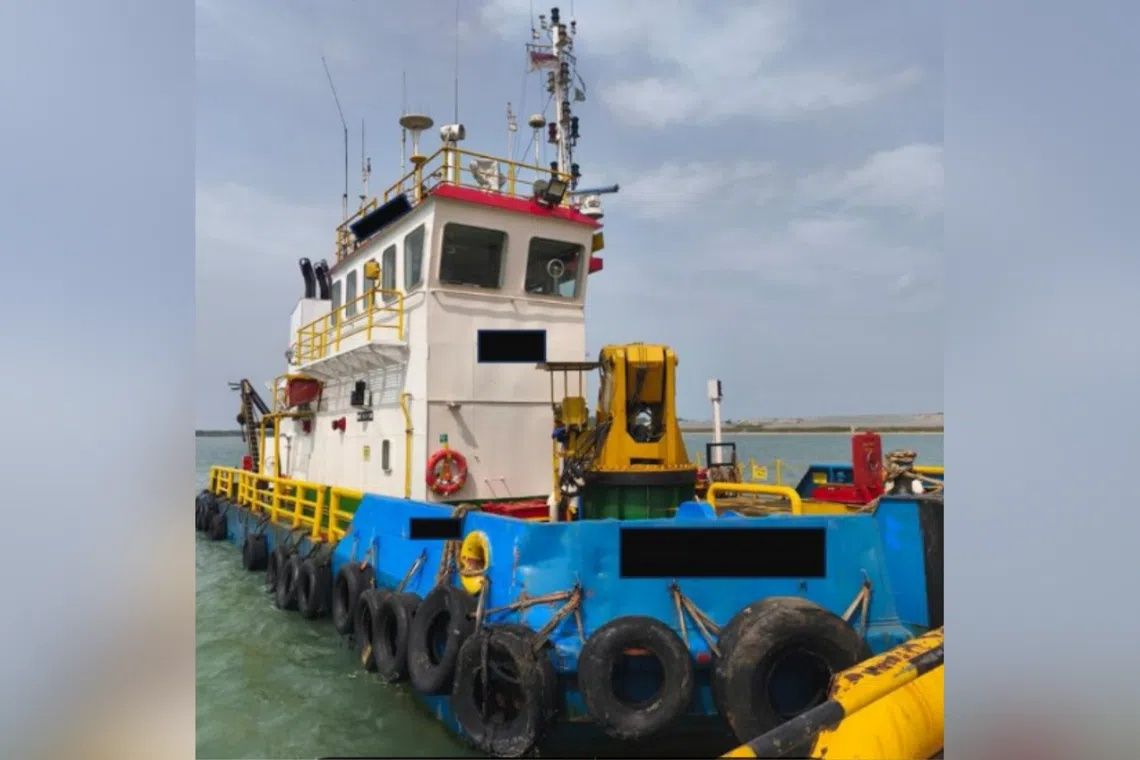
Eight crew members working aboard a Singapore-registered tugboat have been arrested and will face court proceedings this week following their alleged involvement in the unauthorised sale of marine gas oil. The men, whose ages span from 25 to 54 years, were apprehended during a predawn enforcement operation in the waters adjacent to Tuas on August 13, with their initial court appearance scheduled for Friday, August 14, according to the Police Coast Guard.
The arrest came after Police Coast Guard officers conducted a routine inspection of the vessel in the early morning hours, discovering discrepancies that prompted further investigation. The preliminary findings indicated that the accused individuals had taken advantage of their positions as crew members to misappropriate marine gas oil stocks maintained aboard the tugboat. The estimated value of the missing fuel amounted to approximately S$10,570, suggesting a calculated effort to siphon off quantities over a period of time rather than a spontaneous act.
According to police statements, the crew members acted without the knowledge or authorisation of their employer. Rather than reporting the fuel discrepancy through proper channels, they deliberately channelled the stolen marine gas oil into illegal sales transactions designed to generate personal income. This distinction between simple theft and the deliberate concealment of their actions underscores the premeditated nature of the alleged crime, transforming what might otherwise be categorised as simple larceny into a more serious breach of trust.
The formal charges to be filed against the eight men relate to theft by servant of property in possession of the master—a specific provision under Singapore law designed to address situations where employees abuse their access to company assets. This charge carries substantial penalties, with convicted individuals facing potential fines and imprisonment terms of up to seven years. The severity of the possible sentence reflects Singapore's commitment to treating such breaches of employment trust as serious criminal matters rather than minor administrative infractions.
The incident highlights vulnerabilities within Singapore's maritime sector that criminal elements continue to exploit. Marine gas oil, which serves as fuel for ships and industrial operations, represents a valuable commodity in Southeast Asian waters. The relatively modest amount involved in this particular case—S$10,570—suggests either that the theft was detected before larger quantities could be removed, or that the crew operated cautiously to avoid triggering immediate audit procedures that might have exposed their activities more rapidly.
Singapore's maritime authorities have intensified their enforcement posture in response to recurring incidents of fuel theft within the region. The Police Coast Guard's routine inspection that led to these arrests exemplifies the proactive approach authorities are adopting to safeguard territorial waters and prevent illicit maritime commerce. The waters off Tuas, lying within Singapore's jurisdiction, have become a focal point for such enforcement operations given the area's significant shipping traffic and the presence of multiple vessels requiring fuel supplies.
The broader implications of this case extend beyond the individual arrests. For Malaysian and other Southeast Asian maritime operators, it underscores the importance of implementing robust inventory controls and oversight mechanisms aboard vessels. Companies operating in these waters face reputational and financial risks when crew members engage in theft or other illegal transactions, particularly when such activities might inadvertently facilitate broader criminal networks operating within the region's shipping lanes.
Singapore's police have emphasised their determination to combat illegal marine fuel transactions occurring within territorial waters. Official statements stress that enforcement operations will persist at heightened levels to maintain deterrence and prevent criminal opportunism. This messaging serves dual purposes: warning potential offenders of the consequences of attempting similar thefts, while simultaneously reassuring legitimate shipping operators that authorities actively protect maritime commerce integrity.
The case also raises questions about crew management practices and vetting procedures employed by shipping companies operating in the region. Employment screening, background checks, and ongoing supervision protocols all play critical roles in preventing internal theft rings from forming aboard vessels. Companies that fail to implement adequate safeguards risk becoming targets for organised maritime crime networks seeking collaborators within shipping operations.
For regional maritime stakeholders, this incident represents a reminder of the persistent challenges facing port states in combating transnational maritime crime. While large-scale piracy and armed robbery grab international headlines, smaller-scale theft operations like fuel siphoning generate substantial cumulative losses across the shipping industry. The collaborative efforts required to address these challenges involve not only coast guards and naval forces, but also port authorities, shipping companies, and maritime regulatory bodies operating throughout Southeast Asia.
The investigation and subsequent prosecution will likely yield insights into how such theft operations are conducted and organised within maritime environments. These findings may inform future policy adjustments and enforcement strategies across Singapore and neighbouring jurisdictions. As regional cooperation in maritime security continues to develop, cases such as this contribute valuable intelligence to broader efforts aimed at creating a more secure and compliant shipping environment throughout Southeast Asian waters.

