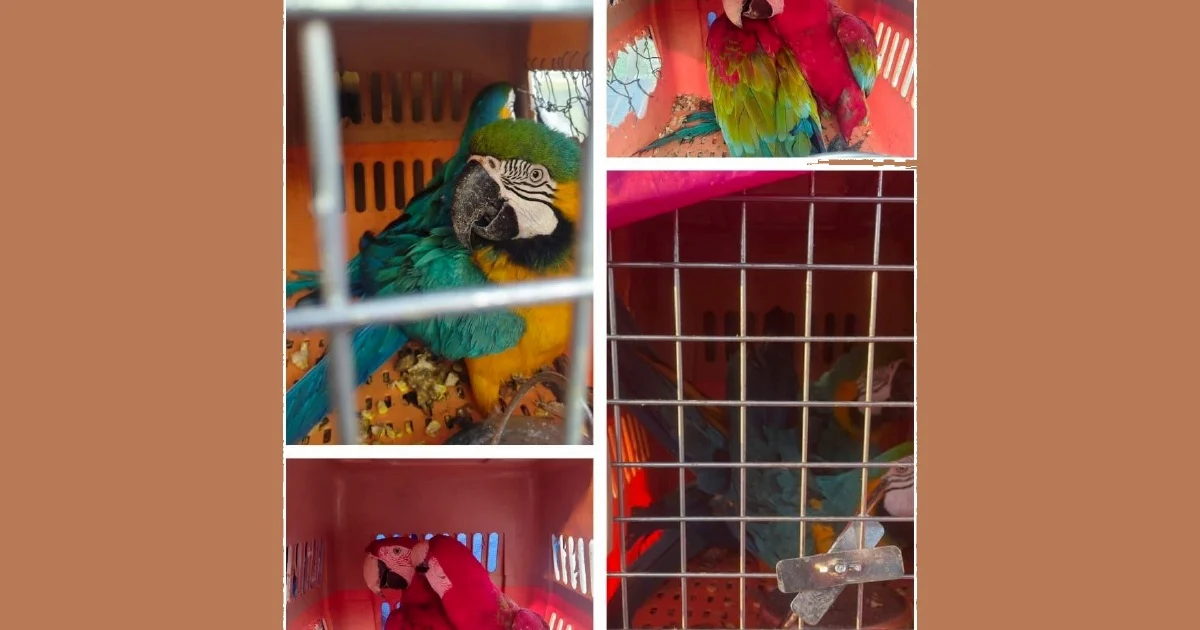
Wildlife authorities in Tumpat, Kelantan have arrested two individuals in connection with the illegal transportation of eight protected macaws valued at approximately RM400,000. The operation, conducted along Jalan Bandar Tumpat, represents another significant blow against the persistent problem of exotic bird smuggling that continues to plague Malaysia despite increased enforcement efforts.
The two detained men, described as long-standing associates, were apprehended during a routine inspection that uncovered the high-value contraband. Macaws rank among the world's most sought-after avian species on the black market, commanding premium prices due to their striking plumage, intelligence, and relatively long lifespans. The species' appeal to collectors and private breeders has made them consistent targets for smuggling networks operating across Southeast Asia.
The seizure underscores the continuing sophistication of wildlife trafficking operations that exploit Malaysia's strategic location as a transit point between source countries and end-markets across Asia. Criminal syndicates engaged in bird smuggling frequently use Malaysia as a hub for consolidating shipments before distributing them to final destinations, where enforcement mechanisms may be less stringent or corruption more prevalent. This particular interception, while successful, illustrates the cat-and-mouse dynamic that characterises wildlife enforcement in the region.
Protected macaw species fall under international conservation agreements, including the Convention on International Trade in Endangered Species (CITES), which Malaysia is a signatory to. The Birds (Protection) Regulations 1993 and amendments to Malaysian wildlife law classify such transactions as serious offences carrying substantial penalties. Beyond regulatory compliance, the seizure reflects broader environmental concerns about the depletion of wild macaw populations in their native South American habitats, where habitat destruction compounds the impact of illegal trapping for the international pet trade.
The monetary value assigned to the eight birds—RM400,000—reflects current black-market pricing for captive-bred macaws, though wild-caught specimens typically command even higher premiums among collectors willing to pay for genetic diversity and perceived superior traits. A single macaw can fetch between RM30,000 and RM50,000 in illicit transactions, making the trafficking of such birds financially attractive to criminal organisations despite elevated legal risks.
Kelantan's northern coastal location and its proximity to major transport networks has historically made it vulnerable to smuggling activities. The state serves as a critical point in supply chains moving goods between Thailand and other parts of Malaysia, creating opportunities for traffickers to conceal contraband within legitimate commercial movements or to exploit gaps in coordination between enforcement agencies operating across state and international boundaries.
The arrest of two associated individuals raises questions about the broader network that facilitated this operation. Typically, such smuggling cases involve multiple actors—from those capturing or acquiring birds at source, through to transporters, handlers, and final buyers. The identification of these two individuals may provide law enforcement with leads to dismantle larger criminal ecosystems responsible for coordinating the acquisition, transport, and distribution of protected species.
Malaysian authorities have intensified wildlife enforcement in recent years through specialised units within the Department of Wildlife and National Parks (PERHILITAN) and collaboration with customs and police agencies. However, the persistence of high-value smuggling cases suggests that criminal networks continue to operate despite these efforts, indicating either insufficient resources, gaps in inter-agency coordination, or the operational adaptation of smugglers who modify routes and methods in response to enforcement successes.
The RM400,000 valuation also highlights the economic incentives driving this illicit trade. For individual smugglers, the potential profit on a single successful transaction—even accounting for loss rates and legal risks—can substantially exceed legitimate income opportunities in many Southeast Asian contexts. This economic calculus remains difficult to counter through enforcement alone, suggesting that broader solutions must address demand-side factors in consuming countries and the underlying drivers of poverty and limited economic opportunity in source communities.
The case contributes to an emerging picture of Malaysia's role in the global exotic pet trade, where the country experiences smuggling pressures from multiple directions. While some operations involve birds sourced externally, others involve facilitating demand from domestic collectors, suggesting that the issue is not merely one of international transit but also reflects domestic market dynamics requiring targeted public awareness and regulation of domestic breeding and sales practices.
Authorities have not disclosed details regarding the intended destination for these macaws or the operational scope of the network involved, information that would typically emerge through investigative follow-up and potential prosecution proceedings. The outcomes of such cases—including sentencing severity and asset forfeiture—provide important signals to criminal enterprises about the level of risk associated with wildlife trafficking relative to potential rewards.
Moving forward, this seizure reinforces the imperative for sustained investment in wildlife law enforcement capacity, inter-agency coordination mechanisms, and intelligence-led approaches to disrupt smuggling networks at source and in transit. Equally important are efforts to reduce demand through consumer education and diplomatic engagement with neighbouring countries to harmonise enforcement standards and cross-border cooperation frameworks.

