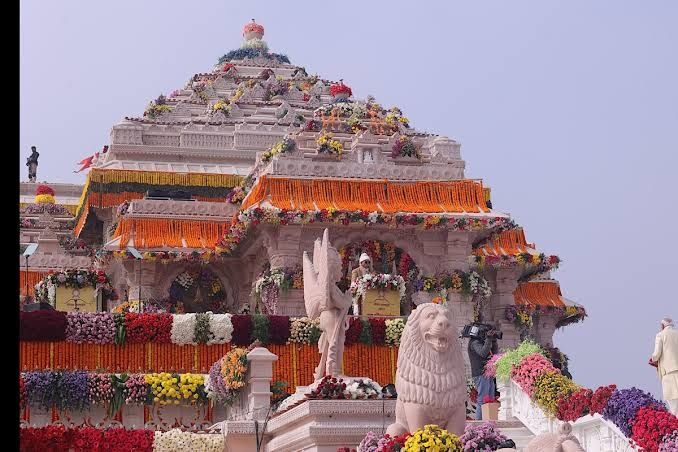
Indian police have arrested eight individuals in connection with alleged theft and systematic misappropriation of donations at the Ram Mandir in northern Uttar Pradesh, a temple that has become central to Prime Minister Narendra Modi's political narrative around Hindu nationalism. The arrests, announced late Thursday following the registration of a criminal case on June 25, represent a significant embarrassment for the Hindu-majority BJP government in a state led by Chief Minister Yogi Adityanath, who has pledged that "no guilty person will be spared" in the investigation.
The Ram Mandir was inaugurated by Modi himself in 2024 with considerable ceremonial grandeur, constructed on a site where the Babri mosque had stood for centuries until its demolition in 1992 by Hindu activists. The temple's construction symbolises the culmination of a decades-long campaign championed by Modi's Bharatiya Janata Party when it was in opposition, a movement that galvanised Hindu voters and fundamentally reshaping India's electoral landscape. The project cost an estimated US$240 million, entirely funded through public donations solicited from devotees across India and the diaspora.
Among those arrested are eight temple employees, most of whom held responsibilities for counting, recording, and managing the substantial sums in cash and valuables deposited daily by worshippers. These donations include significant quantities of gold, silver, and currency notes from the millions of pilgrims who have visited the temple since its opening. The scope of their alleged misappropriation extends across multiple categories of temple funds, suggesting a coordinated system rather than isolated incidents.
While official government statements have remained circumspect about the scale of the alleged theft, opposition parties and independent media reports suggest the embezzled amount could exceed US$20 million, an astonishingly large sum that would represent a substantial portion of the temple's annual revenue. The reluctance of authorities to publicly confirm exact figures has fuelled speculation about the true magnitude of the scandal and whether additional arrests may follow as investigations deepen.
The criminal charges filed against the arrested individuals include criminal breach of trust, outright theft, criminal conspiracy, and corruption under Indian law. These charges carry potentially substantial prison sentences and signal the seriousness with which state authorities are treating the matter, particularly given the high-profile nature of the temple and its religious significance.
The revelation has profoundly shaken the faith of devotees across India. Viti Saxena, a 44-year-old homemaker who contributed to the temple's construction fund, expressed her dismay that the shrine has become "discussed for all the wrong reasons." Saxena questioned whether her own donations and those of millions of other believers actually reached the temple's coffers or were diverted into private hands. She described the scandal as "a matter of global shame," highlighting how the incident has damaged not only the temple's reputation but also the credibility of Hindu religious institutions more broadly.
The Uttar Pradesh government has established a Special Investigation Team to examine the full scope of the alleged irregularities, suggesting authorities anticipate more comprehensive revelations as the probe advances. Chief Minister Adityanath's public commitment to prosecuting all guilty parties reflects the political pressure mounting on the state government to demonstrate accountability, even as the scandal threatens to overshadow the temple's symbolic importance for the BJP.
For the broader Indian political landscape, the arrests present a complex challenge. The Ram Mandir has been instrumentalised as a cornerstone of Modi's Hindu nationalist agenda, with the temple's inauguration treated as a vindication of the BJP's two-decade campaign to reclaim the site from secular governance. Any suggestion of financial mismanagement at such a high-profile religious institution risks undermining the party's carefully cultivated image of Hindu cultural restoration and national pride.
The temple's contentious history extends back centuries, with Hindu theology maintaining that the deity Ram was born in Ayodhya more than 7,000 years ago, with the Babri mosque later constructed at that sacred location by a 16th-century Mughal emperor. The 1992 demolition of the mosque by Hindu activists triggered communal riots across India, yet simultaneously catalysed the BJP's rise to electoral dominance, eventually displacing the secularist Congress party that had governed India since independence from Britain.
Southeast Asian observers should note that such large-scale temple finance scandals carry implications beyond India's borders. Malaysian Hindu temples and religious institutions, which operate within a different governance framework, may face increased scrutiny from devotees comparing fund management standards. The Ram Mandir case underscores the importance of transparent accounting practices and robust internal controls at all major religious institutions, particularly those managing substantial public donations.
The investigation also raises questions about institutional oversight mechanisms at major temples worldwide. Unlike some government-run religious sites, privately managed temples often lack the external auditing requirements that might prevent or rapidly detect systematic theft. The Ram Mandir's status as a trust-managed institution rather than a fully government-controlled shrine may have created organisational vulnerabilities that facilitated the alleged embezzlement.
As the investigation continues and more details emerge, the case will likely influence how other Hindu temples and religious organisations in India and across South Asia restructure their financial management practices. The scandal serves as a cautionary tale about the necessity of separating religious authority from financial administration, and the importance of implementing transparent accounting systems even at institutions with profound spiritual significance to their communities.

