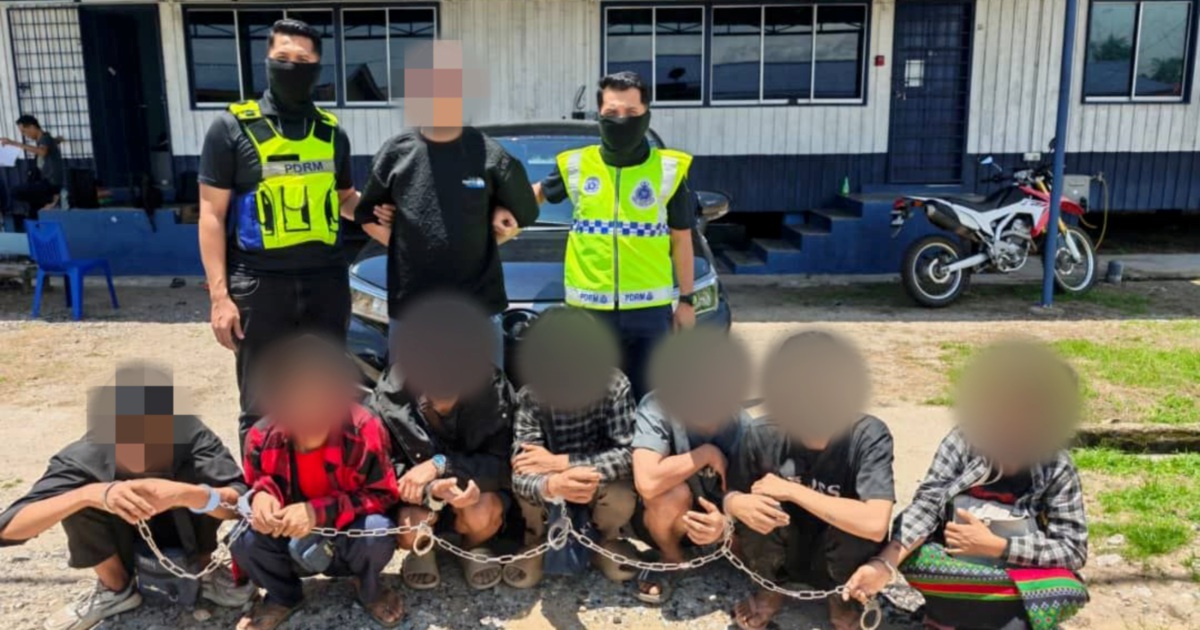
Law enforcement authorities in Kelantan have intensified crackdowns on human smuggling networks with the early-morning arrest of eight suspects, marking another significant operation against organised migrant trafficking in the state. The detentions occurred in Kota Baru and involved apprehending a Malaysian man at the centre of the alleged smuggling operation alongside seven undocumented Myanmar nationals who were being transported in a single vehicle. This latest enforcement action underscores the scale and sophistication of clandestine migration routes operating across Malaysia's porous northern frontier.
The Kelantan operation reflects broader regional trends in migrant trafficking that have intensified over the past decade. Malaysia, positioned at a critical juncture in Southeast Asian migration corridors, continues to serve as both a transit point and destination for vulnerable individuals fleeing conflict, persecution, and economic hardship across Myanmar and Bangladesh. The arrest of a Malaysian national as the primary suspect suggests the involvement of local facilitators who exploit their knowledge of transportation networks and police procedures to move undocumented migrants through remote checkpoints and secondary roads, particularly across Kelantan's border regions.
The seven Myanmar nationals encountered during the raid represent a fraction of the estimated undocumented population residing in Malaysia. Myanmar has experienced prolonged political instability and military conflict since the 2021 coup, generating sustained outflows of refugees and economic migrants. Many flee persecution targeting specific ethnic minorities, including the Rohingya, Karen, and Chin communities. Kelantan, with its proximity to the Thailand-Malaysia border and porous boundary with Thai provinces harbouring migrant processing hubs, has become a strategic location for smuggling networks to consolidate and distribute migrants further south towards peninsular urban centres.
The vehicle-based smuggling method employed in this case represents a common operational approach among trafficking networks seeking to move migrants across state boundaries while avoiding immigration checkpoints. By consolidating multiple undocumented individuals in a single transport, smugglers minimise operational costs and reduce the frequency of movements, though this approach concentrates vulnerability and risk. The early-morning timing of enforcement action suggests police intelligence gathering capabilities have improved, enabling targeted interventions rather than opportunistic roadside apprehensions that characterise many migrant interceptions.
Kelantan's role in migrant trafficking networks extends beyond immediate transport operations. The state serves as a staging area where migrants are housed temporarily before proceeding to Kuala Lumpur, Selangor, or other manufacturing and service sector hubs offering employment opportunities. Local complicity, whether through landlords, transportation providers, or officials, facilitates these operations, creating complex enforcement challenges that require coordinated inter-agency approaches. Previous investigations have revealed connections between smuggling networks and broader criminal enterprises involved in document fraud, labour trafficking, and extortion.
The involvement of a Malaysian facilitator is particularly significant, as it indicates recruitment of locals by more established trafficking organisations. Such collaboration typically involves payment structures where Malaysian operatives receive compensation per migrant transported, creating incentive structures that ensure sustained recruitment of new smugglers as enforcement pressure increases. This decentralised model makes dismantling networks substantially more difficult than targeting individual kingpins, as replacement operatives can be quickly mobilised to continue operations.
The eight detainees now face investigation under Malaysia's anti-trafficking and immigration legislation. The undocumented Myanmar nationals will likely face immigration procedures including processing at detention facilities before possible voluntary return or formal deportation. However, Malaysia's inconsistent enforcement of anti-trafficking statutes and limited capacity for victim support services mean many smuggled individuals receive minimal assistance despite their vulnerable circumstances. International organisations have repeatedly documented inadequacies in victim protection frameworks, particularly concerning access to legal representation and trauma counselling.
This arrest coincides with escalating regional concerns about migrant vulnerability as smuggling costs have risen and route conditions deteriorated. Desperation among migrant populations, combined with reduced legitimate employment pathways, increases reliance on traffickers willing to undertake riskier operations. The Myanmar migrant community in Malaysia, estimated at several hundred thousand, faces heightened exploitation vulnerability in light of the homeland security situation and limited legal status protections.
Malaysia's response to migrant smuggling has traditionally emphasised enforcement and border security rather than addressing root causes or providing comprehensive victim support. While necessary, enforcement-focused approaches without concurrent investment in documentation facilitation, labour rights protections, and trafficking prevention programmes offer limited long-term deterrence. Regional cooperation mechanisms, including intelligence sharing with Thailand, Myanmar authorities, and other transit nations, remain underdeveloped despite acknowledged smuggling networks spanning multiple jurisdictions.
The Kelantan operation signals continued police commitment to interdiction efforts, yet structural conditions enabling smuggling networks—including significant wage differentials between Myanmar and Malaysia, limited legal migration pathways, and demand for low-cost labour in Malaysian industries—persist largely unaddressed. Sustainable reduction in migrant trafficking will require comprehensive approaches extending beyond arrests to encompass migration governance reforms, labour market regularisation, and capacity building in origin and transit countries. Until such systemic interventions materialise, enforcement operations will likely remain cyclical responses to a fundamentally enduring challenge.

