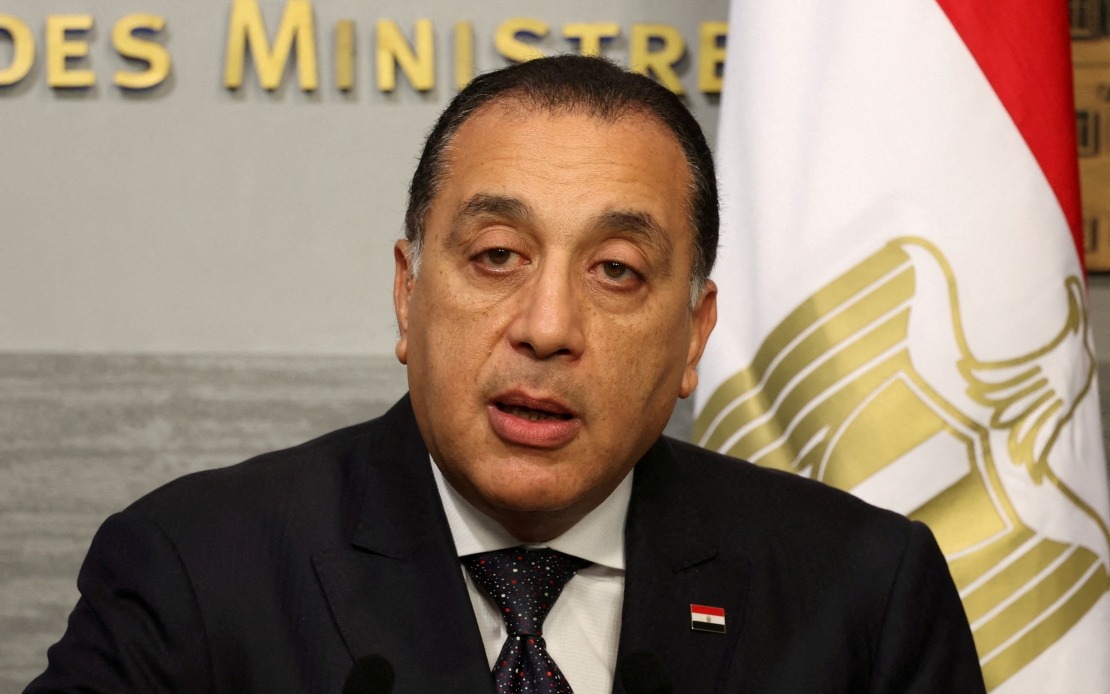
Egypt is moving forward with its landmark nuclear energy initiative, with Prime Minister Mostafa Madbouly confirming that the nation's inaugural nuclear power plant remains on schedule to feed electricity into the grid by 2028. The assurance came during discussions with Alexey Likhachev, chief executive of Russia's Rosatom state nuclear corporation, as engineers achieved a significant construction milestone by installing the reactor pressure vessel for the facility's second unit.
The El Dabaa Nuclear Power Plant, positioned roughly 300 kilometres northwest of Cairo in Matrouh Province along Egypt's Mediterranean coast, represents a watershed moment for the nation's energy infrastructure. Madbouly characterised the undertaking as a realisation of long-standing national aspirations, made achievable through the deep technological partnership between Cairo and Moscow. The government has reiterated its determination to maintain momentum and adhere to the phased implementation schedule that has guided the project since bilateral contracts were formalised in December 2017.
The four-reactor facility will ultimately deliver 4,800 megawatts of generating capacity, with each unit engineered to produce 1,200 megawatts independently. This scale positions the installation among the region's most substantial energy investments and reflects Egypt's recognition that conventional hydroelectric and fossil fuel sources alone cannot sustain power supplies for a population exceeding 100 million people. The first reactor's integration into the grid in 2028 will be followed by the commissioning of the three remaining units, expected to conclude by 2030, establishing a staggered approach that permits operational learning and technical validation between successive phases.
For Southeast Asian observers, Egypt's nuclear gambit offers instructive parallels and contrasts with the region's own energy trajectories. Vietnam, Thailand, and Indonesia have all grappled with similar pressures to balance rising electricity consumption against environmental commitments and infrastructure constraints. Egypt's partnership model—leveraging Russian expertise and finance—illustrates an alternative pathway to the Western-dominated approaches pursued by some ASEAN members, though it also introduces geopolitical considerations that merit careful analysis in the regional context.
The nuclear initiative sits at the heart of Egypt's broader energy diversification strategy, aiming to curtail the nation's dependence on natural gas and oil while expanding the proportion of zero-emission generation. As climate concerns intensify globally and investors demand cleaner power portfolios, nuclear technology offers Egypt a route to meet surging electricity demand without exponentially increasing greenhouse gas emissions. This calculus resonates across developing economies throughout Asia and Africa that confront the dual imperative of expansion and environmental stewardship.
Likhachev's participation in the ceremonial milestone underscores Rosatom's integral role in shepherding the project through its construction phases. The Russian corporation has assumed responsibility not merely for supplying equipment and reactor designs but for facilitating knowledge transfer, training Egyptian engineers and technicians to operate and maintain the facility independently over its decades-long operational lifespan. Such comprehensive engagement extends beyond conventional commercial transactions, effectively binding Moscow's technological standing to Cairo's success.
The 2028 timeline, while ambitious, reflects realistic assessment of the challenges inherent in constructing nuclear infrastructure in a developing-world context. Site preparation, supply chain logistics, regulatory approval, and workforce training all demand meticulous coordination. The phased activation schedule—bringing units online progressively rather than simultaneously—permits grid operators and maintenance teams to accrue practical experience before managing the full electrical load, a prudent approach that acknowledges the operational complexities of nuclear generation.
For Egypt specifically, nuclear capacity carries profound economic implications. The nation's electricity sector has long struggled with chronic underinvestment and inefficiency, creating bottlenecks that constrain industrial competitiveness and erode living standards through rolling blackouts. Nuclear generation, once operational, offers decades of predictable, low-fuel-cost electricity supply, potentially stabilising power prices and attracting energy-intensive manufacturing to Egyptian industrial zones. This prospect has animated government enthusiasm for the project despite its massive upfront capital requirements.
Regional geopolitics constitute an undercurrent worth acknowledging. The Russian involvement in Egypt's nuclear programme reflects deeper strategic alignment between Moscow and Cairo, particularly evident across defence and energy portfolios. For Western governments and institutions accustomed to wielding influence over nuclear proliferation and technology transfer policies, the El Dabaa project exemplifies shifting global power dynamics in infrastructure development. Southeast Asian nations monitoring such trends should consider how Russia's expanding technological footprint in neighbouring regions might reshape the competitive landscape for energy megaprojects.
The project's progression also carries implications for international nuclear governance and non-proliferation frameworks. Egypt, as a signatory to the Nuclear Non-Proliferation Treaty, operates under International Atomic Energy Agency safeguards, ensuring that civilian nuclear activities remain divorced from weapons programmes. Transparent adherence to these international protocols throughout El Dabaa's lifecycle will serve Egypt's diplomatic interests while reinforcing the credibility of nuclear power as a legitimate decarbonisation tool for developing economies.
Looking ahead, successful commissioning of the El Dabaa plant could catalyse fresh investment in nuclear capacity elsewhere across North Africa and the Middle East. Nations such as Morocco, Saudi Arabia, and the United Arab Emirates have explored nuclear options, and Egypt's demonstrated execution capability—or conversely, any substantial delays—will colour those deliberations. For the region and beyond, the El Dabaa timeline represents both an opportunity and a test of whether emerging economies can effectively absorb sophisticated nuclear technology and operate it safely and efficiently.

