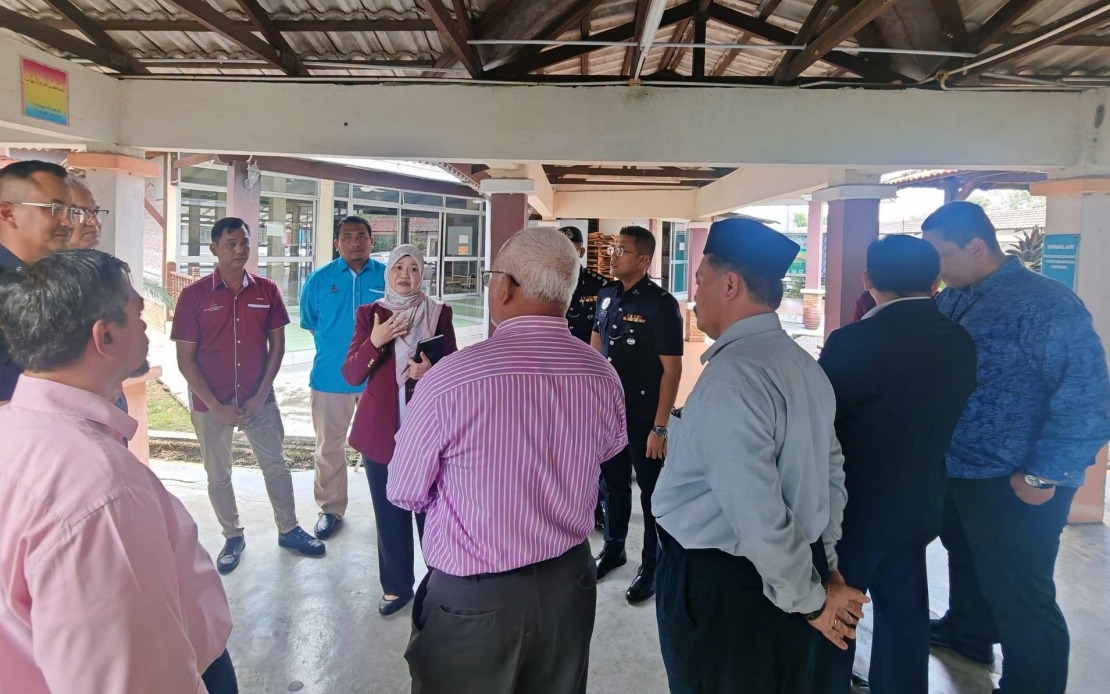
Education Minister Fadhlina Sidek moved swiftly to address mounting public concern over school safety in Selangor, arriving at a secondary school in Banting, Kuala Langat, on the afternoon of July 6 following a violent incident that had shaken the institution earlier that morning. The minister touched down at the campus at 1.20 pm to meet directly with school administrators and gather firsthand information about the stabbing that had left a Form Three student injured, signalling the government's commitment to responding visibly to crises affecting educational institutions.
Police received notification of the altercation at 9.50 am, immediately mobilising response teams to secure the scene and provide emergency medical assistance. The investigation quickly established that the injury resulted from an attack by another female student wielding a knife, transforming what might have been dismissed as playground conflict into a serious criminal matter demanding immediate intervention. The Kuala Langat district police chief Supt Mohd Akmalrizal Radzi confirmed that authorities had apprehended the suspected assailant to facilitate inquiries, while the injured pupil was transported to Banting Hospital where medical staff confirmed she remained in stable condition despite the severity of her wounds.
Fadhlina's public messaging emphasised that restoring normalcy and protecting student wellbeing were now the paramount concerns occupying both the Ministry and responding agencies. In her statement released through social media, she directed attention to the victim's medical needs and the psychological trauma that inevitably ripples through school communities following violence. Her appeal to the public to avoid speculating or circulating unverified accounts reflected awareness that misinformation frequently compounds the damage inflicted by such incidents, potentially undermining official investigations and deepening anxiety among parents and educators.
The minister's remarks underscored a delicate balance government figures must maintain when addressing school violence: acknowledging the gravity of the situation without fuelling panic that might erode confidence in educational institutions themselves. By framing her response around agency coordination and proper procedures, Fadhlina positioned the incident as manageable through existing systems rather than symptomatic of systemic breakdown, a calculated rhetorical move designed to reassure stakeholders without minimising the seriousness of what had occurred.
Selangor's political leadership wasted no time in amplifying calls for enhanced institutional safeguards, with Banting assemblyman V. Paparaidu—who chairs the Selangor Human Resources and Poverty Eradication Committee—leveraging the incident to advocate for strengthened perimeter security and more rigorous monitoring protocols. Paparaidu's emphasis on constant vigilance at entry points and gates reflected a growing conviction among Malaysian policymakers that schools require fortress-like protection to shield students from external threats and internal disturbances. His assertion that security personnel must maintain heightened awareness during arrival and dismissal periods, when movement is heaviest, suggested recognition that institutional vulnerabilities correlate directly with periods of maximum foot traffic and reduced supervision.
The assemblyman's framing of schools as spaces where education should occur "without fear or intimidation" articulated an increasingly contested ideal in Malaysian public discourse. As violent incidents involving youth proliferate across the region, administrators and officials face mounting pressure to implement surveillance and control measures that many educators worry may undermine the learning environment itself. The tension between security and freedom remains largely unresolved in Malaysian education policy, with each incident ratcheting up demands for physical barriers and monitoring while critics caution against transforming schools into restrictive spaces that paradoxically diminish their value as communities.
The rapid deployment of psychological support services by the Selangor State Education Department demonstrated that trauma management protocols have become institutionalised responses to school violence, at least at the administrative level. Paparaidu's gratitude for counselling provision to the victim, her family, and affected students acknowledged that psychological wounds often exceed the severity of physical injury, potentially shaping students' attitudes toward school attendance and institutional trust for months or years following traumatic events. The availability of professional support differentiated this institutional response from historical patterns where schools simply moved past violent incidents without addressing their emotional aftermath.
The identity of the assailant as another student rather than an external intruder introduces a dimension that complicates the security narrative dominant in official responses. When students harm peers, heightened gate monitoring and personnel screening offer limited preventative value, suggesting that the roots of school violence lie partly within institutional culture, peer relationships, and factors schools themselves can influence through counselling, conflict resolution, and mental health services. Malaysian policymakers have been slower than counterparts in developed nations to embrace this psychological and social perspective, continuing to emphasise physical security measures that address symptoms rather than underlying causes.
The incident occurring in Kuala Langat, a district within Selangor, places it within Malaysia's most populous state, where educational infrastructure serves millions of students across urban and semi-urban environments. Selangor's rapid development and population growth have strained school facilities and resources, sometimes compromising the pastoral care functions that historically helped educators identify troubled students and intervene before crises erupted. The concentration of reported school violence incidents in Selangor relative to other states may reflect either genuine prevalence or simply greater media coverage of incidents in the nation's most densely populated region, a distinction authorities have not rigorously attempted to clarify.
Fadhlina's promise to release further details once authorities authorised disclosure suggested that police investigations would determine whether additional charges might be laid or whether the incident represented an isolated, spontaneous altercation. The distinction matters considerably for public interpretation: a single violent outburst by a previously well-adjusted student differs significantly from evidence of premeditation or escalating aggression, yet media coverage and political messaging often blur these categories in ways that distort public understanding of school safety trends. Malaysian news coverage of educational crises frequently emphasises the dramatic incident itself rather than contextualising violence within broader statistical patterns, potentially creating disproportionate public anxiety.
As policymakers and educators grapple with the Banting incident, the fundamental question remains whether Malaysia's educational system can simultaneously guarantee security and preserve the openness essential to healthy learning communities. The government's visible response through ministerial visits and coordinated agency action signals political engagement with public concerns, yet without sustained commitment to addressing underlying social and psychological factors contributing to youth violence, institutional responses risk becoming performative rituals that provide reassurance without substantive protection. For Malaysian parents and students, the incident underscores how quickly institutional trust can be disrupted and how much educational quality depends on factors extending far beyond curriculum and facilities.

