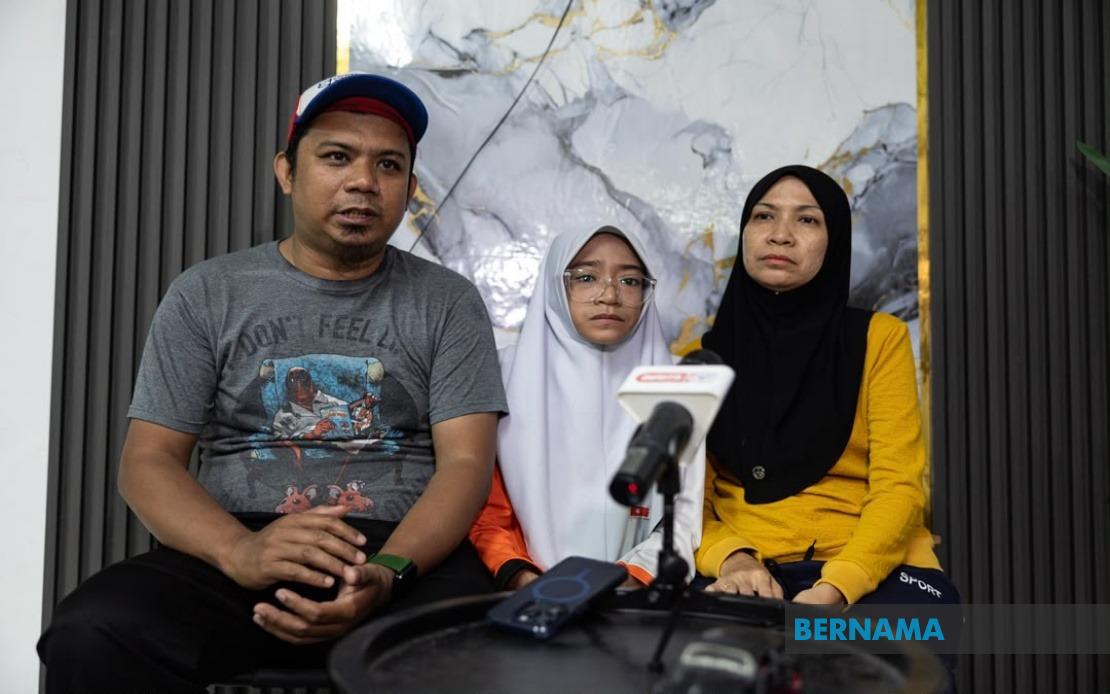
Education Minister Fadhlina Sidek and the Tun Hussein Onn Teachers' Foundation (YGTHO) have moved swiftly to ease the financial burden on a family struggling to afford critical spinal surgery for their teenage daughter. The pair announced a combined contribution of RM10,000 to cover the cost of scoliosis surgery for Arissa El Zahra Reduan, a 13-year-old whose procedure is scheduled for September 8 at Raja Permaisuri Bainun Hospital in Ipoh.
Fadhlina disclosed the assistance through a video message to Arissa and her mother, personally informing the teenager that funds had been secured for her treatment. In the call, the minister emphasised her desire to see Arissa return to the classroom after her recovery, underscoring the broader social impact of the intervention. The gesture reflects growing ministerial attention to cases where students face educational disruption due to medical conditions, a pattern increasingly visible across Malaysian government circles where officials intervene in compelling individual circumstances.
Scoliosis, an abnormal curvature of the spine, can severely restrict a young person's mobility and comfort if left untreated. Surgical intervention often becomes necessary to prevent progression and to restore quality of life. For families with limited resources, the cost of such procedures at specialist hospitals can be prohibitively expensive, forcing difficult choices between medical necessity and financial survival. Arissa's case exemplifies the healthcare access challenges that persist in Malaysia despite the availability of public medical infrastructure, particularly when families must navigate waiting times and capacity constraints at government facilities.
Fadhlina's announcement on social media emphasised the emotional dimension of her decision-making, describing her reaction to encountering a child so determined to remain engaged in her education. She noted that witnessing Arissa's eagerness to attend school with her peers had moved her deeply, suggesting that the minister viewed the contribution not merely as financial aid but as an investment in a young student's future. This framing reflects a common rhetorical approach among Malaysian politicians when addressing healthcare gaps—positioning individual generosity as a solution alongside broader systemic improvements.
The contribution represents a collaborative approach, with YGTHO, the foundation established in honour of former Prime Minister Tun Hussein Onn, playing an equal role in sourcing the funds. The foundation's involvement signals institutional backing for causes centred on education and welfare, extending its mission beyond traditional teacher-focused initiatives to encompass students facing medical obstacles to their schooling. Such partnerships between government officials and charitable organisations have become increasingly common in addressing ad-hoc social welfare needs in Malaysia.
Fadhlina indicated that her team would handle all logistical arrangements necessary to ensure Arissa received optimal care throughout her surgical journey. This administrative involvement goes beyond financial provision, suggesting coordination with the hospital, post-operative monitoring, and potentially liaison with Arissa's school to facilitate her educational reintegration. The commitment demonstrates how ministerial intervention can smooth pathways through healthcare systems that might otherwise leave families navigating bureaucratic procedures independently.
The timing of the announcement—coinciding with media coverage of the family's initial appeal—highlights the role of public attention in galvanising government response. Arissa's father, Reduan Saad, had previously approached journalists describing his need for RM10,000 to fund his daughter's scheduled surgery. The subsequent rapid intervention by Fadhlina underscores how media exposure can accelerate official action on individual hardship cases, though such visibility-dependent solutions raise questions about equity and the fate of comparable cases that escape public attention.
For Southeast Asian observers, Malaysia's approach to handling healthcare financing gaps through ministerial discretion and foundation contributions offers both strengths and limitations. While individual interventions demonstrate responsiveness and compassion, they may mask underlying structural deficiencies in public healthcare budgeting and surgical access. The reliance on ad-hoc generosity rather than systematic resource allocation raises longer-term concerns about sustainability and equitable distribution of medical support across communities.
Arissa's case will likely generate broader conversation about how Malaysia addresses the intersection of education, healthcare, and social welfare. As students across the country face similar medical barriers to attendance, policymakers may face pressure to develop more systematic mechanisms for identifying and supporting affected teenagers. The minister's public engagement with Arissa's situation has elevated her from an individual case study to a potential catalyst for policy examination within education and health portfolios.
The September 8 surgery date now carries clearer prospects for success, with financial uncertainty removed. However, Arissa's journey through spinal surgery and rehabilitation will require ongoing support beyond the initial RM10,000 allocation. Physiotherapy, follow-up consultations, and potential additional interventions may exceed the funded amount, suggesting that while this contribution addresses the immediate crisis, longer-term healthcare planning may yet prove necessary.
Fadhlina's message to Arissa emphasised the importance of spiritual faith and emotional resilience during the challenging months ahead. Such encouragement, while supportive, operates within a distinctly Malaysian cultural and religious context that may resonate strongly with local audiences. The minister's closing invocation of prayer and strength reflects common communicative patterns in Malaysian public life, where religious sentiment frequently accompanies government action on welfare matters.

