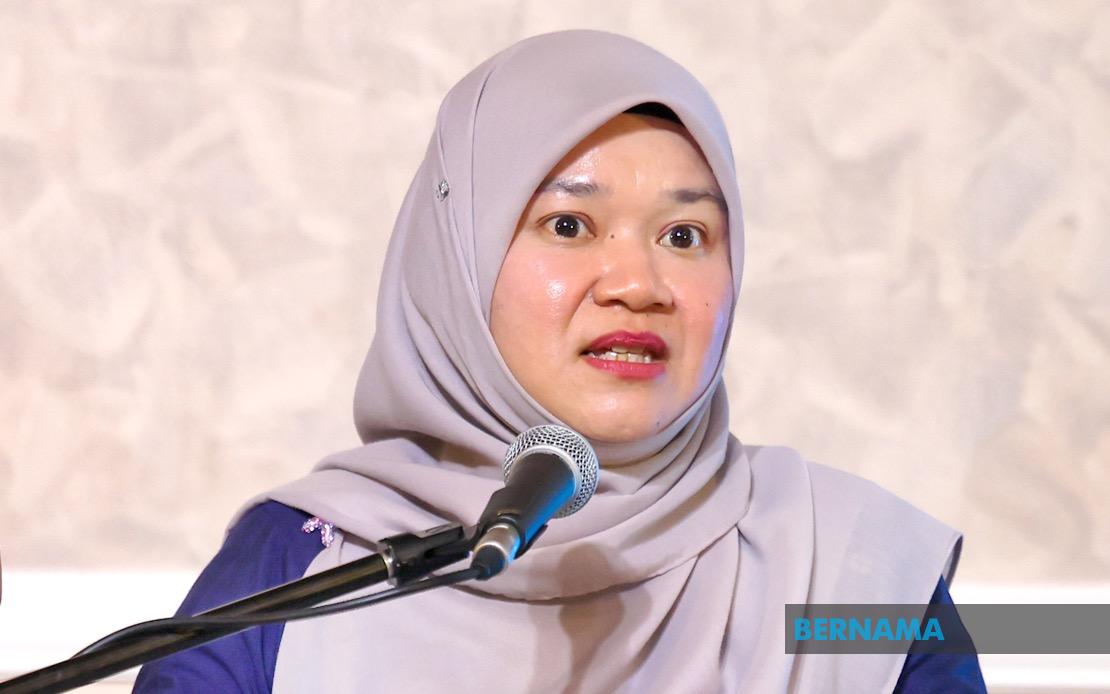
Education Minister Fadhlina Sidek, who heads the PKR Wanita wing, has taken formal action against those responsible for distributing a synthetic video that makes unsubstantiated claims about her. The PKR politician lodged a police report in Kuala Lumpur on June 24 following the online circulation of the artificially-generated footage, which she characterised as deliberately harmful and an assault on her personal integrity.
In a statement released the same day, Fadhlina expressed her dismay at the content of the video, emphasising that its creation and spread represent a calculated effort to harm her standing. The deliberate nature of such campaigns, she stressed, goes beyond mere political criticism and crosses into the territory of character assassination. By choosing to involve law enforcement, Fadhlina has signalled her determination to pursue legal remedies rather than allow such allegations to circulate unchallenged.
The Education Minister's decision to file a formal complaint reflects growing concern within Malaysian political circles about the weaponisation of artificial intelligence technology for malicious purposes. As deepfake and AI-generated content becomes increasingly sophisticated and difficult to distinguish from authentic material, politicians and public figures face unprecedented vulnerability to fabricated evidence. Fadhlina's case underscores how technology that was once the domain of specialists is now accessible enough to be weaponised against individuals in positions of public trust.
Beyond her immediate circumstances, Fadhlina used the occasion to call for a comprehensive societal response to the systematic targeting of women in politics through slander and sexual harassment. Her appeal addressed not just the specific incident but the broader pattern of character attacks directed disproportionately at female politicians across Malaysia and the region. This framing transforms her personal grievance into a commentary on gender-based political violence and the hostile environment that women navigating public office must navigate.
The Education Minister's statement implicitly challenges other stakeholders—political parties, media organisations, social media platforms, and law enforcement agencies—to adopt stronger positions against such attacks. She emphasised the need for a firm collective stance, suggesting that isolated legal responses from individual victims are insufficient without systemic changes in how society treats allegations of defamation and sexual harassment targeting women in elected office.
Police investigations into online defamation cases in Malaysia typically proceed under provisions of the Communications and Multimedia Act 1998 and the Penal Code, which carry penalties for causing public alarm, insulting religious feelings, and deliberately spreading false information. The involvement of AI generation adds a novel dimension to such cases, as authorities must establish both the falsity of allegations and the intentional creation and distribution of synthetic content.
The circulation of malicious deepfakes represents a relatively new challenge for Malaysian law enforcement, which has traditionally dealt with defamation through conventional digital channels. The technical sophistication required to generate convincing AI videos means that perpetrators may possess resources, expertise, or connections that exceed those available to average social media users, potentially pointing toward organised campaigns rather than spontaneous attacks.
Fadhlina's willingness to publicly name the incident and lodge a formal complaint may serve a deterrent function within Malaysian politics. Senior female politicians who challenge such attacks openly help establish a norm that such conduct will not be tolerated without consequence. Conversely, politicians who remain silent or attempt to weather such storms privately may inadvertently encourage further attacks by signalling vulnerability or lack of institutional support.
The case also highlights vulnerabilities in Malaysia's digital ecosystem, where misinformation and synthetic content can spread rapidly across messaging applications and social media platforms before fact-checkers or authorities can respond. The speed of viral content distribution often means that initial false impressions become entrenched in public consciousness even after corrections are issued, a dynamic that particularly disadvantages those being targeted.
For Malaysian readers and Southeast Asian observers, this incident serves as a reminder that political discourse increasingly operates across multiple planes simultaneously—physical parliamentary debates, conventional media coverage, and digital spaces where synthetic content can be created and weaponised with relative anonymity. The sophistication and accessibility of AI tools means that such attacks are likely to become more common rather than exceptional occurrences in coming years.
Fadhlina's decision to engage the formal justice system rather than attempt to counter the narrative through digital means alone reflects a calculated choice to establish a legal record and set precedent. As Malaysian courts and enforcement agencies develop jurisprudence around AI-generated defamation, cases like hers will help establish standards for what constitutes malicious deepfakes and what remedies are available to victims.
The broader implications extend to questions of institutional accountability and digital governance in Malaysia. How effectively authorities investigate and prosecute such cases will determine whether AI-generated defamation becomes a common political tactic or remains rare enough to deter potential perpetrators. The Education Minister's formal complaint therefore carries significance beyond her individual interests, potentially shaping how Malaysian society addresses synthetic media threats to public figures across government and opposition alike.