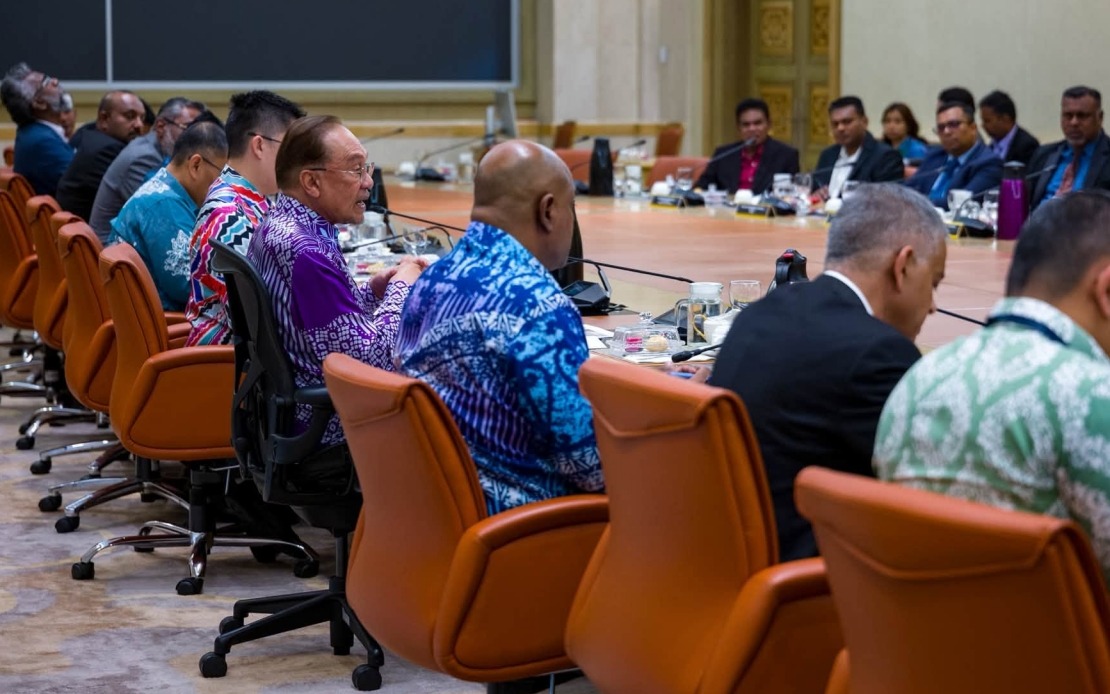
Prime Minister Datuk Seri Anwar Ibrahim has outlined a comprehensive framework for advancing the wellbeing of Malaysia's Indian community, positioning quality education and robust social welfare systems as foundational elements in any meaningful empowerment strategy. Speaking after consultations with Indian community leaders, Anwar articulated a vision that extends beyond symbolic gestures to tackle the structural challenges that have historically limited opportunities within this demographic.
The Prime Minister, who simultaneously holds the Finance Ministry portfolio, identified four interconnected pillars as essential for sustainable progress. Quality education represents the first and most critical component, reflecting a recognition that educational attainment remains the most reliable pathway to upward mobility and long-term economic security. Comprehensive welfare mechanisms form the second pillar, acknowledging that social safety nets must exist to protect vulnerable households and ensure basic living standards. Skills development and improved employment prospects complete this framework, addressing the immediate need for viable livelihoods while simultaneously building human capital for future generations.
Anwar's emphasis on these priorities emerged from direct engagement with community representatives, suggesting that grassroots input has shaped the government's policy direction. This consultative approach carries particular significance in Malaysia's plural society, where top-down initiatives without community buy-in have historically struggled to achieve their intended impact. By positioning Indian community leaders as partners in the conversation rather than passive recipients of government directives, the Prime Minister signalled a departure from earlier governance patterns that often sidelined minority perspectives from policy formulation.
Central to the government's implementation architecture is the Malaysian Indian Transformation Unit, or MITRA, which Anwar tasked with adopting a more proactive stance at the grassroots level. The unit's effectiveness ultimately depends on its capacity to move beyond centralised office operations and establish meaningful presence within communities where challenges are most acute. Anwar's directive suggests dissatisfaction with existing operational models and reflects awareness that bureaucratic distance from beneficiaries typically produces poor outcomes and wasted resources.
A particularly noteworthy element of Anwar's statement concerned the need for accurate needs assessment and targeted delivery. He emphasised that government agencies must invest effort in identifying genuine community requirements rather than implementing pre-designed programmes that may not address actual circumstances. This principle of demand-driven rather than supply-driven policymaking represents a more sophisticated approach to development work, though its success depends entirely on the willingness of implementing agencies to abandon entrenched practices and genuinely listen to ground-level voices.
The Prime Minister also highlighted the importance of verifying that benefits reach intended recipients, acknowledging a widespread problem in developing economies where social programmes frequently leak resources to undeserving populations through ineffective targeting mechanisms. This concern reflects particular relevance in Malaysia, where questions about programme effectiveness have periodically surfaced in public discourse and invited scrutiny from civil society organisations.
Anwar's framing of the empowerment agenda through the lens of compassion, accountability and good governance offers insights into how the government conceptualises its responsibilities toward minority communities. Compassion suggests recognition of historical disadvantages and current vulnerabilities; accountability demands that officials demonstrate measurable results rather than merely expending budgets; and good governance encompasses transparency, efficient resource deployment and responsiveness to community feedback. Together, these principles articulate a standards-based approach to inclusive development.
The broader implication of these statements concerns Malaysia's trajectory as a multi-ethnic nation. The Indian community has historically experienced marginalisation in economic opportunities and resource allocation relative to their population share, a reality reflected in various socioeconomic indicators. Anwar's emphasis on preventing any segment from being left behind in national development directly addresses this historical pattern, signalling political commitment to correcting imbalances that have accumulated over decades.
For Malaysian readers, particularly those from the Indian community, these pronouncements carry both promise and uncertainty. Promise derives from articulated priorities and apparent ministerial commitment; uncertainty stems from the perennial gap between announced policies and effective implementation. Whether MITRA and related agencies possess sufficient resources, capacity and political protection to execute this agenda at scale remains an open question that will determine actual outcomes for intended beneficiaries.
The emphasis on employment opportunities deserves particular attention given Malaysia's evolving labour market. Youth unemployment rates within minority communities have periodically spiked during economic downturns, and structural barriers to advancement in corporate hierarchies have proven resistant to policy interventions. Anwar's focus on this dimension suggests recognition that welfare alone cannot substitute for dignified, remunerative employment that allows individuals and families to achieve economic independence.
Regionally, Malaysia's approach to minority community empowerment attracts attention from neighbouring nations grappling with similar demographic and developmental challenges. How effectively these initiatives translate into improved living standards and reduced inequality may offer lessons applicable across Southeast Asia, where numerous countries balance growth imperatives with obligations toward less-advantaged populations.
Looking forward, the true measure of these policy commitments will emerge through specific budgetary allocations, legislative reforms and demonstrable improvements in relevant outcome metrics. Community leaders will presumably monitor whether MITRA receives adequate funding, whether proposed initiatives materialise on announced timelines, and whether the quality of education, employment and welfare outcomes actually improves for households currently experiencing disadvantage.

