The East Coast Rail Link (ECRL), Malaysia's RM50.27 billion flagship infrastructure initiative, is on track to generate roughly 2,000 employment opportunities across Selangor's locomotive manufacturing sector, according to state authorities. The substantial job creation potential underscores the project's significance not merely as a connectivity initiative but as a major economic catalyst for the region, particularly for the state's industrial workforce development strategy.
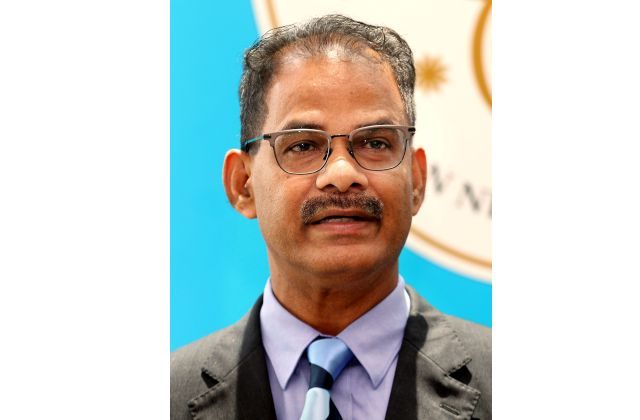
Selangor's human resources and poverty eradication committee chairman V. Papparaidu highlighted during Tuesday's state assembly proceedings that the ambitious national project would rely heavily on domestic talent, with approximately four-fifths of the required positions earmarked for Malaysian workers. This employment structure reflects a deliberate policy choice to channel economic benefits directly to the local population rather than relying extensively on foreign workers, addressing longstanding concerns about skills development and job creation among Malaysian youth. The emphasis on local hiring represents an opportunity to build sustainable expertise in rail infrastructure and advanced manufacturing—sectors historically dominated by imported foreign specialists.
Recognizing the need to prepare the workforce for these emerging opportunities, the Selangor state government has positioned skills training as a cornerstone of its strategy to bridge the gap between available positions and worker readiness. Papparaidu acknowledged that equipping young Malaysians with industry-specific competencies requires coordinated investment in education and vocational pathways tailored to employers' actual requirements. This acknowledgment signals a broader understanding within state leadership that infrastructure megaprojects succeed only when accompanied by robust human capital development frameworks.
To facilitate this workforce pipeline, the state has activated several employment-matching initiatives operating in parallel. Kerjaya Selangor, developed in partnership with the Social Security Organisation (PERKESO) through the MyFuture Jobs digital platform, represents a modern approach to connecting job-seekers with available positions by algorithmically matching qualifications and skills against industry demand signals. This platform-based model enables data-driven matching rather than relying on traditional recruitment channels, potentially reducing hiring inefficiencies and accelerating the path from education to employment for technical professionals.
Beyond digital platforms, the state government has organized JobCare Selangor, a series of recruitment fairs combining job exhibitions with on-site interview opportunities. These events serve a dual purpose: they provide immediate placement channels for Technical and Vocational Education and Training (TVET) graduates while simultaneously signaling to educational institutions which sectors require priority attention. Between January and mid-July of this year, PERKESO data indicated that Selangor produced 10,111 TVET graduates, providing a substantial pool of potential candidates for positions arising from ECRL expansion and other industrial growth.
The labour market dynamics in Selangor reveal considerable demand for technically qualified personnel. During the same five-month period, the state recorded 78,030 job vacancies requiring at least diploma-level qualifications, demonstrating robust employer demand across multiple sectors. Within this broader employment landscape, high-skill industries including automotive, semiconductor manufacturing, and advanced rail systems accounted for 3,965 specific vacancies. These positions—ranging from automotive engineers to data scientists and software developers—exemplify the sophisticated technical capabilities that modern infrastructure projects increasingly demand, all of which remain accessible through properly structured TVET pathways.
The apparent mismatch between vacancy volume and graduate production, however, conceals deeper structural challenges in skills alignment. While Selangor generates substantial numbers of vocational graduates annually, employers frequently report difficulty locating workers with precisely requisite competencies for specialized roles. This disconnect suggests that quantity of TVET output alone proves insufficient; programme design must anticipate evolving industry specifications while remaining flexible enough to adapt as employer requirements shift throughout infrastructure project cycles.
Acknowledging these complexities, Papparaidu indicated the state government recognizes the necessity for systematic mapping exercises across Selangor's diverse districts. The state's geography encompasses vastly different economic zones—from Shah Alam's automotive and manufacturing corridors to Pelabuhan Klang's port-centric operations—each generating distinct workforce requirements. A comprehensive mapping initiative would require consolidating enrolment and graduate data from technical colleges and universities, then cross-referencing these outputs against district-level industrial composition and employer hiring patterns. Such granular analysis remains challenging given existing data fragmentation across multiple educational and training institutions.
This district-level approach reflects sophisticated economic planning that recognizes Selangor's internal heterogeneity. Rather than implementing generic skills training programmes applicable across the entire state, targeted initiatives could channel TVET investments toward fields matching local industrial clusters. Semenyih's Nushi Mahfodz, who raised the original question about TVET utilization, implicitly advocated for this precision-focused methodology, pushing state policymakers toward more rigorous labour market analysis than currently practiced.
The ECRL project's timing coincides with broader Southeast Asian trends toward infrastructure-intensive development and technological specialization. For Malaysia, converting this megaproject into sustainable employment gains requires treating workforce development as equally important as engineering and financial management. The lessons emerging from Selangor's approach—combining digital job-matching platforms, recruitment events, and emerging district-level mapping initiatives—may offer instructive models for other states pursuing similar infrastructure-led employment strategies.
Beyond immediate job creation, the ECRL presents an opportunity to establish Malaysia's reputation for technical excellence in rail manufacturing and locomotive production. Building a skilled domestic workforce now establishes foundations for potential export-oriented rail manufacturing clusters that could serve regional markets across Southeast Asia. This long-term perspective elevates the stakes for current TVET investments and employment initiatives, framing them not merely as responses to one project's staffing needs but as foundational investments in sectoral competitiveness.

