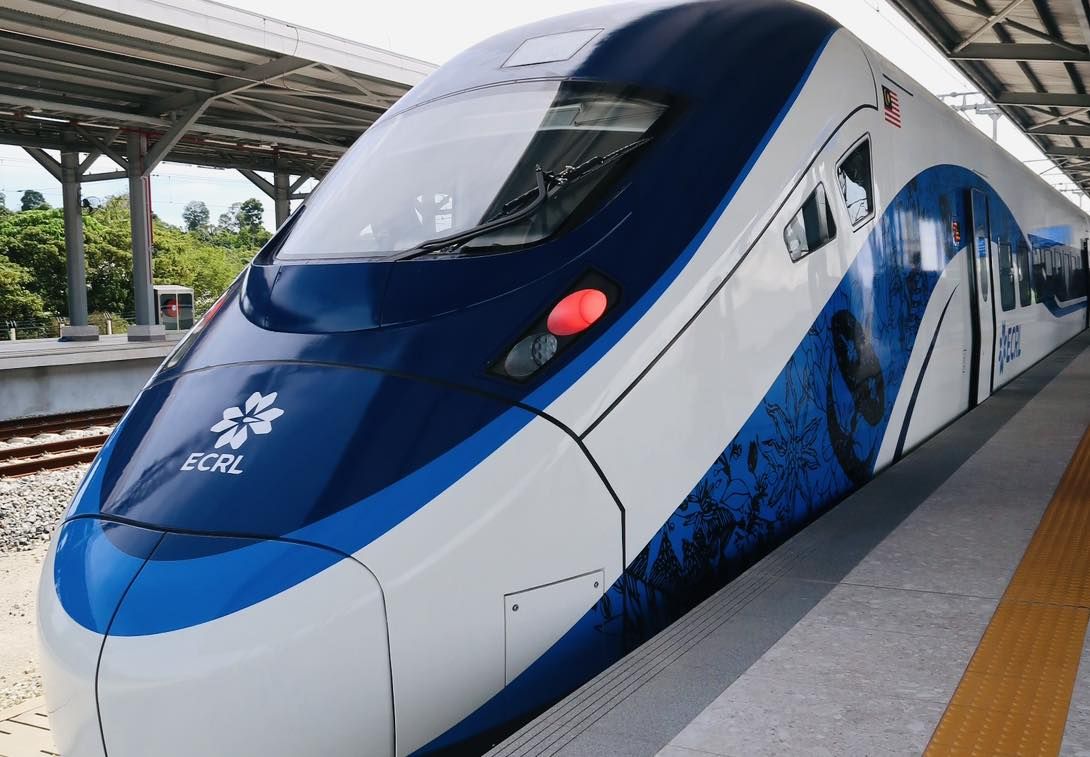
Malaysia's East Coast Rail Link (ECRL) stands to become a transformative economic engine for the nation, with projections showing the megaproject will add between RM80 and RM90 billion to the country's cumulative gross domestic product by 2047. Deputy Economy Minister Datuk Mohd Shahar Abdullah has underscored the scale of this anticipated economic windfall during recent remarks to the media, emphasizing that the ECRL transcends its role as mere transportation infrastructure to function as a broader catalyst for sustainable development and investment across the economically significant eastern regions.
The projected returns hinge on the successful rollout of 21 Economic Accelerator Projects strategically positioned along the 665-kilometre corridor. These initiatives are designed to unlock latent economic potential in areas that have historically lagged behind the more developed west coast, representing a deliberate policy shift toward geographic equity in development. The identification of three primary logistics hubs marks the most concrete element of this broader vision. Pasir Puteh in Kelantan will feature an 86.2-hectare facility, Kemaman in Terengganu will encompass 27.5 hectares, and Temerloh in Pahang will span 20.2 hectares, collectively serving as gateways for goods movement and commercial activity across the east coast.
Beyond these three anchor hubs, multiple ECRL stations have been earmarked for transformation into logistics and commercial nodes. This network approach reflects contemporary thinking about integrated transport and economic development, where railway infrastructure serves as the spine for broader regional economic ecosystems. By concentrating logistics functions at strategic points, policymakers aim to generate clustering effects that attract related industries, warehousing operations, and distribution networks, multiplying the economic returns from the core rail investment.
The Perodua logistics hub in Paya Besar, Kuantan, exemplifies this integrated approach. The first phase of this facility is scheduled for completion by 2029, well ahead of the ECRL's full operational launch in January 2027. This staged development allows anchor industries to establish presence and begin operations as the rail link comes online, ensuring immediate utilization of the new transport capacity. Paya Besar's location in Kuantan makes it particularly significant, given the district's existing industrial base and proximity to major ports and manufacturing facilities throughout Pahang.
For Malaysia's broader logistics ecosystem, the ECRL represents a critical piece of infrastructure designed to complement rather than replace existing international shipping routes. Datuk Mohd Shahar clarified that the project functions to strengthen Malaysia's overall competitive position in regional and global logistics networks. This positioning is significant in an era where supply chain resilience and capacity have become paramount considerations for multinational corporations and regional traders. By offering an alternative transport corridor with modern infrastructure, the ECRL enhances Malaysia's attractiveness as a logistics hub and reduces dependency on congested west-coast routes.
The development strategy explicitly aligns with the government's MADANI Economy framework, which prioritizes inclusive growth and equitable development across all regions. This integration into broader economic governance demonstrates that the ECRL is not an isolated megaproject but rather a linchpin in a comprehensive approach to narrowing the development gap between Malaysia's east and west coasts. The disparity in economic opportunities and infrastructure quality between these regions has long represented a structural challenge for policymakers, and the ECRL offers a tangible mechanism for addressing this historical imbalance.
Employment generation stands as another crucial benefit embedded in government projections. The construction phase itself has already provided thousands of jobs, while the operational phase is expected to create sustained employment across maintenance, logistics, manufacturing, and related service sectors. Quality job opportunities—whether in port operations, warehouse management, transport services, or supply chain coordination—will extend beyond major urban centers to smaller towns along the corridor, directly addressing regional unemployment concerns.
The allocation of train equipment reflects the dual economic mandate of the ECRL. Eleven six-car electric multiple unit (EMU) train sets are dedicated to passenger services, facilitating labor mobility and supporting the regional workforce market. Simultaneously, twelve electric locomotives for cargo purposes directly address freight transport needs, positioning the corridor as a competitive alternative for regional trade flows. This balanced equipment allocation demonstrates that the ECRL serves both human and economic circulation, essential for regional development.
The RM50.27 billion investment magnitude underscores the government's confidence in the project's returns, though such large-scale infrastructure typically operates on extended payoff horizons. The completion target of December 2026 and January 2027 operational launch timing appears increasingly realistic given recent project momentum. However, realizing the projected RM80 to RM90 billion GDP contribution depends critically on successful activation of the Economic Accelerator Projects and genuine commercial adoption of the new rail capacity by regional industries and traders.
For Southeast Asian context, the ECRL represents Malaysia's response to evolving regional supply chain dynamics and competition from other major infrastructure projects across the region. Thailand's rail modernization initiatives, Indonesia's port development programs, and Singapore's continued logistics dominance all inform the strategic importance of this project. The ECRL's success will be measured not merely in financial returns but in whether it genuinely attracts new investment, retains existing industries, and positions Malaysia's east coast as a competitive logistics hub within the broader regional architecture.
The integration of the ECRL with the 13th Malaysia Plan demonstrates governance coherence, with the Malaysia Development Composite Index and MyRMK system ensuring that project benefits reach intended beneficiary regions. This systematic approach reduces the risk of development benefits concentrating in major cities while peripheral areas remain marginalized. Successful implementation will require sustained coordination across federal and state authorities, particularly given the corridor's passage through Kelantan, Terengganu, and Pahang.
Ultimately, the ECRL's economic promise extends beyond the 2047 projection horizon. If the project establishes the east coast as a genuine logistics and manufacturing hub, the multiplier effects could accelerate beyond current estimates. Attracting higher-value manufacturing, specialized logistics services, and regional headquarters could transform the trajectory of east coast development. Conversely, if underutilization occurs or alternative regional routes prove more competitive, returns could fall substantially short of projections.

