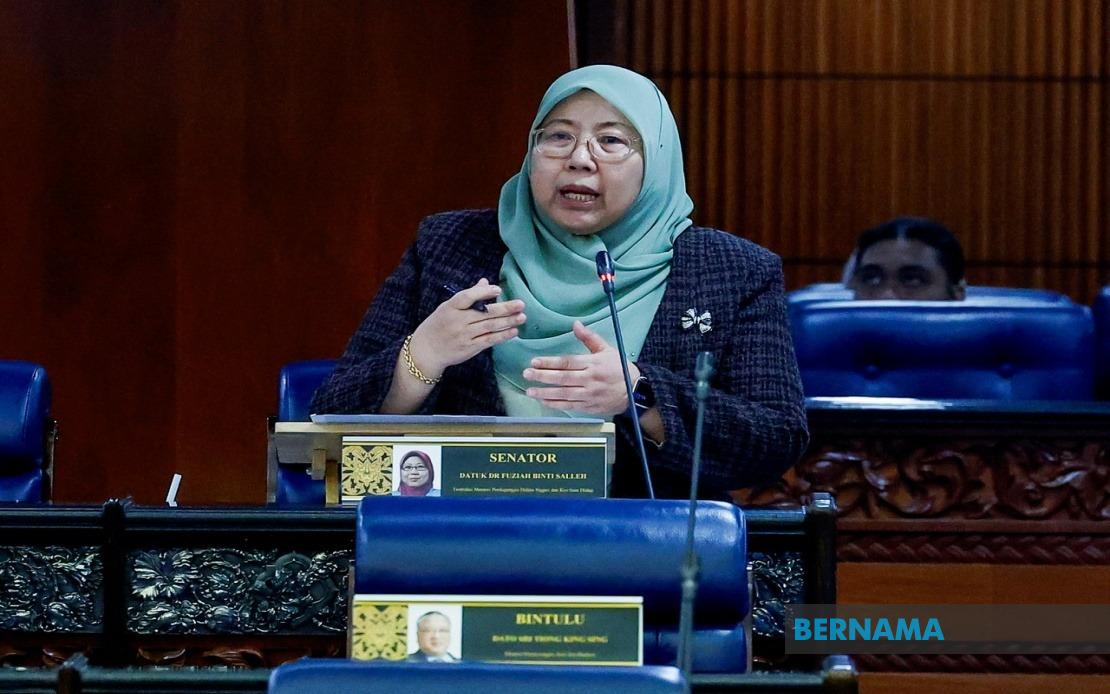
The eCOSS mobile application, designed to regulate access to subsidised one-kilogramme packets of cooking oil, has demonstrated measurable success in stemming losses since its deployment more than a year ago. Deputy Domestic Trade and Cost of Living Minister Datuk Dr Fuziah Salleh presented evidence to Parliament on July 6 suggesting the digital platform is performing its core function: maintaining steady market supplies while excluding ineligible purchasers, particularly foreign nationals who previously exploited leakage points in the distribution network.
According to Fuziah, the ministry gauges the scheme's efficacy through two principal metrics: the stability of subsidised oil availability on retail shelves and the relative scarcity of supply complaints from consumers and traders. By early July, the application had attracted 5.261 million Malaysian registrations. The aggregate volume of subsidised oil moving through registered retail channels reached approximately 18 million packets monthly—a figure suggesting both substantial consumer participation and consistent product flow to market.
Johor, selected as a pilot jurisdiction for eCOSS implementation, illustrates the programme's localised impact. The state recorded 580,000 downloaded applications among its population, with slightly over one-third of Johor's 2,822 approved retailers actively participating in the digital system. More tellingly, the frequency of shortage complaints plummeted from nine reported incidents in June 2025 to merely two in the equivalent month this year, indicating either improved supply discipline or consumer confidence in procurement channels.
The initiative represents a response to systemic vulnerabilities in Malaysia's subsidy architecture. Historically, controlled commodities have attracted arbitrageurs and cross-border diversion, with foreign purchasers and informal traders exploiting gaps between retail prices and international benchmarks. By digitising the purchase verification process at the point of sale, eCOSS interposes authentication checks that older manual systems could not sustain. The mobile application essentially converts retail counters into monitored checkpoints, reducing opportunities for unauthorised bulk acquisitions or resale.
Address digital exclusion remains a significant implementation challenge, particularly among elderly Malaysians and residents in areas with limited smartphone penetration or data infrastructure. Recognising this vulnerability, the ministry has deployed supplementary support mechanisms. These include in-store assistance from retail staff, educational outreach programmes targeting low-literacy demographics, instructional video content, and crucially, the continued option for consumers without smartphones to purchase subsidised oil through traditional channels. These parallel pathways prevent the scheme from inadvertently penalising vulnerable populations through technological gatekeeping.
Fuziah revealed that the ministry is actively soliciting user feedback to refine operational procedures. This iterative approach suggests recognition that digital systems governing essential commodities require ongoing calibration as behavioural patterns emerge and unforeseen implementation obstacles surface. The feedback loop signals responsiveness to ground-level experience rather than rigid adherence to theoretical design.
The eCOSS infrastructure functions across multiple supply chain layers, creating transparency from manufacturing through to final consumer. The architecture tracks cooking oil movement from refineries into repackaging facilities, onwards to wholesalers and registered retailers, and finally to authenticated end-users. This granular visibility enables authorities to identify points where product diverges from intended channels, whether through diversion, hoarding, or cross-border trafficking. Data accumulated through this monitoring informs enforcement operations and policy adjustments.
While the eCOSS mobile application represents the consumer-facing interface, the underlying eCOSS system encompasses broader logistics and surveillance infrastructure. The application itself functions as a last-mile connectivity tool, bridging the information gap between wholesale distribution networks and retail checkout transactions. This distinction matters: the app is not primarily an enforcement tool but rather a data collection mechanism that supplies intelligence to separate compliance operations.
The subsidy protection initiative carries particular relevance for Malaysia's budgetary health. Cooking oil subsidisation constitutes a significant recurring fiscal outlay, and minimising leakages directly impacts public expenditure efficiency. Each unauthorised packet diverted represents both immediate budgetary loss and hidden inflation, as subsidised product siphoned from legitimate channels can suppress retail pricing discipline or exit domestic markets entirely. Reducing these losses extends subsidy sustainability and theoretically permits the government to maintain affordability without escalating fiscal pressure.
Regionally, Malaysia's experience with digital subsidy management offers instructive lessons for neighbouring economies grappling with comparable challenges. Many Southeast Asian governments struggle to prevent cooking oil subsidy abuse, particularly in border regions where price differentials incentivise smuggling. eCOSS demonstrates that mobile-first authentication, combined with retail point-of-sale integration, can meaningfully reduce unauthorised access without entirely blocking legitimate consumers lacking advanced digital skills.
The scheme's success ultimately depends on sustained consumer cooperation and retailer compliance. Unlike enforcement mechanisms that generate resistance, a system perceived as fair and accessible tends toward voluntary participation. By maintaining alternative pathways for digitally-excluded populations, eCOSS avoids the legitimacy erosion that purely technology-dependent systems risk. This pragmatic inclusivity may explain the low complaint volumes—consumers struggle less when they retain realistic options for obtaining subsidised supplies.
Moving forward, the ministry's emphasis on feedback collection suggests openness to structural adjustments. Potential refinements might address geographic disparities in app penetration, seasonal fluctuations in cooking oil demand, or supply chain disruptions beyond eCOSS's regulatory scope. As the application accumulates transaction data, more sophisticated analytics may identify subtle leakage patterns that earlier indicators missed. The programme thus represents an ongoing experiment in applying digital governance to commodity subsidy administration, with implications extending beyond cooking oil to other price-controlled essentials.

