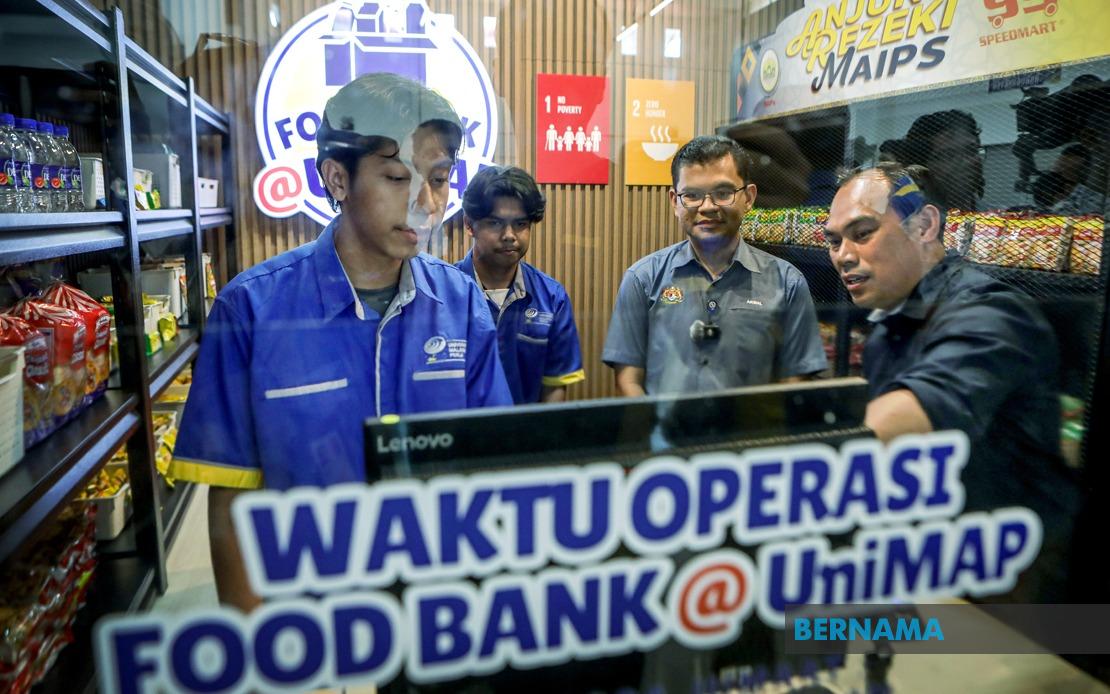
Malaysia's Economy Ministry is moving to secure continued funding for the People's Income Initiative – Food Entrepreneur Initiative (IPR-INSAN), a targeted programme designed to uplift small food business operators from the bottom 40 per cent income bracket while simultaneously improving food accessibility for consumers. Economy Minister Akmal Nasrullah Mohd Nasir announced the ministry's intention to petition the Ministry of Finance for programme extension following a working visit to Universiti Malaysia Perlis, where he witnessed the initiative in action through campus vending machine installations.
The IPR-INSAN programme represents a policy intersection between poverty alleviation and innovation, leveraging automated vending technology to create market entry points for entrepreneurs who traditionally face barriers to retail operations. Rather than requiring significant capital investment or formal retail premises, participating B40 entrepreneurs operate food vending machines positioned strategically across university campuses. This model reduces overhead costs while guaranteeing foot traffic from a concentrated student population, addressing a fundamental challenge in microenterprise development across Southeast Asia where access to suitable business locations remains prohibitively expensive for lower-income operators.
During his UniversitiMalaysia Perlis campus tour, Minister Akmal Nasrullah examined two operational vending machine locations while also visiting the institution's Food Bank and MADANI Dapur Siswa student kitchen facility. The ministry's ground-level assessments indicate the programme delivers measurable benefits across multiple stakeholder groups. B40 entrepreneurs gain income-generating opportunities through a structured platform, while students and campus workers obtain prepared meals at prices substantially below commercial food court rates. This dual benefit structure aligns with Malaysia's broader MADANI framework, which emphasises inclusive economic growth and social welfare integration.
The concrete financial performance data emerging from UniversitiMalaysia Perlis demonstrates the programme's tangible economic impact on participant entrepreneurs. At the Tuanku Abdul Rahman Residential College, entrepreneur Norleyana Nordin's homemade food vending operation generated average monthly sales of RM2,178.80, with peak performance reaching RM4,905 during January. These figures suggest viable microenterprise sustainability, particularly when contextualised against the minimal overhead structure the vending model provides. The highest-performing operator at Tuanku Tengku Fauziah Residential College, Noor Hasfalela Mohd Noor, recorded average monthly sales of RM4,595, with January sales spiking to RM10,012.
The performance variance between individual entrepreneurs—ranging from approximately RM2,200 to RM4,600 in monthly average revenue—reflects broader realities in food microenterprises, where factors including product quality, menu diversity, pricing strategy, and operator engagement influence outcomes. Both entrepreneurs demonstrated capacity to sustain regular operations while generating income substantially above typical subsistence levels, suggesting the vending platform model effectively removes structural barriers that traditionally limit B40 entrepreneur profitability. The February and April 2026 figures for Noor Hasfalela's operations (RM5,049 and RM4,868 respectively) indicate sustainable revenue streams rather than anomalous monthly spikes, critical for assessing long-term viability.
From a policy development perspective, Malaysia's embrace of automated vending technology for poverty reduction represents an instructive approach that may offer lessons for other ASEAN nations grappling with informal economy integration and B40 support mechanisms. Unlike traditional micro-credit programmes requiring extensive administrative overhead and borrower assessments, the IPR-INSAN model operates through infrastructure provision, creating supply-side support that reduces entrepreneurial risk. This represents a philosophical shift from traditional welfare dependency models toward systematic economic participation, though success remains contingent on operator skill development and market demand sustainability.
The programme's integration within university ecosystems creates additional social dividends beyond direct entrepreneur income generation. UniversitiMalaysia Perlis' Food Bank and MADANI Dapur Siswa initiatives work in concert with IPR-INSAN vending operations, creating a layered food security architecture addressing student populations across varying income levels. Students facing severe food insecurity access supportive programmes, while others obtain competitively-priced prepared meals from entrepreneur-operated vending machines. This tiered approach prevents programme overlap while maximising impact across the institution's socioeconomic spectrum.
Economy Minister Akmal Nasrullah's emphasis on programme extension reflects government recognition that successful poverty-reduction initiatives require multi-year implementation horizons to achieve sustainable impact. Short-term programmes risk participant overdependence on transitional support without establishing genuine economic capacity-building. The ministry's lobbying efforts with the Finance Ministry therefore address fundamental budgeting constraints that prevent long-term commitment to social enterprises. Malaysian policymakers increasingly recognise that B40 support requires patient capital and sustained institutional commitment rather than cyclical interventions.
The IPR-INSAN programme also indirectly addresses broader campus welfare concerns that university administrations across Malaysia have navigated. Student mental health and academic performance correlate significantly with food security and financial stress management. By reducing meal costs through B40 entrepreneur vending operations, institutions reduce financial pressure on enrolled students while creating employment and income-generation pathways for economically disadvantaged community members. This creates positive externalities extending beyond direct programme participants.
UniversitiMalaysia Perlis' proactive partnership in IPR-INSAN implementation demonstrates how institutional actors can operationalise government poverty-reduction mandates through infrastructure provision and operational support. The university's identification of appropriate vending machine locations within residential colleges shows strategic thinking about foot traffic concentration and student access patterns. The institution's coordinated messaging around programme success also enhances visibility, potentially encouraging other Malaysian universities to adopt similar models and expand aggregate programme reach.
Looking forward, the ministry's extension petition faces Finance Ministry scrutiny regarding cost-benefit analysis, scalability potential, and alignment with competing budgetary priorities. However, the documented performance data from UniversitiMalaysia Perlis provides empirical foundation for expansion arguments. If successfully extended, the programme could potentially expand beyond higher education institutions toward secondary schools, government office complexes, and other high-density locations where concentrated consumer populations could support B40 entrepreneur vending operations.
The IPR-INSAN programme ultimately reflects Malaysia's evolving approach to poverty reduction through market-based mechanisms rather than pure welfare transfers. By connecting B40 entrepreneurs to reliable customer bases through technological platforms, the initiative demonstrates that inclusive growth requires structural enabling rather than charity-based interventions. Success metrics extending beyond immediate programme participants—including student cost-of-living relief and community economic participation—suggest the initiative merits continued policy investment and potential regional replication.

