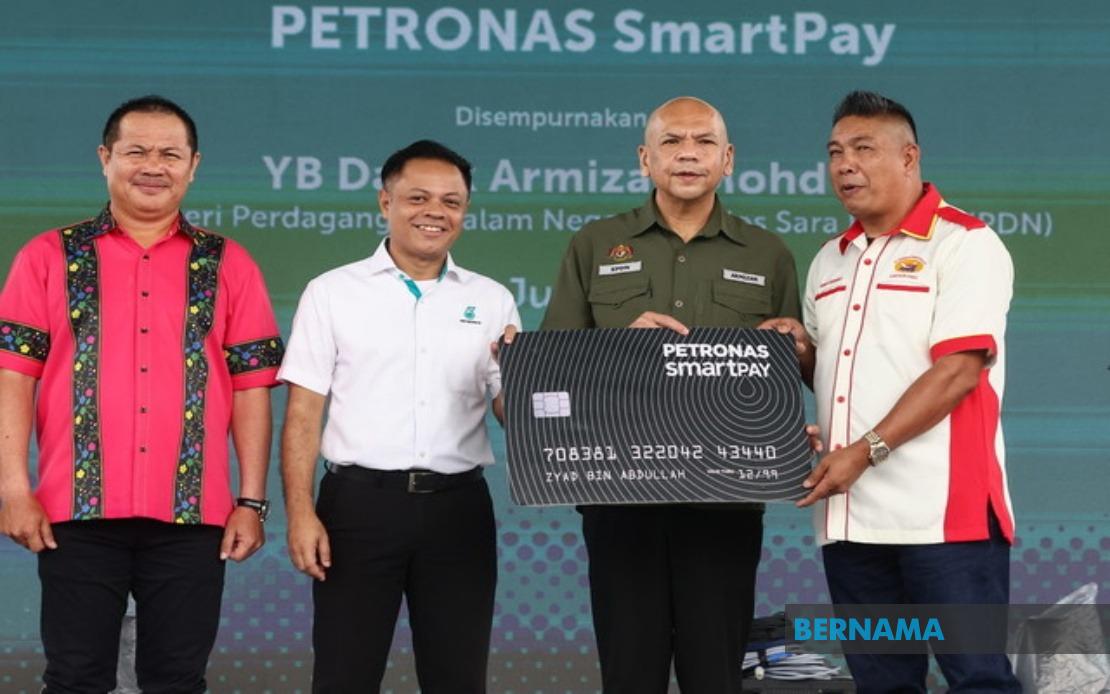
The government's expanded Subsidised Diesel Control System (SKDS) is drawing disproportionately strong participation from Sabah, Sarawak and Labuan, with Domestic Trade and Cost of Living Minister Datuk Armizan Mohd Ali revealing that companies from these three regions account for 67.9 per cent of new registrations under the scheme's newly opened jeep and pickup categories. Speaking at a fleet card handover ceremony during the Jom Malaysia Festival in Sandakan on July 26, Armizan highlighted that this eastern concentration reflects the programme's growing relevance to regional transport operators, with 10,453 companies in the three territories registering a combined 18,538 vehicles since the scheme expanded on July 3.
The broader national figures underscore the momentum behind the SKDS extension. Across Malaysia, 15,388 companies have registered 25,781 vehicles under the new jeep and pickup category since early July, demonstrating that the government's decision to widen eligibility has resonated strongly with the commercial transport sector. This expansion represents a significant policy shift, moving beyond traditional commercial transport categories to include sole proprietorships and partnerships operating smaller utility vehicles—a move that appears to have unleashed considerable latent demand, particularly in East Malaysia where road-based logistics and small-scale transport operations form the backbone of many local economies.
The mechanism offering eligible operators a RM300 subsidy per litre of diesel purchased through SKDS fleet cards has proven particularly attractive to East Malaysian transport businesses. Companies now benefit from accessing subsidised fuel through dedicated fleet cards issued by oil companies, creating a streamlined purchasing system that reduces administrative friction compared to previous arrangements. For small to medium-sized operators in Sabah and Sarawak, where operational margins can be tight and fuel costs represent a significant expense, the RM300 subsidy translates into meaningful savings that can improve business viability and competitiveness. The appeal appears especially strong in regions where transport distances are longer and fuel costs consequently loom larger in business calculations.
Armizan's remarks during the Sandakan ceremony also underscored the government's commitment to maximising SKDS participation, urging eligible companies that have not yet registered to submit applications through the MySubsidi portal without delay. This active encouragement suggests that while current uptake has been robust, officials perceive additional compliance potential, particularly among smaller operators who may lack familiarity with the registration process or harbour uncertainty about eligibility criteria. Given that East Malaysian companies already account for nearly seven in ten registrations, targeted outreach in these regions could yield further increases, though the minister's emphasis on digital portal access raises questions about digital literacy and internet connectivity challenges in more remote areas.
The SKDS framework itself remains administratively compartmentalised across multiple agencies, with Armizan's ministry overseeing diesel subsidies for 35 types of commercial vehicles while the Ministry of Finance manages petrol subsidies through parallel schemes serving individual consumers. This division reflects the government's attempt to calibrate subsidy design according to user categories and vehicle types, though it simultaneously creates complexity. Armizan acknowledged this structural reality by explaining that his ministry focuses exclusively on commercial transport, leaving individual and household petrol subsidies—Budi95 and Budi Diesel programmes—to Finance Ministry stewardship, a distinction that may confuse operators touching both schemes.
Significantly, Armizan used the Sandakan engagement to flag emerging policy tensions around subsidy standardisation that have surfaced among East Malaysian stakeholders. Representatives raised concerns about inconsistencies in eligibility conditions between diesel and petrol subsidy schemes affecting individuals and households, specifically questioning why different criteria apply to consumers accessing Budi95 petrol versus Budi Diesel, and suggesting uniform conditions—such as requiring only a valid driving licence—might improve programme transparency and fairness. These grievances reflect growing sophistication in regional policy engagement, with East Malaysian voices explicitly questioning the logic of fragmented subsidy governance and proposing streamlined alternatives. Rather than dismissing these concerns, Armizan directed them toward the Sabah State Secretary for processing through formal coordination channels between state and federal levels, acknowledging that wholesale standardisation may exceed his immediate remit.
The vehicle registration issue raised by Sandakan representatives carries particular weight in East Malaysia, where Ministry of Finance rules governing registration eligibility create constraints that differ from commercial sector arrangements. Armizan's willingness to facilitate dialogue between state and federal authorities on this specific problem signals recognition that centralised fuel subsidy policies sometimes encounter legitimate implementation friction in regional contexts and may benefit from localised adaptation. The reference to ensuring vehicle registration names align across schemes suggests officials are grappling with instances where vehicle ownership structures or documentation practices in Sabah and Sarawak diverge from West Malaysian norms, creating unintended barriers to subsidy access.
Coordination between multiple stakeholder groups will prove essential for SKDS consolidation moving forward. Armizan explicitly committed his ministry to strengthening ongoing collaboration with the Finance Ministry, Sabah and Sarawak state governments, oil companies, and broader industry participants, a commitment reflecting the multi-actor nature of diesel subsidy delivery. Oil companies serve as the retail interface, issuing fleet cards and processing transactions; state governments hold regulatory and administrative capacity particularly relevant to East Malaysian implementation; the Finance Ministry shapes broader subsidy policy; and transport operators themselves provide critical feedback on programme functionality. Effective coordination among these entities will determine whether SKDS expansion achieves its dual goals of extending subsidy benefits to smaller operators while maintaining fiscal sustainability.
For Malaysian transport operators, particularly those in East Malaysia, the expanded SKDS represents a meaningful reduction in operational costs at a time when fuel price pressures strain business margins. The RM300 diesel subsidy, while seemingly modest in absolute terms, compounds across multiple refuelling cycles and assumes particular significance for operators with large fleets or intensive daily usage patterns. Sabah and Sarawak companies' strong early uptake suggests confidence that the scheme offers genuine benefits worth pursuing administrative registration. However, the concentration of registrations in East Malaysia—while reflecting the region's transport-dependent economy—also raises questions about West Malaysian awareness and penetration, potentially indicating an information or accessibility gap that the government may need to address through targeted communication campaigns.
The broader policy context framing SKDS expansion reflects government commitment to managing fuel subsidy costs while targeting benefits toward economically productive transport activities. By focusing subsidies on commercial operators rather than universal petrol subsidies for individual drivers, the approach attempts to balance affordability concerns against fiscal constraints—a pragmatic trade-off that gains political traction when schemes demonstrably benefit working businesses and employment-generating sectors. The strong East Malaysian response validates this logic regionally and may inform future subsidy policy design, potentially encouraging officials to consider whether other regional needs might benefit from similarly flexible programme structures adapted to local economic realities.

