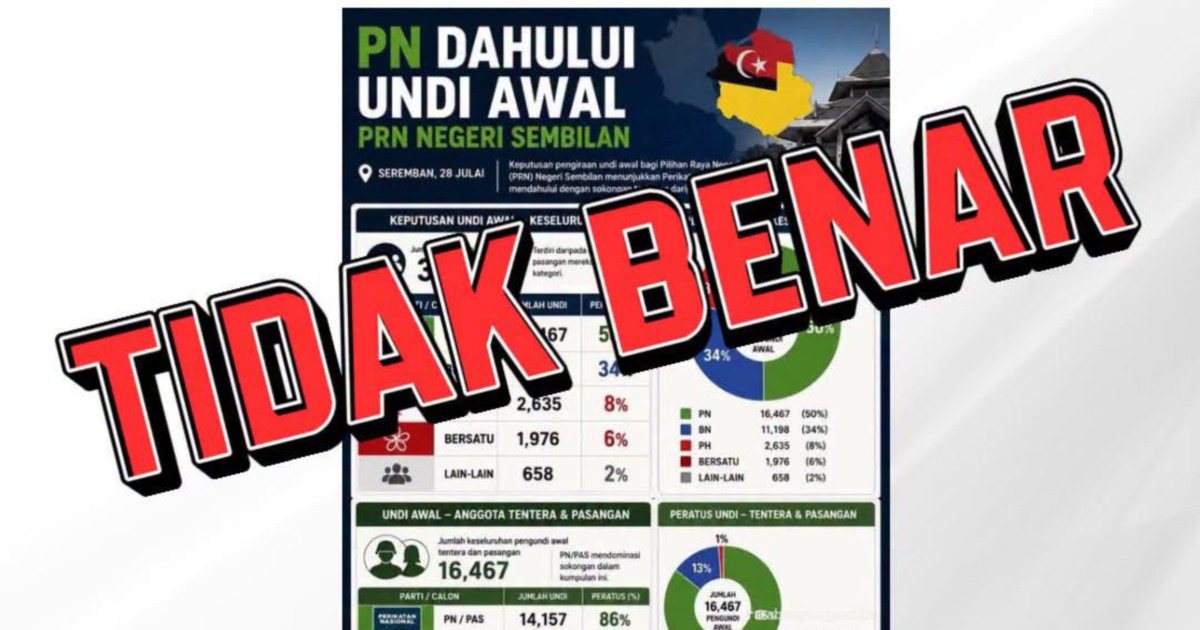
The Election Commission unveiled its timeline for processing early ballots in Negeri Sembilan's upcoming state election, setting 5pm Saturday as the official start for vote tallying from those who cast their votes ahead of polling day. The clarification emerged from Seremban as the electoral body sought to establish clear procedures for a key phase of the election process that has generated public curiosity and occasional speculation about potential outcomes.
The announcement carries particular importance given the heightened scrutiny surrounding early voting mechanisms across Malaysian elections in recent years. Early votes typically originate from various groups including election officials, police officers, military personnel, and others classified as essential workers or unable to participate on the designated polling day. The EC's decision to consolidate all early ballot counting at a single, publicly announced time reflects efforts to enhance transparency and prevent premature claims about electoral trajectories.
Speaking specifically to circulating online narratives about early voting patterns, the EC firmly rejected viral assertions claiming that Perikatan Nasional had already established a commanding advantage through early ballots. Such claims have frequently circulated on social media platforms during Malaysian elections, occasionally gaining traction among politically engaged communities before official counting procedures commence. The EC's proactive denial underscores the commission's recognition of how unverified electoral information can shape public perception and confidence in democratic processes.
The timing of Saturday's vote count places it well ahead of the general polling day, allowing sufficient time for comprehensive tallying while maintaining the integrity of the electoral process. By establishing a fixed commencement time and making it public knowledge, the EC enables election observers, media representatives, and political party representatives to coordinate their presence and monitor procedures with adequate notice. This transparency mechanism has become increasingly standard practice across regional election management bodies seeking to validate their credibility.
Negeri Sembilan's 16th state election represents another critical test of electoral management as Malaysia continues strengthening its institutional frameworks. The state's electoral exercise comes amid broader regional trends toward more sophisticated election administration, including refined procedures for handling remote voting categories and enhanced security measures surrounding ballot handling. For Malaysian observers accustomed to evolving electoral practices, the precise communication around early vote processing demonstrates how electoral bodies attempt to institutionalise consistency and predictability.
The emergence of false claims about early voting results speaks to a broader challenge confronting electoral integrity across Southeast Asia. Social media platforms have become primary channels through which unverified electoral narratives spread, occasionally outpacing official communications from recognised authorities. Malaysia's experience mirrors patterns observed in neighbouring democracies where the speed and virality of digital misinformation occasionally exceed the ability of official institutions to correct inaccuracies in real time. The EC's decision to explicitly address false PN claims rather than remain silent reflects lessons learned from managing electoral discourse in an increasingly digital environment.
For political parties and their supporters, the clarification about early vote counting procedures removes any ambiguity about when results will emerge. Perikatan Nasional, along with competing coalitions and independent candidates, can now align their election night logistics with the confirmed Saturday 5pm commencement, allowing campaign teams to position observers and manage their own information distribution strategies accordingly. The specificity of this timeline prevents the confusion that occasionally arises when election procedures remain vague or subject to last-minute modifications.
The rejection of viral PN lead claims also carries implications for electoral confidence among ordinary voters. Public faith in election management systems depends substantially on citizens' belief that no party or candidate receives advance knowledge of results or enjoys procedural advantages that undermine fair competition. By promptly denying unsubstantiated claims of early advantage, the EC reaffirms that early voting categories receive the same procedural scrutiny and counting protocols as all other ballots. This assurance becomes particularly important in polarised electoral environments where trust in institutions cannot be assumed.
Negeri Sembilan's electoral context includes various demographic and political considerations that make the state's results regionally significant. The state has experienced shifts in political alignment during recent election cycles, reflecting broader Malaysian voter movements between established coalitions and emerging political alternatives. The upcoming election will likely attract interest from political analysts and regional observers seeking to discern patterns about voter sentiment and coalition dynamics that extend beyond Negeri Sembilan's borders.
Looking forward, the EC's handling of early vote procedures and its confrontation of misinformation will contribute to the operational and reputational framework surrounding the election's broader execution. Election observers will monitor whether Saturday's counting proceeds according to the announced timeline, whether procedural consistency is maintained, and whether the transparent approach encourages confidence among competing parties. The accumulated details of electoral administration, properly executed, construct the institutional foundations that enable democratic processes to function credibly.

