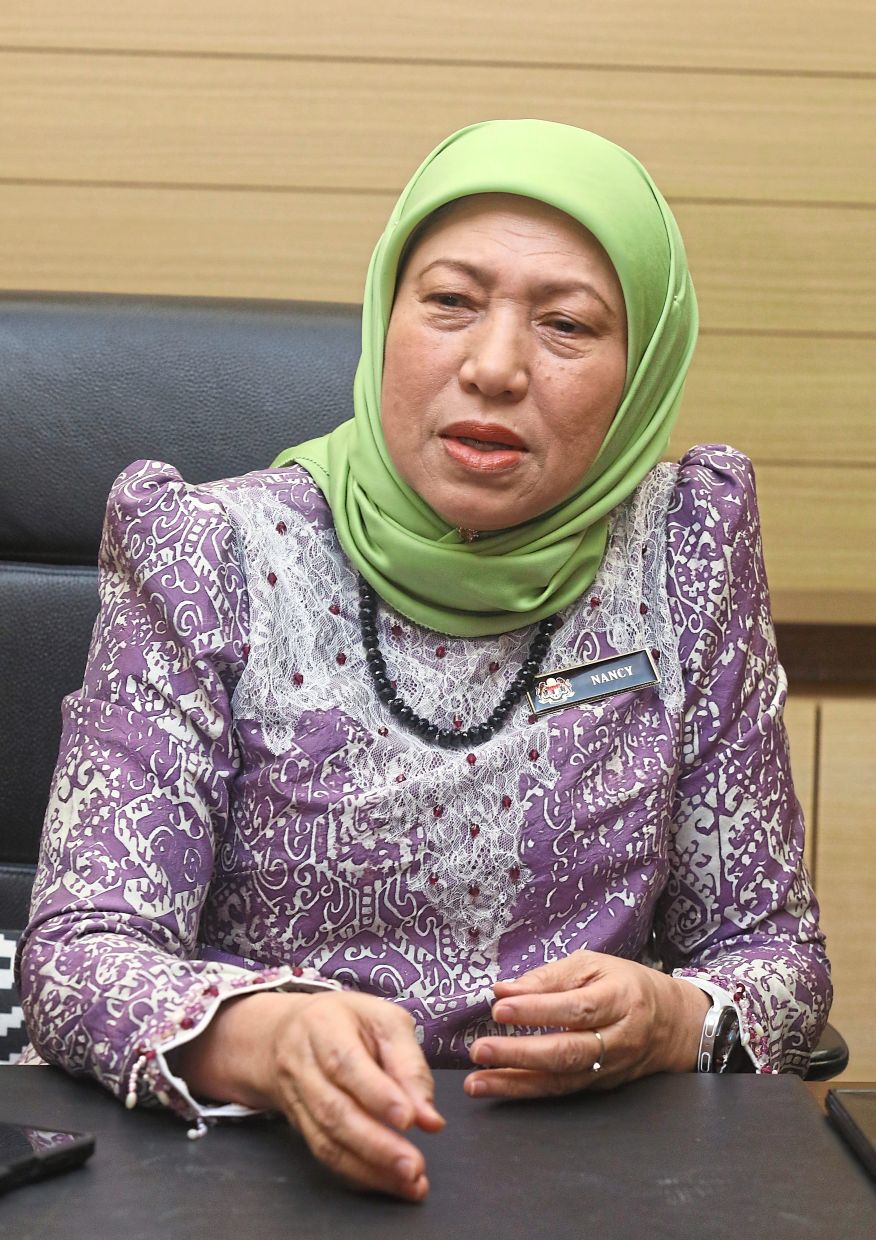
Registering a child as a person with disabilities (OKU) represents far more than completing paperwork—it forms the foundation for accessing a coordinated system of government support that can fundamentally reshape a child's trajectory. According to Women, Family and Community Development Minister Datuk Seri Nancy Shukri, timely registration ensures families do not miss critical windows for intervention during crucial developmental stages. The process, administered by the Social Welfare Department (JKM), translates a child's medical condition into official recognition that unlocks doors to welfare assistance, healthcare services, educational provisions and social development programmes otherwise unavailable to families navigating the disability support landscape.
The pathway to registration, while straightforward in principle, requires parents to compile specific documentation including the child's birth certificate or identification documents alongside a medical report or certification substantiating the disability diagnosis. Additional supporting materials must accompany these core documents as stipulated by JKM. Upon successful approval, the child receives an OKU card serving as tangible proof of registered disability status—a credential that carries weight across government and private sector institutions. This official designation becomes the key unlocking a diverse portfolio of benefits spanning financial assistance programmes, rehabilitation services tailored to individual needs, early intervention initiatives targeting infants and young children, and access to specialised educational facilities designed for children with varying disabilities.
Nancy's advocacy for early registration reflects evidence that intervention timing significantly influences developmental outcomes. Children who access support services during infancy and early childhood benefit from neuroplasticity—the brain's enhanced capacity to form new neural pathways during formative years. Early intervention programmes, contingent on OKU registration, focus on maximising this biological advantage through targeted therapies, skill-building activities and family-centred support. She cautioned parents against postponing registration, framing delay as a lost opportunity rather than a procedural inconvenience. The government's commitment to supporting disabled persons extends beyond childhood, acknowledging that support requirements evolve through adolescence, early adulthood and later life stages as individuals' aspirations, employment circumstances and assistance needs transform.
The support architecture extends significantly into employment pathways, a critical domain where OKU registration creates tangible opportunities. Malaysia's labour market has historically presented barriers for persons with disabilities, with employers sometimes lacking awareness of accommodation possibilities or harbouring misconceptions about productivity and workplace integration. To address this structural challenge, JKM has introduced a job coach service providing on-the-job support enabling OKU to secure and sustain employment. These specially trained job coaches function as bridges between employers and disabled employees, delivering practical workplace guidance while simultaneously educating employers about effective accommodation strategies. This dual-direction approach recognises that inclusive employment requires institutional change within organisations, not merely individual effort from workers with disabilities.
Complementing job coaching initiatives, the government has rolled out Disability Equality Training (DET) targeting employers, human resource practitioners and broader workforces. Rather than limiting itself to awareness-raising, DET deliberately cultivates attitudinal shifts regarding disability, reframing disabled persons from objects of charity to contributors with valuable skills and perspectives. Nancy emphasised that such training represents a strategic lever for dismantling societal barriers predicated on misconception and exclusion. This philosophical reorientation carries particular significance in Southeast Asia, where traditional stigma surrounding disability remains pronounced across multiple countries. By positioning disability equality as a workplace imperative rather than optional goodwill, Malaysia's approach potentially influences regional attitudes.
The Social Security Organisation (PERKESO) operates within this ecosystem, offering rehabilitation services, skills training and employment placement initiatives specifically designed for persons with disabilities. The MyFutureJobs platform exemplifies this integration, connecting job seekers—including registered OKU—with employers actively seeking to build diverse workforces. These infrastructure investments suggest recognition that inclusive employment depends on systems deliberately designed to facilitate connections between workers with disabilities and receptive employers rather than relying on individual initiative alone. For Malaysian jobseekers with disabilities, such platforms represent meaningful alternatives to informal networks that have historically excluded them.
Beyond employment, government initiatives address lifelong learning and economic participation. The expansion of vocational training programmes, entrepreneurship support schemes and independent living resources acknowledges that disabled persons possess diverse aspirations extending across multiple life domains. A parent registering their child as OKU today positions that individual not merely for childhood services but for continuous access to evolving support programmes. This longitudinal perspective distinguishes Malaysia's approach from older models treating disability services as temporary interventions rather than ongoing support systems.
The collaborative framework underpinning OKU support mobilises multiple institutional actors. Government agencies coordinate with statutory bodies, private sector organisations and non-governmental organisations to broaden the reach and quality of services. This ecosystem approach reflects understanding that comprehensive disability support cannot emanate from government structures alone. NGOs often possess grassroots knowledge and community trust; private employers control access to economic opportunity; and statutory bodies manage specialised rehabilitation expertise. Each actor contributes distinct capabilities toward the overarching objective of enabling disabled persons to participate fully in society.
For parents contemplating OKU registration, the administrative process yields compounding returns across time. Early childhood registration unlocks intervention programmes during critical developmental windows, adolescent registration provides access to vocational preparation, young adult registration connects individuals with employment support services, and lifelong registration ensures continuity as support requirements shift through adulthood. Nancy's framing of registration as foundational to a child's opportunity structure invites parents to view this step as investment in their child's future participation and dignity rather than acknowledgment of deficit. This reorientation—from registration as bureaucratic necessity to registration as gateway to empowerment—potentially encourages higher uptake among Malaysian families who might otherwise delay engagement with government disability services.

