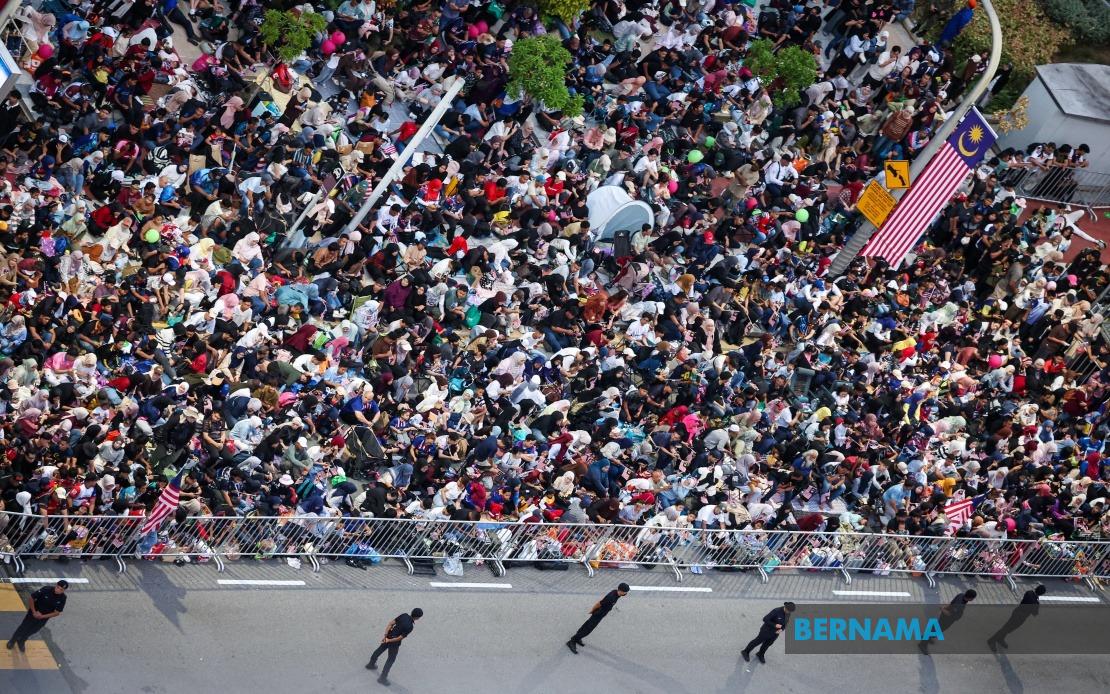
Anticipation for Malaysia's 69th National Day reached fever pitch as crowds descended upon Dataran Putrajaya from late evening onwards, with many staking out positions well before dawn to guarantee unobstructed views of the festivities. The themed celebration, "Malaysia MADANI: Kesejahteraan Dinikmati", commenced at 8 am, drawing enthusiasts from across the country who recognized that prime viewing real estate along the parade corridor would require strategic early positioning. This year's turnout underscored a renewed appetite among Malaysians to participate directly in the nation's most significant civic celebration, moving beyond passive media consumption to experiential engagement.
Young creatives like Mock Wei Qi, 23, epitomized a generational shift in how citizens engage with national occasions. The freelance photographer and his associates arrived at 11 pm the previous evening, driven not by patriotic obligation alone but by genuine creative ambition. For this cohort, the National Day parade represented a high-stakes opportunity to produce compelling multimedia content that could authentically represent Malaysia's distinctive character and cultural richness to international audiences. Their presence highlighted how major civic events now serve dual purposes—ceremonial national moments and creative platforms for individual expression and skill development.
The decision to arrive exceptionally early transformed what might have been a transactional viewing experience into something more profound. Families like Ahmad Azri Onn's multi-generational group, who positioned themselves from 5:30 pm onwards, recognized that the overnight vigil itself constituted valuable experience for younger members. Rather than treating the wait as an inconvenience, Ahmad Azri deliberately framed it as a "camping experience," converting hours of standing and sitting into memorable family bonding time during the school holiday period. The modest drizzle that fell during their wait, rather than dampening spirits, actually provided relief from the heat and became part of the shared narrative.
Couples seeking to correct previous disappointments also joined the throngs. Those identified only as As and Adib arrived at 5 pm, motivated by distinct resolution stemming from the previous year's experience. Having missed premium positioning in 2024 and consequently viewed the celebration from considerable distance, they deliberately adjusted their strategy this time. This pattern—learning from prior National Day attendance and implementing improved tactics—suggests that participation in these events creates cumulative expectations and increasingly sophisticated planning among repeat attendees. Such behavior indicates deepening civic engagement rather than superficial nationalism.
The geographical centrality of Dataran Putrajaya amplified the venue's symbolic importance. As the nation's administrative hub and purpose-built ceremonial space, Putrajaya represents Malaysia's modern identity and forward-looking governance vision. Conducting the National Day celebration at this location rather than alternative venues reinforces institutional continuity and the government's connection to popular participation. The physical act of gathering at this specific location carries meaning beyond mere logistical convenience—it represents citizens claiming space within the nation's formal power center.
Weather conditions, which might have discouraged casual participants, failed to dampen genuine enthusiasm. The overnight drizzle and uncertainty about humidity levels could have prompted last-minute cancellations, yet families maintained their posts and arrived according to plan. This resilience suggested that attendance reflected considered commitment rather than impulse decisions. The willingness to endure discomfort—sleeping outdoors, managing children in variable conditions, standing for extended periods—indicated that the experiential value of direct participation outweighed physical convenience.
The escalating trend of pre-dawn arrivals raises questions about accessibility and equity in public participation. Optimal viewing positions increasingly require significant time commitments that disadvantage working professionals, single parents, and those with mobility constraints. While the spontaneous camping culture creates inclusive community atmosphere, the necessity to arrive hours in advance implicitly creates hierarchy among participants based on flexibility and available leisure time. Malaysian policymakers might consider how future civic celebrations can balance authentic grassroots participation with equitable access across demographic groups.
Photography and content creation emerged as driving motivations alongside traditional patriotic sentiment. The presence of equipment-carrying creatives seeking cinematically optimal angles reflected broader cultural shifts wherein major events function as content generation opportunities. For young professionals in the digital economy, attendance simultaneously serves personal branding purposes, professional portfolio development, and national participation. This convergence is neither cynical nor inauthentic—rather, it represents how contemporary civic engagement increasingly integrates personal economic interest with collective national moments.
The midnight-to-dawn period at Dataran Putrajaya functioned as impromptu civic commons, where strangers shared space, exchanged conversations, and collectively anticipated shared national experience. These informal gatherings often generate more genuine social bonding than the formal ceremony itself. Such spontaneous community formation around public occasions strengthens social cohesion and reminds participants of their membership within broader national community. For Malaysia's multiethnic society, these moments of collective gathering hold particular significance in reinforcing unity across diverse backgrounds.
The substantial advance preparations also reflected demographic patterns worth noting. Families with school-age children dominated overnight arrivals, suggesting that National Day celebrations align with school holiday calendars and serve educational functions alongside entertainment value. Parents deliberately exposed children to Malaysia's formal civic rituals, transmitting national consciousness and historical awareness through experiential participation. This intergenerational transmission, facilitated by the school holiday timing, ensures that younger cohorts develop embodied memories of national occasions rather than abstract textbook knowledge.
Looking forward, the sustained enthusiasm for physical attendance at major national celebrations suggests resilience in civic participation despite competing entertainment options and digital alternatives. While virtual streaming exists, the preference for in-person presence at Dataran Putrajaya indicates that Malaysians still value direct participation in nation-defining moments. This genuine appetite for shared national experience—despite physical inconvenience, early arrival requirements, and overnight discomfort—affirms continued relevance of traditional civic rituals in the digital age.

