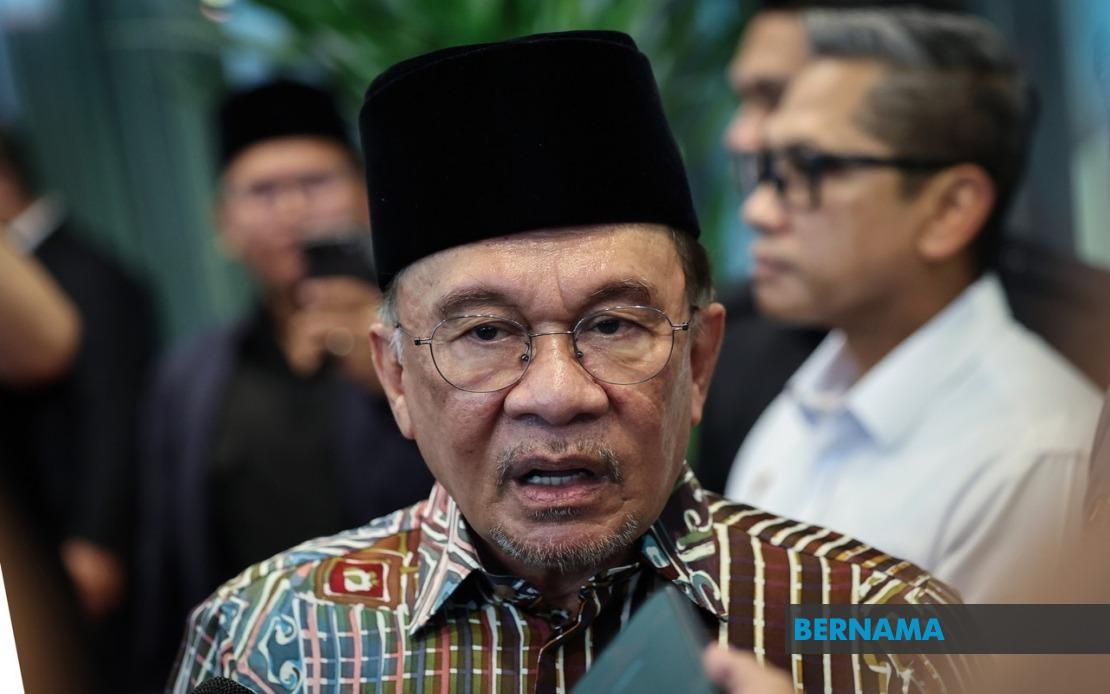
Prime Minister Datuk Seri Anwar Ibrahim has issued a sharp rebuke of Israel's announcement to tender construction contracts for the E1 settlement project east of Jerusalem, arguing that such development would strategically partition the West Bank and fatally compromise the viability of a future Palestinian state. The statement, delivered via Facebook on August 21, represents Malaysia's latest diplomatic intervention on the contentious Middle East issue and signals Kuala Lumpur's intention to track international corporate involvement in the scheme.
The E1 area holds particular geographic and political significance in Palestinian territorial claims. Located between Jerusalem and the Dead Sea, this tract of land forms a critical corridor connecting the northern and southern sections of the West Bank. Israeli construction in this zone would effectively sever that connection, rendering Palestinian territories fragmented and potentially unworkable as a unified sovereign entity. Anwar emphasised that international law prohibits such settlements in occupied territories, yet Israel has consistently proceeded without meaningful consequence.
Anwar's condemnation extends beyond the immediate E1 project to encompass the broader context of Israeli settlement expansion. He framed the tender announcement as emblematic of what he characterised as the Israeli regime's abandonment of even cosmetic commitments to peace negotiations or international consensus. The statement pointedly referenced escalating violence against Palestinian civilians in the West Bank and the ongoing military operations in Gaza, presenting the E1 decision as part of a larger pattern that demonstrates Israel's prioritisation of territorial expansion over diplomatic resolution.
The Prime Minister reaffirmed Malaysia's long-standing foreign policy commitment to Palestinian self-determination, restating support for the establishment of a sovereign, viable, contiguous and independent Palestinian state. This position reflects Malaysia's consistent diplomatic alignment with Organisation of Islamic Cooperation (OIC) positions on Palestine and underscores the country's role as a vocal advocate for Palestinian rights within international forums. Such statements carry particular weight given Malaysia's influence among Muslim-majority nations in Southeast Asia and beyond.
A notable dimension of Anwar's response involves Malaysia's pledge to monitor international corporate participation in the E1 project and respond accordingly. This language suggests potential economic consequences for companies that engage with Israeli settlement development, hinting at possible boycotts, divestment measures, or exclusion from Malaysian markets and contracts. Such threats represent one of the few leverage points available to nations without direct military or political power to influence Israeli policy, and signal Malaysia's willingness to employ economic pressure as a diplomatic tool.
The Malaysian government's intervention aligns with recent statements from the United Nations Secretary-General Antonio Guterres, who has similarly expressed grave concerns about illegal Israeli settlement expansion. UN spokesperson Stephane Dujarric warned that E1 development would not merely inconvenience Palestinian governance but would pose an "existential threat" to the two-state solution framework that has underpinned international peace efforts for decades. The UN assessment echoes longstanding territorial analyses showing that Palestinian statehood becomes logistically and administratively unfeasible if the West Bank is divided into non-contiguous enclaves.
The broader geopolitical context amplifies the significance of Anwar's statement. Escalating Israeli-Palestinian tensions, particularly following recent cycles of violence, have intensified pressure on nations to take visible positions on the conflict. Malaysia's outspoken stance reflects both genuine policy commitment and domestic political considerations, as support for Palestinian causes enjoys substantial public backing among Malaysian citizens. The government's vocal condemnation serves to reinforce its credibility on this issue among constituents and regional allies.
For Southeast Asian observers, Malaysia's approach illustrates how regional powers navigate great power competition and conflicting international norms. By explicitly warning international companies of potential consequences, Anwar's government signals that business decisions carry political weight and that economic participation in contested territories may trigger regional repercussions. This approach reflects a calculation that economic pressure, though limited in scope, represents a legitimate and necessary response to policies Malaysia views as violating international law.
The E1 settlement dispute encapsulates fundamental tensions in contemporary international relations: the collision between sovereignty claims, territorial law, and the practical reality that enforcement mechanisms for international norms remain weak. Israel's ability to proceed despite international condemnation stems partly from strategic partnerships with major powers and partly from the fragmented nature of global governance. Malaysia's response demonstrates how smaller nations attempt to impose costs through alternative mechanisms when traditional diplomatic channels prove ineffective.
The implications for Malaysia and the region extend beyond symbolic diplomacy. Should E1 construction proceed, it would further entrench the territorial fragmentation of Palestinian territories, making future peace negotiations substantially more complicated. The fracturing of the West Bank into disconnected zones would create humanitarian challenges, economic dysfunction, and prolonged instability that could radiate across the region. Malaysian policymakers appear to recognise that early intervention through diplomatic statements and threatened economic consequences represents a more cost-effective response than managing consequences of unresolved conflict years hence.
Anwar's statement also reflects Malaysia's broader commitment to maintaining its role as an advocate for developing nations within international institutions. By consistently raising Palestinian issues in prominent forums, the government reinforces its positioning as a voice for the Global South and strengthens relationships with allied nations in Africa, Asia, and the Middle East. This diplomatic engagement serves Malaysia's soft power objectives while addressing what Malaysian leadership views as legitimate grievances regarding international law and justice.

