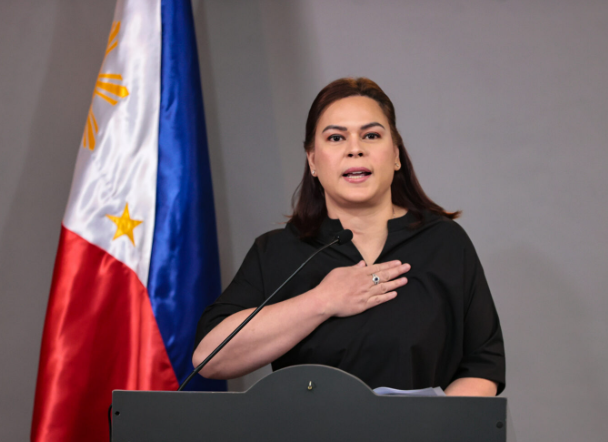
Vice President Sara Duterte on Tuesday leveraged the presence of thousands of Iglesia ni Cristo (INC) members gathered along Epifanio de los Santos Avenue to articulate a sweeping indictment of President Ferdinand Marcos Jr.'s government, characterizing it as defined by administrative incompetence and an inability to tackle the nation's most acute challenges. The rally, ostensibly organized by the influential religious organisation to protest what the INC termed "selective justice" and legal distortion following an announced plunder complaint against Senator Rodante Marcoleta, became a platform for the Vice President to broadcast her sustained critique of the administration since 2024.
Duterte's characterisation of the Marcos presidency centred on what she framed as a fundamental disconnect between the President and the lived experience of ordinary Filipinos. She specifically highlighted government inaction regarding mounting price pressures, employment insecurity, and the deteriorating affordability of essential goods and services. Rather than respond to these material hardships with substantive policy interventions, Duterte argued, the administration has instead pursued a strategy of silencing critics and interrogating dissenting voices under the guise of ensuring accountability. This framing—positioning governance failure as the root cause rather than any legitimate investigation—situates her opposition within a narrative of defending public interest against administrative overreach.
Central to Duterte's Tuesday statement was an accusation that the administration has created what she characterised as an "increasingly oppressive political environment" in which questioning presidential conduct, critiquing policy outcomes, or raising allegations of wrongdoing invite intimidation rather than substantive engagement. She positioned these dynamics as fundamentally corrosive to democratic institutions, arguing that a government which meets criticism with coercion betrays its foundational constitutional obligations. The Vice President further contended that such patterns represent a broader assault on free expression and democratic accountability, extending beyond individual personalities to touch on systemic governance principles.
Duterte's invocation of the Edsa gathering reflects a strategic political calculation. The INC, numbering roughly three million Filipino members, constitutes a voting bloc of considerable magnitude in national elections. The organisation's presence at a major public gathering carries immediate political significance, and Duterte's decision to interpret that gathering as evidence of broader societal discontent—extending well beyond the specific legal dispute the INC cited—represents an attempt to amplify and generalise her grievances. By connecting the INC's concerns about selective justice to her own narrative of administrative failure and democratic erosion, she sought to position her critique as reflecting a genuinely popular sentiment rather than merely factional political opposition.
The substance of Duterte's remarks, however, raises analytical complexity. The Marcos administration faces legitimate criticism regarding inflation, employment dynamics, and policy responsiveness. Simultaneously, Duterte herself now stands impeached by the House of Representatives—charged with threatening statements directed toward the President and his spouse, unexplained wealth accumulation, and misappropriation of confidential funds. The Vice President's framing of government criticism as inherently subject to suppression becomes less persuasive when examined against the fact that the impeachment process itself represents the institutional capacity to challenge executive authority. Her characterisation of the political environment as increasingly repressive sits uncomfortably beside the reality that she possesses the platform to make such statements nationally and faces no legal consequence for doing so.
For Malaysian observers, the dynamics unfolding in Philippine politics warrant careful attention. Both nations navigate the tension between presidential prerogatives and accountability mechanisms. The case illustrates how incumbent administrations and their challengers can deploy institutional processes—impeachment, judicial complaint, legislative scrutiny—as vehicles for political struggle. Understanding these patterns illuminates the fragility of institutional neutrality in highly personalised political environments. When formal governance mechanisms become primarily tools of factional struggle rather than genuine accountability, public faith in institutions erodes regardless of which faction temporarily holds advantage.
The timing of Duterte's statement carries particular significance given that her impeachment trial is scheduled to commence on July 6, merely days after her Tuesday remarks. The trial represents a critical juncture in Philippine politics, potentially establishing precedent for vice-presidential accountability and the limits of executive prerogative. Duterte's decision to escalate her public critique immediately before this trial suggests she views the court of public opinion as a critical venue for her defence, even as formal legal proceedings prepare to examine the specific charges against her. This dynamic—attempting to shape public narrative while facing institutional judgment—reflects the interpenetration of electoral politics and formal accountability mechanisms.
Duterte's assertion that the underlying issue "is no longer a matter of politics" but rather concerns "the honour of the State and the future of a people" represents a rhetorical elevation designed to position her critique beyond partisan contestation. Yet this very formulation acknowledges the fundamentally political nature of the struggle. When national honour and collective destiny become the stakes articulated in political disputes, the temperature of political conflict necessarily rises, potentially narrowing space for institutional resolution. The Vice President appears to be appealing to public mobilisation as a counterweight to legislative and judicial processes that have moved against her, inverting the usual hierarchy in which formal institutions provide the primary venue for resolving such disputes.
The INC's specific grievance regarding Senator Marcoleta's case provides the immediate occasion for the Tuesday gathering, yet the organisation's participation in anti-administration protest signals broader organisational positioning. The INC has historically exercised significant autonomy in Philippine electoral and political dynamics, often shifting its alignment based on institutional considerations affecting its operations and members' interests. If the organisation moves toward more sustained anti-administration positioning, the cumulative effect on Marcos administration stability could be material, particularly heading toward 2025 elections and beyond. For regional observers, this illustrates how religious organisations with significant membership bases can leverage their constituencies to amplify political pressure.
The substantive economic grievances Duterte articulated—inflation, employment, living costs—remain legitimate objects of public concern and legitimate grounds for political opposition. The administration's response to such criticism, and the formal mechanisms through which political accountability is pursued, will shape Philippine democratic health beyond the immediate drama of Duterte's impeachment trial. How the Senate Impeachment Court proceeds, how the administration addresses ongoing economic challenges, and whether political opposition can function within institutional bounds rather than increasingly through extra-institutional mobilisation will together determine whether Philippine politics can accommodate genuine competition without descending into zero-sum institutional conflict.

