Dutch Prime Minister Rob Jetten has delivered a formal state apology to members of the Moluccan community, acknowledging the Netherlands' systematic mistreatment of the ethnic group who arrived in the country more than seven decades ago. Speaking at a solemn ceremony in Rotterdam where hundreds of Moluccans gathered, Jetten expressed regret for the inadequate reception, poor housing conditions, social abandonment, and the government's failure to fulfil its repatriation commitments. The apology marks a significant moment in Dutch-Indonesian relations and offers long-overdue recognition to a community whose historical suffering has often been overshadowed in mainstream European narratives.
The Moluccan people originate from Indonesia's eastern spice islands, a region of considerable historical and economic significance dating back to the era of European colonial competition for control of the lucrative spice trade. During the post-World War II period, as nationalist movements across Asia challenged colonial rule, many Moluccans served as soldiers in the Dutch colonial army, fighting against Indonesian independence forces. This military service placed them in an extraordinary position: they were recruited to defend colonial interests, yet their homeland remained under Indonesian sovereignty. When Indonesian independence became inevitable following years of conflict and international pressure, the Dutch government faced a dilemma regarding the fate of these armed Moluccan soldiers who had fought for the Crown.
The solution devised by Dutch authorities between 1950 and 1951 involved transporting approximately 12,500 Moluccans to the Netherlands in what was ostensibly a temporary arrangement. According to agreements negotiated between the Dutch and Indonesian governments at the time of independence in 1949, these soldiers and their families were meant to remain in the Netherlands only briefly before eventually returning to an independent Moluccan state. However, this promised homeland never materialised, and the Dutch government's commitment to repatriation gradually dissolved into neglect and inaction. The Moluccan diaspora found themselves caught between nations, unable to return to Indonesia under its authoritarian regime and increasingly marginalised within Dutch society.
The living conditions imposed upon the Moluccan arrivals reflected a profound lack of preparedness and, arguably, indifference on the part of the Dutch state. Newly arrived Moluccans were housed in severely inadequate accommodation, many of them confined to former Nazi concentration camps that had been repurposed as temporary shelters. Former soldiers were summarily discharged from military service without support systems or employment assistance, leaving them without income or social standing. The broader Dutch society made minimal efforts to integrate this foreign community, leaving Moluccans socially isolated and economically marginalised despite their service to the Dutch state during the colonial period. The conditions of their confinement stood in stark contrast to the promises made during their transfer negotiations.
This systemic exclusion and betrayal created deep generational trauma within the Moluccan community. The second generation, born or raised in the Netherlands, grew increasingly resentful of their parents' sacrifice and their own status as unwanted foreigners. During the 1970s, frustrated youth began engaging in violent actions, including train hijackings and hostage-taking incidents, desperate attempts to draw international attention to their plight and demand recognition of their historical claims. These acts of terrorism, though ultimately counterproductive to their cause, reflected the profound alienation and desperation that decades of broken promises had instilled in a marginalised population.
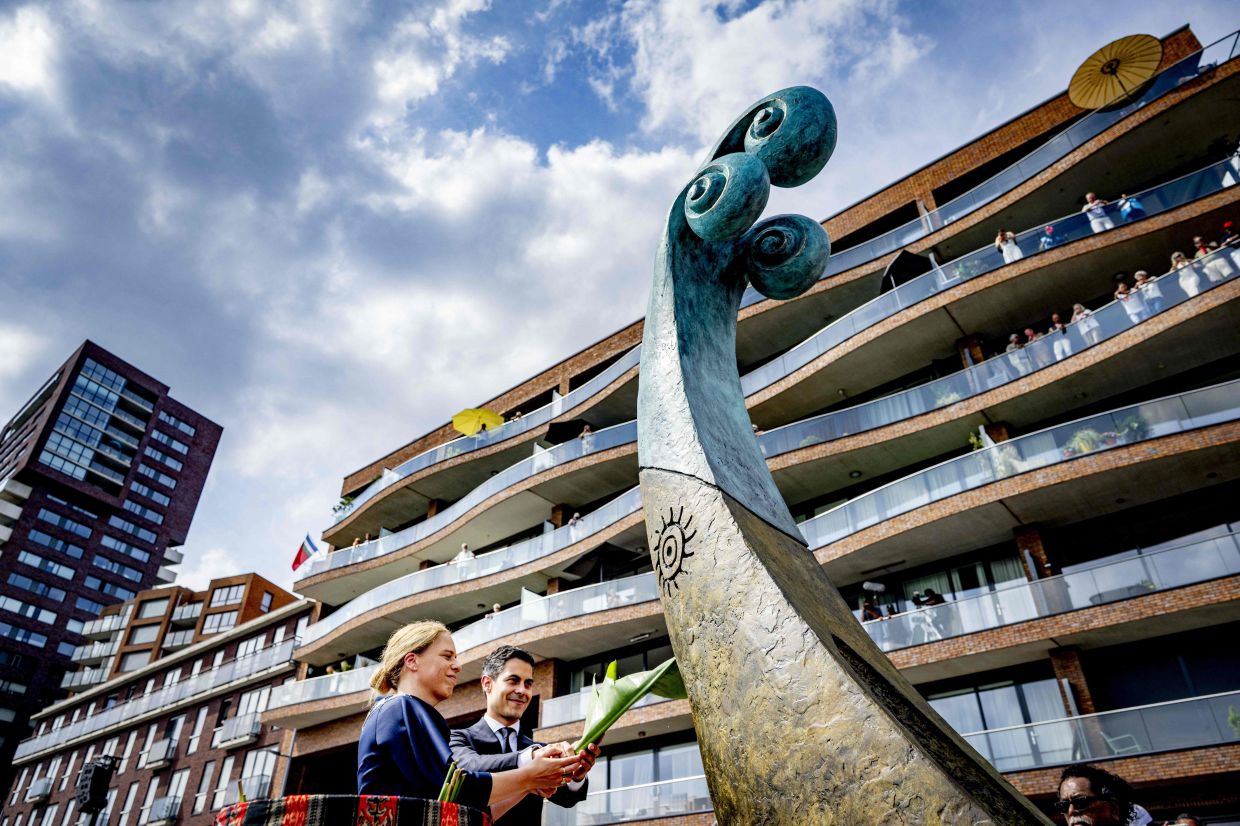
The monument unveiled at Lloydkade in Rotterdam carries profound symbolic weight, as this location represents the physical point where Moluccan suffering in the Netherlands began. The first transport ships carrying displaced Moloccans arrived at this very port, marking the beginning of their forced exile. By choosing this site for the memorial, Dutch authorities acknowledge the historical continuum of injustice from arrival to present day. The gathering of hundreds of community members, many of them clutching family photographs of deceased first-generation Moluccans, underscored the emotional significance of the moment and the persistence of family memories across generations separated by geography and time.
Jetten's carefully chosen words reflected an acknowledgment that symbolic gestures, while meaningful, cannot fully reverse historical wrongs. He explicitly recognised that an apology, however formal and sincere, cannot erase seven decades of inadequate housing, social abandonment, unfulfilled longing, and familial grief. The Prime Minister's statement represented a governmental acceptance of responsibility for failing a community whose vulnerability and displacement resulted directly from Dutch policy decisions. This acceptance stands in contrast to historical patterns in which governments seek to minimise or compartmentalise responsibility for colonial-era actions and their continuing consequences.
The apology carries particular resonance for Southeast Asian readers and policymakers given the region's complex colonial history and ongoing questions about historical justice and reparations. Malaysia and other ASEAN nations have navigated their own post-colonial transitions and confronted legacies of exploitation and displacement. The Dutch government's formal acknowledgment of its failures toward the Moluccan community sets a precedent, however limited, for how colonial powers might address historical injustices. It also reflects changing international norms regarding accountability for past wrongs, particularly those affecting vulnerable minority populations.
Yet the apology also highlights the limitations of formal recognition without substantive material restitution or reparatory programmes. For many Moluccans, words of regret mean little without corresponding efforts to address ongoing socioeconomic disparities, health inequities, and psychological trauma that persist within their community. The Dutch government's formal apology does not automatically translate into policy changes, funding for community development, or systematic efforts to address historical discrimination. The true measure of historical justice will depend on whether this ceremonial moment catalyses genuine institutional reform or remains merely a symbolic gesture intended to provide psychological closure while preserving the existing order.
For the Indonesian government, the Dutch apology also carries diplomatic implications. While Indonesia's official position on the Moluccan question evolved over decades, the formal Dutch acknowledgment of its historical responsibilities validates broader narratives about colonial exploitation and the lasting consequences of European imperial projects in Asia. The apology implicitly reinforces arguments that colonial powers bear ongoing responsibility for populations displaced by their policies, an assertion with potential ramifications for how other nations reckon with their imperial legacies and treatment of diaspora communities.
The gathering in Rotterdam represents a moment where historical memory, family trauma, and official state recognition converge. For Moluccans who have spent their entire lives in the Netherlands while maintaining cultural identity and emotional connection to homelands they may never see, the apology offers long-delayed validation of their suffering. Yet it simultaneously underscores the profound human costs of historical decisions made by governments far removed from the lived experiences of ordinary people. The monument will stand as a permanent reminder of both Dutch injustice and the resilience of a community that maintained identity and dignity despite decades of marginalisation and abandonment.