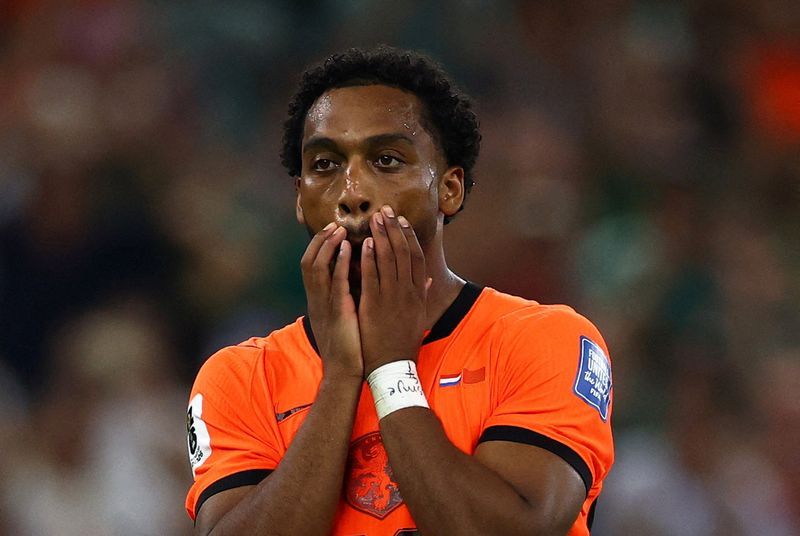
The Netherlands football association has pledged to pursue legal action against those responsible for a wave of racist harassment directed at three national team players following their World Cup elimination by Morocco. Justin Kluivert, Quinten Timber and Crysencio Summerville became targets of discriminatory vitriol on social media platforms after each failed to convert their penalty kicks during Monday's decisive shootout in Monterrey, which ended 3-2 in favour of Morocco. The last-32 encounter had been deadlocked at 1-1 after extra time before the dramatic penalty sequence determined the match outcome.
According to the KNVB's statement released Tuesday, the three players encountered not merely isolated instances of abuse but coordinated hateful commentary characterised as racist and discriminatory in nature. The association's swift response underscores the severity with which such behaviour is now viewed within football governance. Rather than treating the matter as a regrettable but inevitable consequence of competitive sports, Dutch football authorities have signalled their determination to pursue the matter through formal legal channels, sending a clear message that online abuse carries real consequences.
The KNVB has initiated the formal complaint process by referring the matter to 'Meld Online Discriminatie' (Report Online Discrimination), a Dutch platform specifically designed to combat online hate speech and discrimination. Once a complaint is lodged with this organisation, their legal team undertakes a comprehensive assessment to determine whether the posts and comments constitute criminal offences under Dutch law. This technical evaluation is crucial, as not all offensive speech meets the threshold for criminal prosecution, though the discriminatory nature of these particular comments suggests they likely will.
Should the legal evaluation confirm that punishable offences have occurred, the case then escalates to the Public Prosecution Service, which possesses authority to initiate formal criminal investigations. This multi-stage approach reflects how European nations, particularly in the Netherlands and neighbouring countries, have progressively tightened their legal frameworks around online hate speech in recent years. What might once have been dismissed as anonymous internet trolling now triggers genuine law enforcement responses, fundamentally altering the calculus for potential perpetrators.
This incident represents a recurring pattern within international football rather than an isolated incident. The trauma of penalty shootout defeats has previously provided ammunition for those inclined toward racist abuse. Most notably, England's Marcus Rashford, Bukayo Saka and Jadon Sancho endured similar torrents of racist harassment following their Euro 2020 final loss to Italy on penalties in 2021. That incident resulted in prosecutions, with two individuals receiving custodial sentences and another receiving a suspended sentence, demonstrating that authorities increasingly treat such behaviour as serious criminal conduct rather than harmless banter.
The England case established an important precedent that has influenced how football associations and law enforcement across Europe now respond to online abuse. In the weeks following the Euro 2020 final, British police conducted a broad investigation that led to multiple arrests as authorities pursued a comprehensive crackdown on hate speech directed at the three Black players. The visible consequences of those prosecutions have arguably influenced the KNVB's approach, which moves swiftly and decisively rather than hoping the matter will be forgotten.
For Malaysian and Southeast Asian readers, these developments carry particular significance given the region's ongoing struggles with online hate speech and the comparative underdevelopment of legal frameworks to combat cyberbullying and discrimination. While European nations have invested substantially in both legislation and enforcement infrastructure, many Southeast Asian countries still grapple with questions about how best to balance free speech protections with the need to prevent harassment. The Dutch and British precedents demonstrate that treating online abuse as a criminal matter, rather than merely a social media problem, can produce measurable results.
The KNVB's statement emphasised that discrimination fundamentally contradicts football's inclusive values and global reach. The association argued that whereas football uniquely brings together millions of people from diverse backgrounds, discrimination operates as its antithesis, fragmenting rather than uniting communities. This philosophical argument, though not strictly legal, reflects how sporting organisations increasingly frame their response to such incidents within broader narratives about sport's social responsibility and inclusive mission.
The penalty shootout itself was a testament to Morocco's exceptional World Cup campaign, which saw the African nation progress further than any African team had previously managed in the tournament's history. Yet the focus shifted rapidly from sporting achievement to the harassment of individual players, demonstrating how social media can instantaneously transform a disappointing moment into a platform for abuse. The three Dutch players, who in other contexts might simply be remembered as participants in a competitive match, instead become associated with online harassment they did not invite or deserve.
The investigation will likely proceed methodically through the Dutch legal system over coming months, during which prosecutors will determine the scale of the abuse and whether to bring charges against identified individuals. The visibility of these cases, coupled with growing prosecution rates, appears to be gradually establishing genuine deterrence effects. Potential abusers increasingly understand that anonymity online provides limited protection from real-world consequences, a development that many argue constitutes genuine progress in making digital spaces more respectful.
This episode also reflects broader discussions within football about player welfare and the psychological toll of missing crucial moments in high-pressure competitions. The intersection of competitive disappointment and online harassment creates a particularly toxic environment for athletes already experiencing the emotional aftermath of defeat. Addressing systemic racism within online spaces thus becomes not merely a matter of legal enforcement but of creating a sporting environment where players can compete without fear of targeted racial abuse.

