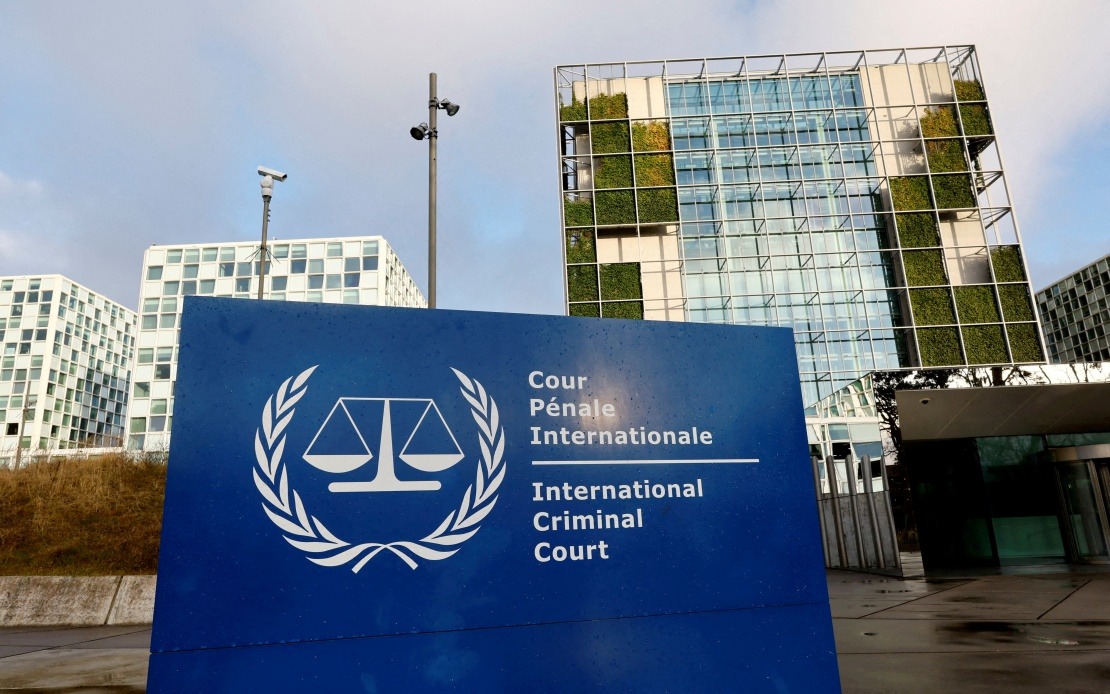
The Netherlands' leading legal academics have launched a pointed critique of American efforts to counter the International Criminal Court, characterising the campaign as a dangerous challenge to the international legal framework that underpins global justice. The controversy erupted after the US Department of State unveiled, on July 13, a comprehensive strategy designed to neutralise what Washington considers an unacceptable threat to its sovereignty and the protection of American military personnel and government officials operating abroad.
Amsterdam-based scholars view the American campaign as fundamentally misguided, warning that it represents precisely the kind of unilateral action that erodes respect for international institutions. Alette Smeulers, a professor specialising in international crimes at the University of Groningen, articulated the core concern: if powerful nations succeed in dismantling multilateral judicial bodies when those institutions prove inconvenient, the world slides inexorably toward a system where power, rather than law, determines outcomes. Such a transformation would represent a retreat from decades of painstaking effort to establish mechanisms for holding perpetrators of mass atrocities accountable on the international stage.
The US position rests on the argument that the ICC, headquartered in The Hague, poses an intolerable threat by asserting the legal authority to investigate, prosecute, and potentially imprison American service members and officials who act in the nation's interests. Washington contends that the court's jurisdiction over these individuals undermines American autonomy and exposes the country to politically motivated proceedings. This reasoning, however, obscures a fundamental misunderstanding of the ICC's actual operational constraints, according to Dutch legal experts.
Smeulers emphasised that the ICC operates under carefully circumscribed limitations that most international observers consider appropriate safeguards rather than overreach. The court possesses jurisdiction only over crimes classified as among the most serious in international law, and even then only when such offences occur within territories of countries that have ratified the Rome Statute or involve nationals of those signatory states. This jurisdictional framework represents a deliberate compromise between universal justice aspirations and respect for national sovereignty, negotiated painstakingly during the court's establishment.
The tension between Washington and the ICC has escalated markedly in recent months. In December of the previous year, the United States imposed sanctions targeting two ICC judges, characterising their actions as politically motivated manoeuvres specifically directed at Israel. That move signalled American willingness to employ economic coercion against judicial officials, a tactic that Kyra Wigard, assistant professor of law at Utrecht University, characterised as genuinely absurd within international relations norms. Wigard noted that sanctions traditionally serve as tools for addressing alleged terrorism or interstate warfare, not for punishing judges whose decisions governments find objectionable.
The implications of Washington's campaign extend far beyond the bilateral relationship between one nation and an international institution. American officials have reportedly indicated their intention to leverage diplomatic pressure on other countries, encouraging them to withdraw from the Rome Statute and terminate their ICC membership. Such pressure tactics could fundamentally undermine the court's legitimacy and operational capacity precisely when international justice mechanisms face unprecedented demands arising from ongoing armed conflicts and humanitarian crises across multiple continents.
For Southeast Asian nations, this development carries particular significance. Several countries in the region maintain different relationships with the ICC and international justice frameworks. The trajectory of American pressure against the court establishes a concerning precedent: if major powers can successfully coerce international institutions into compliance with their preferences, smaller nations face even greater vulnerability to similar tactics when their own interests diverge from those of powerful actors. The undermining of the ICC's independence and authority weakens protections for all nations, not merely the United States.
Smeulers warned that the American campaign could exert far-reaching consequences for the ICC's operational effectiveness and the broader architecture of international law. The potential withdrawal of nations from the Rome Statute would reduce the court's jurisdictional reach, fragment the international community's commitment to addressing mass atrocities through established legal channels, and create vacuums that alternative mechanisms—potentially less transparent and accountable—might fill. The erosion of faith in multilateral institutions proceeds through precisely such incremental steps, each one seemingly justified by particular national interests but collectively dismantling the foundations upon which international order rests.
The Dutch scholars' warnings reflect a broader concern among international law specialists globally: the legitimacy of international courts and tribunals depends fundamentally on the willingness of powerful nations to accept their decisions even when those rulings prove inconvenient. Once major powers begin systematically undermining such institutions through sanctions, diplomatic isolation, and coercive pressure, the entire framework becomes vulnerable. Smaller nations, lacking the capacity to resist pressure from superpowers, lose their recourse to neutral forums for advancing justice claims or resolving disputes according to consistent legal principles rather than raw power calculations.
The debate also illuminates deeper questions about how international justice should function in practice. Should protection of national interests always supersede commitments to universal accountability for serious crimes? Can governments maintain credibility on human rights issues while simultaneously attacking courts designed to enforce those rights? These philosophical tensions persist unresolved, but the practical impact of American pressure threatens to resolve them through institutional collapse rather than principled compromise. Dutch legal expertise, grounded in a nation that helped establish the modern international legal order, suggests that the costs of such collapse would prove substantial and enduring for the entire global community.

