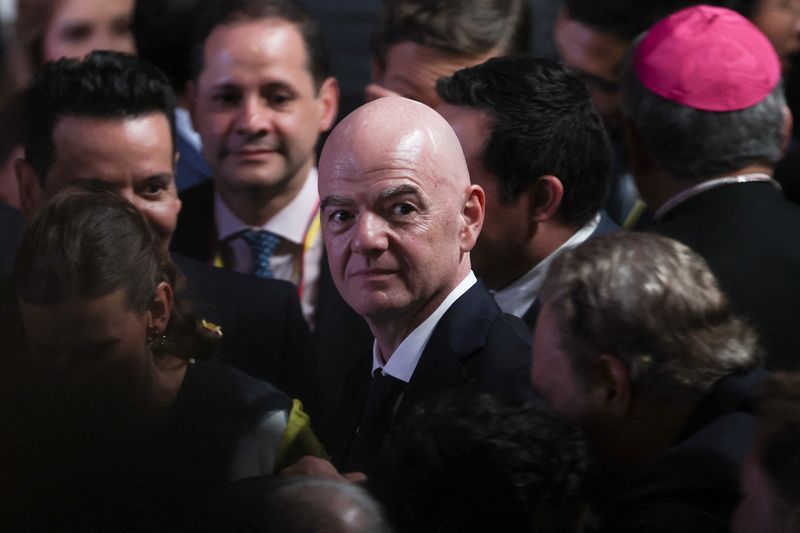
In a significant challenge to FIFA's leadership, the Royal Dutch Football Association (KNVB) has announced plans to convene an international summit in Amsterdam aimed at fundamentally restructuring the sport's global governing body. The announcement marks a sharp reversal in stance for the KNVB, a founding FIFA member since 1904, which now openly questions the fitness of President Gianni Infantino to lead the organisation beyond his current term.
The KNVB's statement, released on Sunday, emphasises that the issue extends well beyond a simple change in personnel at FIFA's helm. While the Dutch association explicitly calls for Infantino's replacement by 2027, it frames this as merely one component of a broader institutional transformation. The federation argues that FIFA's fundamental governance structures require dismantling and reconstruction to ensure the sport's integrity and equitable development globally. This distinction proves crucial, as it suggests that even a new president operating within FIFA's existing framework would be insufficient to address the deep-rooted concerns the KNVB has identified.
Infantino's re-election campaign takes place in March next year, but momentum is building among football's regional powerhouses to challenge his leadership. The trigger for this coordinated pressure stems from his controversial proposal to monetise FIFA's most prized assets by selling equity stakes to private investors, effectively allowing external parties to profit from World Cup tournaments and other marquee events. This attempted privatisation scheme provoked significant backlash from football's establishment, particularly among UEFA nations, setting the stage for what appears to be an orchestrated challenge to his authority.
What distinguishes the KNVB's position from typical political opposition within FIFA is its diagnosis of systemic dysfunction. The Dutch federation identifies excessive presidential power concentration as a core problem, noting insufficient institutional separation between the president's office and FIFA's administrative apparatus. This arrangement, the KNVB suggests, creates conditions for unilateral decision-making and accountability failures. The proposed Amsterdam summit would serve as a consultative forum to establish FIFA's future direction before identifying suitable leadership, reversing the traditional sequence of electing a president who then implements their vision.
The reform agenda outlined by the KNVB encompasses three pillars that reflect contemporary pressures on international sports governance. Enhanced checks and balances represent the first priority, directly addressing concerns about concentrated power. The second pillar integrates human rights and environmental sustainability into FIFA's decision-making framework, reflecting global expectations that major institutions account for social impact beyond their immediate purview. The third emphasises broader international cooperation, implicitly criticising FIFA's tendency to operate as a distant bureaucracy disconnected from its constituent member associations.
Financial redistribution constitutes perhaps the most pointed critique embedded in the KNVB's proposal. The federation advocates that FIFA should reinvest up to 90 percent of its distributable revenue into soccer development programmes. This emphasis on directing FIFA's considerable wealth—the organisation generates billions annually from broadcasting rights and commercial partnerships—towards grassroots development directly challenges the current financial model. It suggests that resources are being concentrated at the centre rather than dispersed to strengthen soccer across less wealthy confederations and developing nations where the sport struggles for institutional support.
The KNVB's framing deliberately counters the narrative that external pressure represents European self-interest masquerading as reform. By emphasising that this should not constitute "a European plan for the rest of the world," the Dutch federation attempts to position its initiative as genuinely multilateral. The call for collaboration with all 211 FIFA member associations and confederations from every region seeks to legitimate the reform effort as reflecting global consensus rather than UEFA's regional preferences. This rhetorical strategy proves essential for maintaining coalition support, particularly among African, Asian, and South American confederations whose backing would determine any challenge's viability.
Context from Infantino's own recent statements complicates the narrative. The FIFA president has argued that closing the financial gap between wealthy and struggling member associations represents FIFA's fundamental responsibility. Yet the KNVB implies that his privatisation proposal would actually worsen this disparity by funnelling additional wealth to external investors rather than redistributing it through the organisation. The contradiction between Infantino's stated commitment to financial equity and his proposed revenue model appears to have crystallised the KNVB's decision to withdraw support.
The KNVB's prior endorsement of Infantino in his previous election takes on particular significance in light of this reversal. The federation emphasises that its historical support was never absolute, suggesting that Infantino's actions during his current term—particularly the botched privatisation attempt—constituted a breach of implicit understandings about governance boundaries. This retrospective qualification allows the KNVB to position its current opposition as principled consistency rather than opportunistic politics.
UEFA's concurrent legal manoeuvres add institutional weight to the reform pressure. The European confederation is seeking permission from a United States federal court to obtain testimony and documents from FIFA entities based in Florida, materials intended for a prospective criminal complaint against Infantino in Switzerland. The simultaneity of the KNVB's governance reform proposal and UEFA's legal actions suggests coordinated strategy rather than independent initiatives, though both organisations maintain formal separation. For Malaysian and Southeast Asian observers, this institutional drama carries implications for how FIFA allocates development resources and shapes regional football's trajectory during the coming mandate period.
The proposed Amsterdam summit represents an attempt to establish new parameters for FIFA's operation before the March election rather than accepting the outcome and then seeking reform. This procedural innovation, if successful, would establish a template for constraining executive power through constituent consultation. The initiative's success depends on assembling sufficient member association support to make ignoring the summit's conclusions politically untenable for any eventual FIFA president, whether that proves to be Infantino or a replacement.

