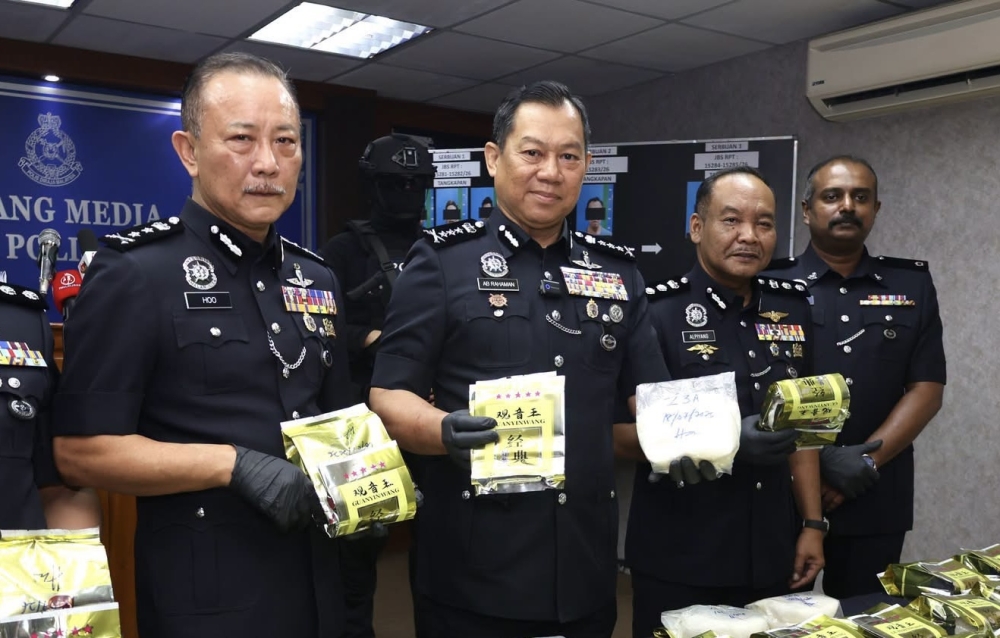
Police in Johor Bahru have successfully dismantled what authorities describe as a syndicate involved in the production and distribution of synthetic drugs, resulting in the arrest of eight individuals across multiple raids conducted throughout the district. Among those apprehended is a 16-year-old youth, making the case notable for its involvement of a minor in what police characterise as a significant drug trafficking operation. The scale and nature of the operation demonstrate the evolving tactics of drug networks in the state, which increasingly involve younger members and make use of everyday vehicles and family assets to evade detection.
The teenager's alleged involvement highlights a troubling trend in Southeast Asia's drug trade, where criminal organisations increasingly recruit young people to carry out distribution activities, banking on lighter sentences and perceived lower law enforcement attention toward minors. According to police statements, the youth made use of his grandfather's vehicle as a mobile distribution point, turning what appears to be an ordinary family car into an operational asset for the syndicate. This approach exemplifies the adaptation strategies employed by contemporary drug networks that seek to exploit family connections and everyday circumstances to obscure their illicit activities from authorities.
The comprehensive nature of the police operation—involving simultaneous raids across multiple locations—suggests that law enforcement had undertaken substantial investigative work prior to the arrests. Such coordinated enforcement actions require significant intelligence gathering, surveillance, and inter-agency coordination to be effective. The decision to execute multiple raids suggests that authorities had identified specific locations linked to production, storage, or distribution activities associated with the syndicate. The timing and execution of such operations are critical to preventing suspects from destroying evidence or fleeing jurisdiction.
Synthetic drugs have become an increasingly significant concern across Malaysia and the broader Southeast Asian region. These substances, which include designer drugs and controlled analogues of established narcotics, present distinctive challenges for law enforcement and public health authorities. The production of synthetic drugs typically requires less sophisticated infrastructure than traditional drug manufacturing, potentially allowing operations to establish themselves in residential areas or seemingly innocuous locations. The relative ease of production compared to heroin or cocaine refinement has contributed to the proliferation of synthetic drug networks throughout urban and semi-urban areas in Malaysia.
The arrest of eight individuals suggests that police have successfully dismantled not merely a retail distribution operation but rather an organised network with multiple operational layers. Law enforcement sources typically differentiate between street-level dealers and higher-level organisational members involved in production, wholesale distribution, and financial management. The breadth of arrests implies that the investigation likely progressed from initial intelligence regarding street-level activity through to identification of supply chain participants and potentially production facilities. Such comprehensive takedowns require meticulous documentation and evidence collection to ensure that prosecutions can proceed effectively through Malaysia's courts.
The use of family vehicles represents a common but effective tactic employed by drug networks seeking to maintain operational security. A private vehicle, particularly one registered to an elderly family member, attracts less suspicion than vehicles typically associated with suspicious activity. Police checkpoints and routine traffic enforcement operations may prioritise vehicles matching particular profiles, potentially allowing family cars to pass through control points without detailed inspection. The exploitation of family assets also complicates investigation and prosecution, as it introduces questions regarding awareness, consent, and complicity of vehicle owners, though in this case the grandfather's involvement or knowledge remains unclear from available information.
For Malaysian law enforcement agencies, the incident underscores the necessity of sustained intelligence operations and community engagement in identifying drug trafficking networks before they expand significantly. Police have indicated that much of their success derives from information provided by members of the public, suggesting that community vigilance remains an essential component of drug suppression efforts. The location of operations in residential areas means that neighbours, local merchants, and family members often become aware of suspicious activity before formal law enforcement becomes involved. Encouraging citizens to report such activities, while protecting informant identities, remains a critical operational requirement.
The involvement of a minor in the distribution chain carries significant implications for juvenile justice policy and rehabilitation frameworks in Malaysia. While the youth will face legal consequences, questions inevitably arise regarding how he became involved with the syndicate, whether recruitment involved coercion or inducement, and what rehabilitation opportunities may exist following adjudication. Child welfare advocates have long emphasised that young people involved in drug distribution often become victims themselves, subjected to exploitation, threats, and dependency on narcotics. Effective prevention requires not merely criminal prosecution but also understanding the circumstances that made the teenager vulnerable to recruitment.
The Johor Bahru operation contributes to broader efforts by Malaysian authorities to disrupt supply chains and constrain the availability of synthetic drugs within the state and region. Johor, as a major commercial and transportation hub with significant cross-border activity, has historically served as a transit point and distribution centre for narcotics destined for Malaysian consumption or further export. The geographic proximity to Singapore and Thailand, combined with existing smuggling infrastructure, makes the state a natural focus for drug trafficking organisations. Police operations that successfully identify and dismantle local distribution networks therefore carry significance beyond immediate crime reduction, potentially disrupting larger regional supply chains.
Looking forward, the case raises important questions regarding prevention and early intervention strategies targeting vulnerable young people in communities adjacent to known trafficking activity. Schools, social services, and community organisations working in coordination with law enforcement can develop programmes designed to identify at-risk youth and provide alternative opportunities and support before criminal recruitment becomes possible. The expense associated with prevention programmes often appears substantial in budgeting discussions, yet the long-term societal costs of addiction, incarceration, and lost human potential vastly exceed prevention expenditures.

