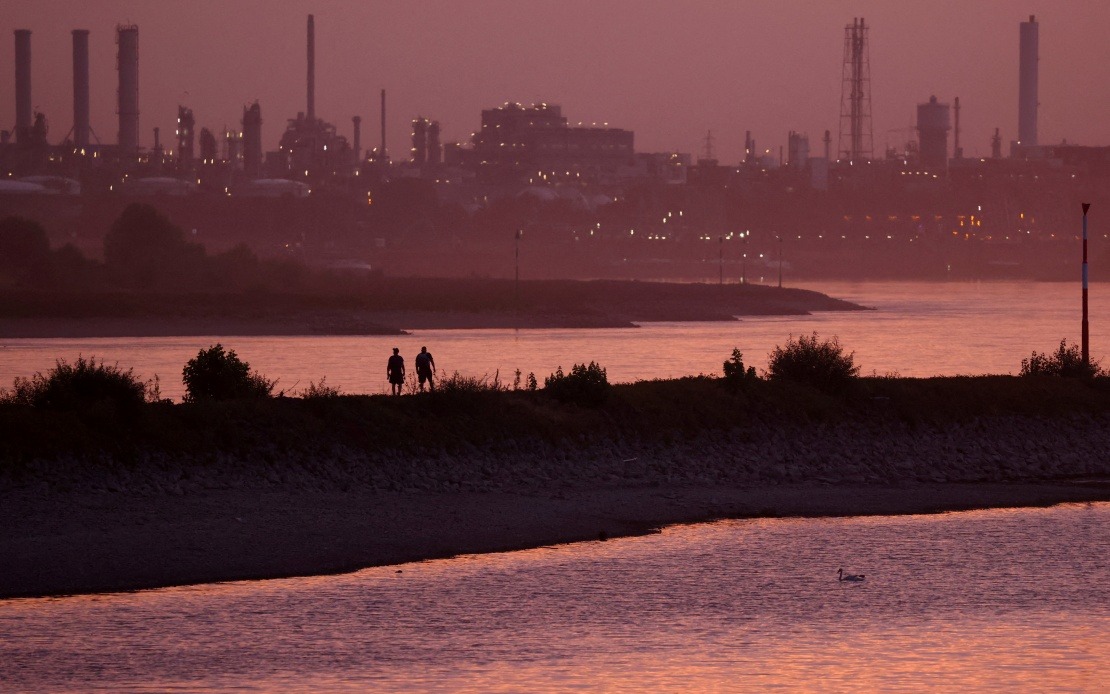
German explosives specialists are preparing to safely neutralise a sizeable World War II-era aerial device uncovered near Cologne after the Rhine River dropped to historically low water levels. The discovery, made on Wednesday evening at Rheinpark, highlights how environmental stress and climate-driven drought conditions are revealing long-buried remnants of Europe's wartime past, sometimes with dangerous consequences for modern communities.
The 500-kilogramme bomb, a United States aerial munition, was spotted as water levels fell dramatically across Germany's most critical inland shipping route. Thursday's gauge measurement at Cologne reached just 67 centimetres—equalling a record low set only days prior—with forecasts suggesting further drops to 66 centimetres. Such extreme conditions are creating unprecedented challenges for navigation, commerce, and public safety across the region.
City officials have ordered the evacuation of approximately 360 people living and working within a 400-metre safety perimeter surrounding the bomb site. The affected population includes residents of a retirement home in the vicinity, alongside personnel at the nearby RTL television studios, a major regional broadcaster. Authorities have not yet released the precise timing of the defusing operation, suggesting the scale of preparation required for such a delicate procedure.
The exposure of this bomb illustrates a broader pattern emerging across Europe as prolonged heat waves and severe droughts create environmental conditions not seen in decades. As water recedes from major river systems, wartime debris—unexploded ordnance, military hardware, and other artefacts—surfaces and poses fresh risks to populations living along these waterways. German authorities have considerable experience managing such discoveries, yet each incident requires careful coordination between emergency services, evacuation teams, and specialist personnel.
Beyond the immediate safety concern, the bomb discovery underscores the persistent economic disruption plaguing the Rhine. Reduced water depths have already forced commercial shipping operators to significantly decrease cargo loads, undermining logistics chains that connect industrial zones across Germany, the Netherlands, and surrounding regions. Every centimetre of drop translates to reduced profitability for barge operators and delays for time-sensitive freight.
Hydro-meteorological forecasts offer little comfort to businesses and communities dependent on the Rhine's stability. Water authorities report that levels are expected to rise only modestly in the coming days, with no prospect of substantial recovery materialising soon. Extended drought conditions and elevated temperatures across Central Europe suggest that the Rhine may remain problematic for navigation and other water-dependent activities through the remainder of the dry season.
For Southeast Asian observers and Malaysian readers, the Rhine situation provides instructive parallels regarding climate vulnerability in developed economies. Major river systems—including Malaysia's own Rajang and Klang Rivers, as well as shared waterways across Southeast Asia—face comparable stresses from changing precipitation patterns and temperature extremes. The Rhine's challenges demonstrate that even wealthy, technologically advanced nations struggle when environmental systems exceed historical norms, a sobering consideration for developing regions with fewer resources for adaptation and crisis management.
The incident also reflects how history intersects with contemporary environmental crises in unpredictable ways. Approximately eighty years after World War II ended, the landscape continues yielding dangerous surprises. Climate change is not merely an abstract future threat; it actively reshapes present-day risks by exposing hazards that previous generations buried or left submerged. Communities worldwide must increasingly prepare for such discoveries as environmental baselines shift.
German authorities possess well-developed protocols for bomb disposal, a consequence of managing thousands of unexploded devices across the nation since 1945. However, the frequency of discoveries may increase if drought episodes become more common. This scenario places additional demands on technical expertise, emergency response capacity, and public resources already stretched by other climate-related challenges.
The Cologne discovery also raises questions about documentation and risk mapping. Do authorities maintain comprehensive records of wartime bombing locations along the Rhine? Can predictive modelling help identify likely exposure zones as water levels decline further? Proactive identification of vulnerable areas might allow preemptive action before bombs emerge without warning, reducing evacuation disruptions and safety risks.
For shipping interests, the period ahead promises continued operational constraints. Until sustained rainfall returns and water levels normalise, commercial navigation will remain compromised. Logistics planners must anticipate extended timelines and reduced capacity, factoring in potential further discoveries that might necessitate temporary channel closures for safety operations.
As this bomb defusing operation unfolds near Cologne, it serves as a reminder that environmental stress creates cascading consequences across multiple domains—public safety, commerce, infrastructure, and historical memory. The Rhine's predicament, driven by broader climatic shifts, demands attention not only from German policymakers but from all societies dependent on major river systems for economic vitality and livelihood security.

