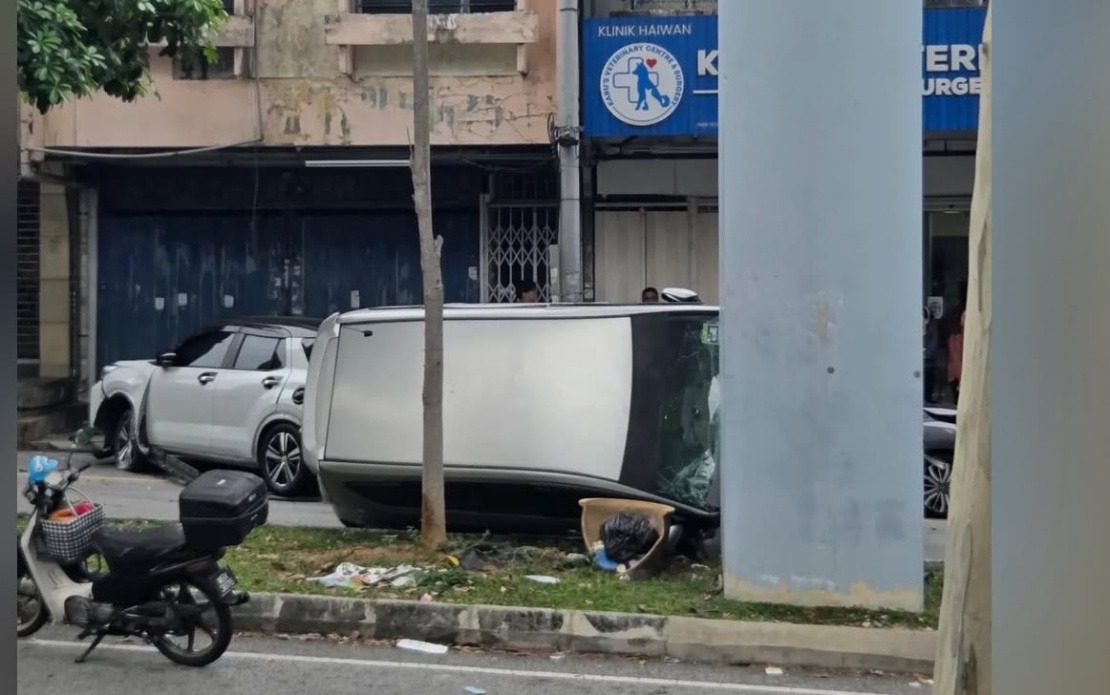
A medical emergency transformed an ordinary Monday morning commute into a multi-vehicle collision in the Cheras area of Kuala Lumpur, when a 28-year-old driver suddenly suffered a seizure while at the wheel. The incident, which unfolded at approximately 8.30 am along Jalan Midah 1, saw the driver's BMW 320i veer sharply off the roadway and strike six vehicles that had been parked along the left shoulder of the street. According to Kuala Lumpur Traffic Investigation and Enforcement Department (JSPT) chief ACP Mohd Zamzuri Mohd Isa, the young man was en route from his residence to his workplace in Taman Midah 1 when the medical crisis occurred, leaving him unable to maintain control of the vehicle.
The circumstances surrounding the crash proved fortunate in one significant respect: all six vehicles that were struck had been vacant at the time of impact, with no drivers or passengers present to sustain injuries. The parked cars belonged to four women between the ages of 29 and 43, a 39-year-old man, and represented one company vehicle. Fortunately, the collision resulted in material damage only, with no physical harm reported to any individuals at the scene. ACP Mohd Zamzuri emphasised in his official statement that the absence of occupants in the stationary vehicles prevented what could have been a far more serious incident with potential casualties.
Investigators discovered that the BMW driver's medical condition was not entirely unexpected, as preliminary inquiries revealed he had experienced seizures intermittently for approximately a decade. This prolonged medical history raises questions about driving practices among individuals managing chronic neurological conditions. Nonetheless, law enforcement conducted standard procedures at the scene, including a breathalyser examination that returned a zero reading of 0 milligrammes per 100 millilitres, conclusively ruling out alcohol or drug impairment as contributing factors to the accident. The negative result clarified that the driver's loss of vehicle control stemmed purely from his sudden medical episode rather than any substance-related impairment.
The incident highlights the critical intersection between individual health management and public road safety in Malaysia's urban centres. Drivers with diagnosed seizure disorders face a complex legal and ethical landscape: while many remain capable of safe driving with appropriate medical supervision and treatment compliance, the unpredictability of seizures presents genuine risks to other road users. This case serves as a stark reminder that invisible medical conditions can manifest dangerously behind the wheel, potentially affecting not only the afflicted driver but innocent bystanders and parked vehicle owners.
From a regulatory perspective, the Kuala Lumpur Traffic Investigation and Enforcement Department has classified the matter under Rule 10 of LN 166/59, suggesting a procedural framework distinct from typical traffic violations. This classification likely reflects the department's assessment that the incident resulted from a medical emergency rather than negligent or reckless driving conduct. The ongoing investigation indicates that authorities are conducting a thorough examination of the circumstances, including reviewing whether the driver had previously disclosed his seizure history to relevant authorities, such as the Road Transport Department, when obtaining or renewing his driving licence.
The specific location of Monday's incident—Jalan Midah 1 in Cheras—places it within one of Kuala Lumpur's established residential neighbourhoods, where parked vehicles along roadsides represent a common feature of daily urban life. The populated nature of such areas means that while this particular collision occurred without injuries, similar medical emergencies could yield vastly different outcomes depending on timing, traffic density, and the presence of pedestrians or occupied vehicles. This geographical context underscores how medical episodes at the wheel pose variable but persistent risks across the city's suburban zones.
Public safety officials continue appealing for information from witnesses or other persons with knowledge of the collision. The Tun H.S. Lee traffic police station, reachable at 03-2071 9999, has been designated as the primary contact point for individuals wishing to assist the investigation. Authorities have also indicated that nearby police stations stand ready to receive witness statements, reflecting a comprehensive approach to gathering evidence and clarifying the exact sequence of events leading to the six-vehicle collision. This transparent invitation for community cooperation signals official confidence in resolving procedural and factual questions surrounding the incident.
For Malaysian motorists and the broader driving public, the Cheras incident carries practical implications regarding health disclosure and driving safety. Vehicle owners and operators are reminded that certain medical conditions—particularly those involving loss of consciousness, seizures, or sudden incapacitation—must be reported to the Road Transport Department, and may necessitate restrictions on driving privileges or mandatory medical reviews. While this particular driver's decade-long seizure history raises questions about prior disclosure and management, the incident demonstrates why transparency about health conditions remains essential to protecting both individual drivers and other road users.
The investigation's ongoing status suggests that further details may emerge regarding the driver's medical management, his previous reporting of his condition to authorities, and the precise circumstances that led to the seizure manifesting at that specific moment. Such inquiries serve dual purposes: they contribute to understanding this particular case while also generating data that helps traffic authorities and public health agencies identify patterns and implement preventive measures across Malaysia's broader driving population. The outcome of these investigations could inform future policy discussions about medical fitness-to-drive assessments and the responsibilities of individuals with chronic neurological conditions.

