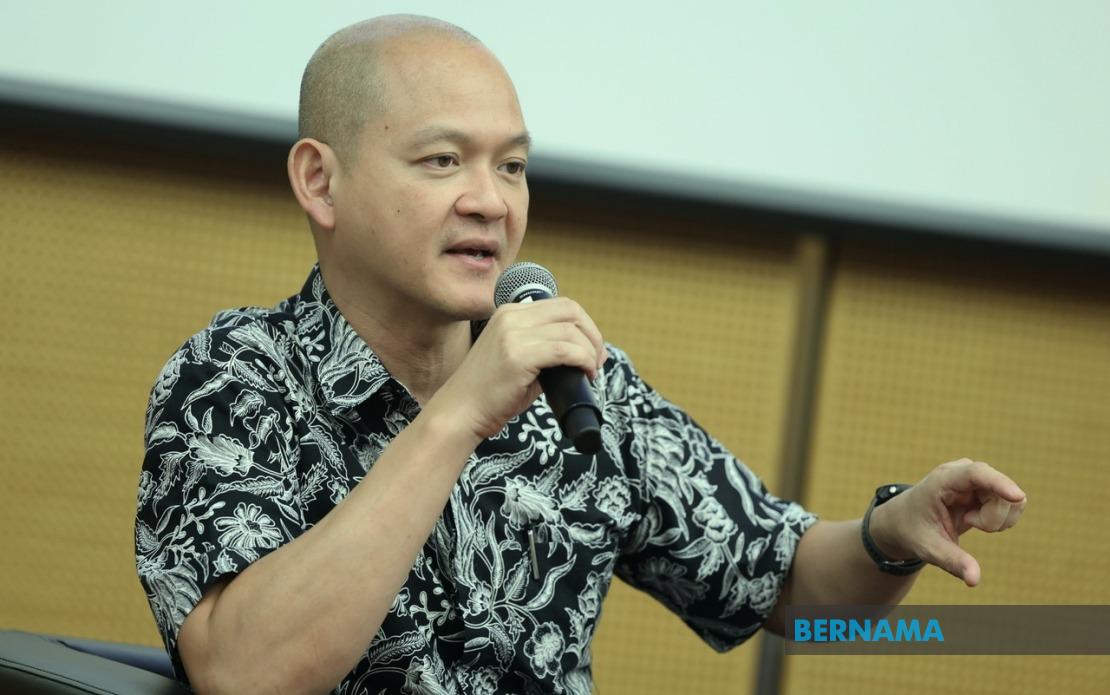
Dr Ong Kian Ming, the former Member of Parliament for Bangi, has formally ended his decade-long membership with the Democratic Action Party, citing his intention to pursue alternative avenues of public service. The announcement came through a Facebook post on August 31, marking the conclusion of a significant chapter in Malaysian opposition politics that had spanned twelve years since his initial party affiliation in 2012.
The departure was communicated directly to senior DAP leadership, including party Secretary-General Anthony Loke Siew Fook and National Organising Secretary Khoo Poay Tiong. While Ong stopped short of detailing specific reasons for his exit, his decision represents a notable shift for a figure who occupied prominent positions within the party's hierarchical and electoral structures during the Pakatan Harapan administration and the subsequent period of opposition consolidation.
Ong's trajectory within DAP encompassed multiple layers of political engagement. He served as Member of Parliament for Serdang between 2013 and 2018, representing the constituency during the crucial 2013 general election held under Barisan Nasional governance. His parliamentary tenure was followed by a relocation to the Bangi constituency, where he retained his seat in the 2018 electoral exercise that brought Pakatan Harapan to federal power for the first time in Malaysian history.
Beyond legislative responsibilities, Ong had held executive ministerial rank as Deputy Minister of International Trade and Industry from 2018 to 2020, positioning him within the economic and trade portfolio during a transitional period for Malaysian governance. This appointment reflected the confidence placed in him by the Harapan leadership at a juncture when the coalition was navigating fresh policy directions and international trade relationships.
His internal party responsibilities demonstrated trust among the DAP central leadership. He served as an appointed member of the Central Executive Committee between 2019 and 2022, granting him participation in the party's highest decision-making body. Additionally, he maintained elected membership on the DAP Selangor state committee from 2018 through 2024, indicating sustained engagement with one of the party's most strategically important state structures.
The Bangi seat itself had undergone electoral challenges in recent years, culminating in Ong's loss of parliamentary representation in 2022. This electoral setback may have provided a natural inflection point for reassessing his political trajectory. The shift from active parliamentary membership to grassroots party work in Selangor represented a gradual scaling back of formal responsibilities within DAP structures.
Significantly, Ong explicitly stated that he does not contemplate joining an alternative political party in the foreseeable future. This declaration distinguishes his departure from the typical pattern of Malaysian opposition politicians who transition between parties or seek realignment with emerging political formations. His statement represents an uncommon choice in Malaysian political culture, where intra-party mobility remains a defining characteristic of competitive politics.
Equally noteworthy is his commitment to abstain from electoral competition in the forthcoming general election cycle. By ruling out candidacy for GE16, Ong is effectively removing himself from the electoral arena entirely, a decision that contrasts sharply with many contemporary politicians who maintain ambitions for renewed representation. This withdrawal from electoral politics suggests a deliberate recalibration of priorities rather than a temporary disaffection with party machinery.
Ong indicated his intention to contribute meaningfully to national interests through alternative channels beyond formal party structures and electoral participation. This cryptic reference to future engagement opens interpretive possibilities ranging from academic contributions to policy advisory roles, business sector involvement, or civil society activism. His academic background and technical expertise in economics and trade policy position him for various institutional roles outside party politics.
The timing of this resignation during the political calendar carries implications for DAP's internal equilibrium. Ong's departure removes a figure with substantial parliamentary experience and ministerial tenure from the party's visible leadership cohort. However, given his recent electoral loss in Bangi and scaled-back party responsibilities, the immediate practical impact on DAP's operational capacity may be limited compared to the symbolic significance of his exit.
For Malaysian opposition politics broadly, Ong's decision reflects a particular strain within the DAP and wider Pakatan Harapan structures. The coalition's return to opposition status following 2020 has precipitated various reassessments among senior figures regarding continued involvement in electoral competition. Ong's choice to withdraw entirely from this contest suggests dissatisfaction with opposition prospects or a fundamental reorientation of personal priorities following his 2022 electoral loss.
The implications for Selangor politics warrant consideration, given Ong's continuing committee membership in the state DAP structure until 2024. His departure removes an experienced voice from party deliberations at the state level, though Selangor remains controlled by a DAP-led coalition that continues to function effectively in electoral terms. The loss of his expertise in international trade and economic matters may necessitate redistribution of portfolio oversight responsibilities within Selangor DAP circles.
Ong's exit underscores the broader challenge facing Malaysian opposition coalitions in retaining experienced personnel when electoral prospects dim and advancement opportunities contract. His choice to pursue non-partisan engagement represents one response to these structural pressures. Whether his departure signals a deeper malaise within DAP's organizational capacity or represents an isolated reassessment by an individual figure remains to be seen as the political landscape continues to evolve toward GE16.

