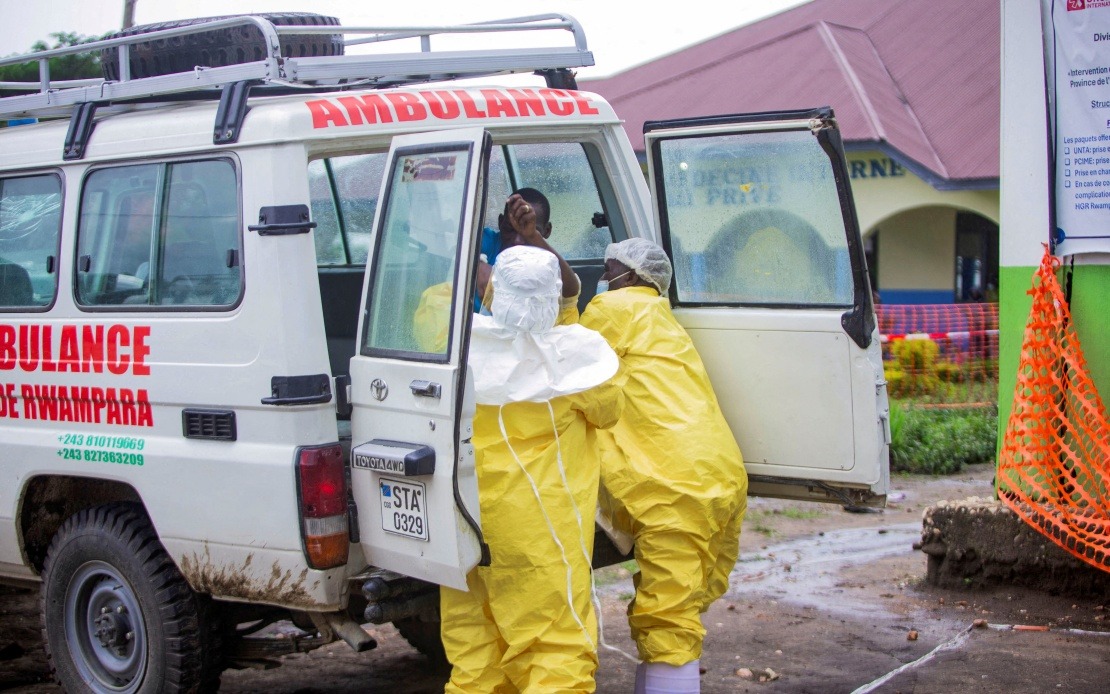
The Democratic Republic of the Congo continues to grapple with a widening Ebola epidemic that has now claimed 672 lives among 1,873 confirmed cases spread across five provinces. According to data released by the country's health ministry on Sunday, the outbreak triggered in May has progressively extended its reach into new territories, signalling fresh challenges for containment efforts in the vast central African nation. The situation reflects both the virus's capacity to traverse provincial boundaries and the difficulties authorities face in tracking transmission chains across densely populated regions affected by ongoing instability.
The five affected provinces identified in the latest epidemiological report are Ituri, North Kivu, South Kivu, Haut-Uele and Tshopo. The inclusion of Haut-Uele and Tshopo marks a significant development, as these regions were recorded as affected areas for the first time in the national surveillance system. Their emergence in the official count underscores how the Bundibugyo ebolavirus variant continues to find new population centres, despite control measures implemented since the outbreak was formally declared on May 15.
Investigative findings reveal that the newly detected cases in Haut-Uele and Tshopo originated through epidemiological connections to Ituri province, the original epicentre of the crisis. The pathways of transmission involve direct contact with infected individuals as well as population movements between these regions. This pattern of spread highlights a critical vulnerability in containment strategies: the natural human mobility patterns across provincial lines, which can rapidly transport the virus to areas where surveillance systems may be less robust or where community awareness of the disease remains limited.
The healthcare infrastructure supporting response efforts is operating under substantial strain. Current figures indicate that 763 patients are either isolated or hospitalised across treatment facilities, while bed occupancy rates have climbed to 95.1 percent. These figures suggest that health systems are approaching saturation at the facility level, a development that could severely compromise care quality and increase mortality risk if case numbers continue their upward trajectory. The pressure on hospital infrastructure also raises concerns about the ability to isolate new suspected cases promptly.
Among the broader caseload, recovery statistics offer a degree of cautious perspective. The health authorities have documented 306 individuals who have successfully recovered from infection, demonstrating that a proportion of patients do overcome the disease with appropriate medical intervention. However, this recovery figure pales against the confirmed death toll, reflecting the exceptional lethality of the Bundibugyo variant in question. Additionally, 299 suspected cases remain under investigation, with 91 deaths recorded among this cohort, indicating that the true disease burden may exceed currently confirmed figures as diagnostic confirmation processes continue.
The Bundibugyo ebolavirus responsible for this outbreak represents one of several known Ebola species, though it typically presents lower case fatality rates than some other variants. The fact that this particular strain has generated such a high mortality count—approaching 36 percent of confirmed cases—suggests either that the affected population faces particular vulnerability factors or that the strain demonstrates heightened virulence in this specific context. Understanding these epidemiological peculiarities remains critical for tailoring public health responses and preparing regional neighbours for potential cross-border spread.
For Malaysia and other Southeast Asian nations, this outbreak serves as a reminder of the unpredictable nature of viral threats in an interconnected world. The Democratic Republic of the Congo's geographic distance provides some buffer, yet the region's ongoing economic and diplomatic ties mean that monitoring disease developments remains prudent. Airlines operating routes to central Africa and Malaysian healthcare institutions treating international patients should maintain heightened vigilance for potential importation of cases, though current transmission appears confined to the affected provinces.
The continuation of new provincial introductions suggests that the outbreak has not yet reached a turning point despite months of response activities. Authorities will need to strengthen cross-provincial coordination to prevent further geographic expansion while addressing the underlying factors driving transmission in already-affected areas. The high bed occupancy rates and substantial numbers of patients requiring treatment indicate that medical capacity—both in terms of physical infrastructure and trained personnel—remains a critical bottleneck that could undermine response effectiveness if not urgently addressed.
Regional health organisations monitoring the situation should prepare contingency plans for scenarios involving escalation or potential spread beyond Congo's borders, particularly affecting neighbouring countries with porous boundaries and limited surveillance capacity. The epidemiological linkages identified between provinces suggest that strengthening cross-border disease surveillance networks in central Africa could yield significant benefits for early detection of future outbreaks. Until case incidence demonstrably declines and no new provincial introductions are recorded over an extended period, public health authorities across the region should maintain heightened alertness and ensure their infectious disease protocols remain current and appropriately resourced.

