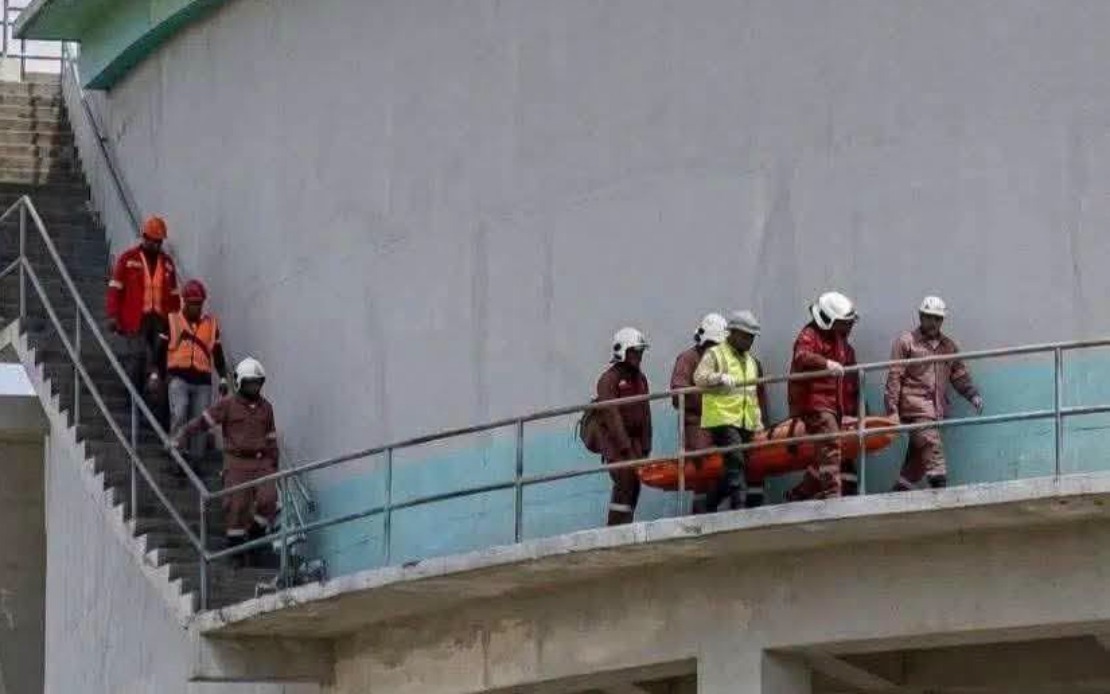
The Department of Occupational Safety and Health (DOSH) has launched a formal investigation into a workplace fatality that claimed the life of an industrial trainee conducting water tank maintenance work at Menara Saujana Perdana 1 in Sungai Buloh, Selangor. The tragedy occurred on June 16, marking another grim reminder of the hazards present in confined space operations across Malaysia's industrial and commercial sectors.
According to DOSH director-general Hazlina Yon, investigators from the department's Selangor office have already conducted an initial site inspection and implemented protective measures to preserve evidence. A formal notice has been issued to prevent any unauthorised interference with the accident location, a standard protocol that underscores the gravity with which authorities approach workplace fatalities. The investigation is proceeding methodically, with witness statements being collected as part of a comprehensive fact-finding exercise that will determine whether regulatory violations contributed to the incident.
The inquiry is being conducted under the purview of Sections 15, 17 and 18 of the Occupational Safety and Health Act 1994, legislation that establishes the legal framework governing workplace safety in Malaysia. These provisions delineate the responsibilities incumbent upon employers, self-employed operators and other relevant parties to safeguard the physical wellbeing and welfare of their workforce. Should the investigation uncover breaches of occupational safety standards, DOSH has indicated its readiness to pursue enforcement action commensurate with the violations identified.
Confined space work represents one of the most hazardous categories of industrial activity, a reality that Hazlina underscored in her statement. Tank cleaning and maintenance operations demand rigorous adherence to established safety protocols, beginning with the procurement of appropriate work permits prior to any personnel entry. Employers are obligated to implement comprehensive control measures designed to mitigate atmospheric, physical and biological risks inherent to such environments before workers are permitted access.
The regulatory framework places substantial onus on management to conduct thorough risk assessments before commencing any operation, particularly those classified as high-risk. This obligation extends beyond mere paperwork compliance; employers must translate risk identification into concrete preventive measures that are communicated to and understood by all personnel involved. The absence of adequate risk assessment represents a critical failure that often precedes workplace disasters, a pattern that has emerged across multiple fatal incidents in the region.
Industrial trainees occupy a particularly vulnerable position within workplace hierarchies, and the regulations accordingly impose heightened responsibilities on employers engaging such personnel. All trainees and new workers assigned to dangerous tasks must receive comprehensive occupational safety and health training tailored to the specific activities they will perform. This instruction must be accompanied by detailed safety briefings that explain hazard identification, procedural compliance and emergency response protocols. Critically, workers must be supervised by competent personnel throughout their duties, individuals who possess both technical knowledge and the authority to halt unsafe practices.
The emphasis on competent supervision reflects an understanding that training alone proves insufficient; active oversight prevents the normalisation of shortcuts and corner-cutting that frequently precipitates accidents. Workers often experience peer pressure or time pressures that tempt them to bypass safety procedures, making consistent supervisory vigilance essential to preventing such lapses. The regulatory framework essentially acknowledges that human factors remain the most unpredictable variable in workplace safety calculations.
For Malaysian employers and contractors, this incident and DOSH's accompanying guidance carry significant implications. Organisations engaged in facility maintenance, construction, manufacturing and related sectors must now anticipate heightened regulatory scrutiny of their confined space operations. Compliance officers should immediately audit their current practices against the standards articulated by DOSH, particularly regarding permit systems, atmospheric monitoring, rescue equipment and supervisor qualifications. Non-compliance discovered through regulatory audits following a fatality carries reputational and legal consequences far exceeding the costs of preventive investment.
The regional context further amplifies these concerns. Across Southeast Asia, occupational safety standards remain inconsistently enforced, creating competitive pressures that tempt operators to cut corners in jurisdictions where oversight is perceived as lax. However, Malaysia's establishment of a dedicated regulatory body with investigation and enforcement capabilities distinguishes it from less developed safety regimes. This relative institutional strength creates an opportunity for Malaysian employers to position themselves as regional safety leaders, providing competitive advantage in contracts with multinational corporations that maintain rigorous safety standards.
Vendor and contractor management emerges as another critical vulnerability area highlighted by DOSH's emphasis that employer responsibility extends to all workers on site, regardless of employment status. Organisations frequently subcontract dangerous work to smaller operators lacking adequate safety infrastructure, then claim distance from resulting incidents. This accountability-shifting represents precisely the type of practice that regulations increasingly target. Forward-thinking organisations should implement pre-qualification safety audits for all contractors, require proof of insurance and training, and maintain supervisory oversight of subcontracted work.
The investigation's outcome will likely yield insights into systemic failures that contributed to this particular tragedy, potentially revealing whether the victim received adequate training, whether required permits were obtained, whether atmospheric monitoring occurred and whether appropriate rescue equipment was available. These details, once publicised through DOSH's enforcement actions or recommendations, will establish de facto industry standards that other operators must follow or risk exposure to similar regulatory action.
Moving forward, the occupational safety landscape in Malaysia appears to be tightening rather than relaxing. DOSH's proactive stance on confined space work, combined with Malaysia's relatively robust legal framework, suggests that organisations cannot rely on regulatory indifference to protect them from accountability for preventable fatalities. The tragic loss of a young industrial trainee represents a preventable disaster, and regulators have indicated their determination to ensure that similar circumstances do not claim additional lives. Employers who view safety compliance as a burdensome cost rather than a fundamental operational requirement face mounting legal, financial and reputational risks.