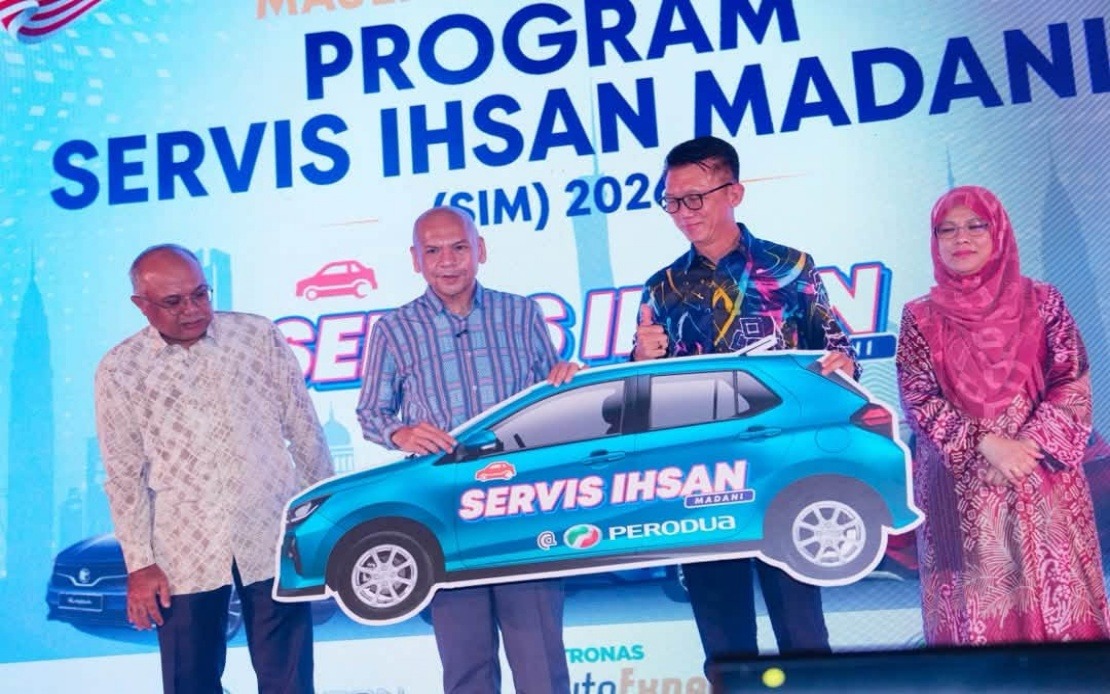
The Ministry of Domestic Trade and Cost of Living has broadened its vehicle maintenance support initiative to encompass Malaysia's domestic automotive brands as part of the Payung RAHMAH MADANI framework. Minister Datuk Armizan Mohd Ali announced that motorists seeking maintenance services will now qualify for an RM70 subsidy when utilising designated facilities run by Perodua, Proton, and PETRONAS AutoExpert, contingent on specific programme requirements.
The infrastructure supporting this expanded initiative spans a substantial network across the nation. The rollout encompasses 531 service outlets in total, distributed across the three participating operators: Perodua operates 221 centres, Proton maintains 186 facilities, and PETRONAS AutoExpert contributes 124 workshops. This geographic spread ensures accessibility for vehicle owners in urban and regional areas alike, reducing the likelihood of exclusion based on location alone.
Access to the subsidy has been deliberately streamlined through digital channels. Vehicle owners interested in claiming the RM70 benefit must make reservations through dedicated mobile applications operated by each service provider. This digital-first approach aligns with Malaysia's broader push toward e-governance and reflects changing consumer preferences for online transaction management.
The expansion represents a calculated policy decision addressing multiple government objectives simultaneously. Beyond the immediate fiscal relief for individual motorists, the initiative aims to cultivate a culture of preventive vehicle maintenance among Malaysian drivers. Regular servicing at authorised centres theoretically extends vehicle lifespan, reduces catastrophic breakdowns that disrupt productivity, and enhances road safety by ensuring mechanical systems function properly.
Placing the scheme within the Payung RAHMAH MADANI framework underscores the government's positioning of affordability measures as central to its Malaysia MADANI narrative. This philosophical umbrella encompasses numerous price-control and subsidy programmes designed to cushion household budgets against inflationary pressures. The automotive maintenance initiative joins a constellation of similar efforts across multiple economic sectors.
Minister Armizan contextualised the announcement within broader National Day and Malaysia Day 2026 celebrations. The Ministry of Domestic Trade hosted commemorative events featuring additional consumer-focused activities, including patriotic competitions and office decoration contests. This integration of policy announcements with nationalistic festivities reflects a deliberate communications strategy that ties economic benefits to national pride narratives.
Third-party commercial partnerships have expanded the scope of concurrent promotional activities. TikTok Shop Malaysia plans a Jualan Ihsan RAHMAH 9.9 online sales event on September 9, offering discounts ranging between 10 and 30 percent on essential commodities. This coordinated effort involving private platforms and government ministries demonstrates the growing integration between state initiatives and e-commerce operators in delivering consumer benefits.
Prime Minister Datuk Seri Anwar Ibrahim previously endorsed the September 9 online sale as a government-backed initiative designed to extend Malaysia Day celebrations into the commercial sphere. His involvement signals high-level governmental commitment to ensuring broad public participation in cost-saving opportunities. The multi-ministry coordination required for such initiatives indicates that affordability messaging has become a governance priority across multiple portfolios.
For Malaysian vehicle owners, the practical implications extend beyond simple cost savings. The RM70 subsidy represents meaningful relief within the context of routine maintenance expenses, which typically range between RM150 and RM400 depending on service requirements. When aggregated across a year's multiple servicing sessions, the cumulative benefit becomes financially significant for average households managing tight budgets.
The inclusion of Perodua and Proton specifically targets Malaysia's dominant domestic automotive segment. Both manufacturers command substantial market shares among price-conscious consumers who represent the scheme's primary beneficiaries. By directing subsidies through locally-owned manufacturers rather than foreign competitors, policymakers simultaneously advance protectionist economic objectives while addressing cost-of-living concerns.
Regional implications merit consideration as well. Neighbouring countries facing similar affordability pressures have implemented comparable vehicle maintenance support schemes. Malaysia's expansion into this policy space positions it competitively within Southeast Asia's emerging policy landscape around transportation costs and household budget management. The scheme potentially establishes benchmarks that other regional governments may reference when designing their own consumer protection frameworks.
The programme's success ultimately depends on participation rates and whether vehicle owners perceive the administrative process as sufficiently straightforward. Digital reservation systems occasionally generate frustration among users unfamiliar with technology platforms, potentially limiting uptake among older demographics who nonetheless represent significant vehicle ownership populations. Monitoring actual utilisation rates will prove essential for assessing whether the initiative achieves its dual objectives of reducing household costs whilst promoting maintenance discipline.
Moving forward, the scheme's scope could expand further if initial uptake meets government expectations. Additional automotive service providers, spare parts retailers, or alternative fuel vehicle operators might eventually qualify for inclusion. The foundation established through the current 531-centre network provides a template for scaling efforts across related consumer sectors facing affordability pressures.

