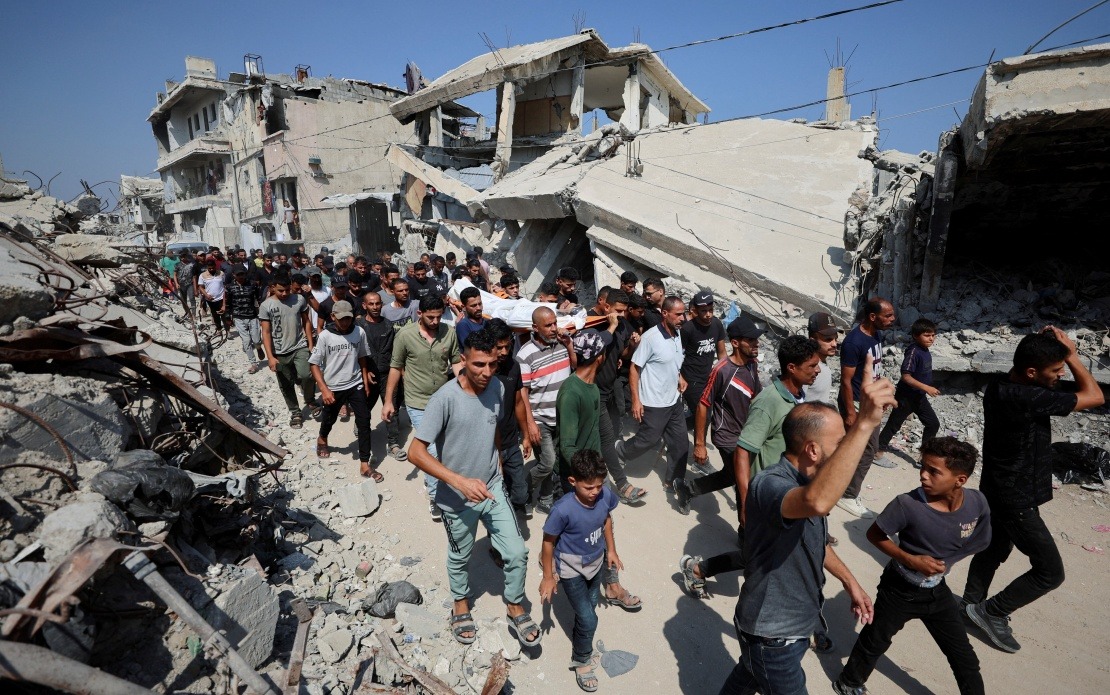
The international humanitarian organization Médecins Sans Frontières (MSF), known globally as Doctors Without Borders, has issued a sharp rebuke against the Israeli military's decision to terminate investigative cases concerning the deaths of its personnel and their family members in Gaza. The closure of these cases, announced this week, proceeded without any formal criminal investigation being initiated, prompting the organization to characterize the action as a fundamental denial of justice. MSF's condemnation arrives nearly two years after the group first petitioned Israeli authorities for comprehensive investigations into these fatal incidents, demonstrating a prolonged struggle for accountability within the Israeli legal framework.
The organization's frustration intensifies when considering the trajectory of its appeals process. After facing repeated stonewalling from Israel's Military Advocate General, MSF ultimately escalated its petition to Israel's High Court, seeking judicial intervention to compel a response. The subsequent closure of cases without any criminal inquiry suggests to MSF that institutional mechanisms designed to investigate potential violations have fundamentally failed. This development underscores a critical concern facing humanitarian workers and their families: the apparent absence of independent oversight mechanisms capable of examining allegations of misconduct by military forces operating in conflict zones.
Central to MSF's argument is the assertion that the Israeli military has effectively investigated itself, a process the organization views as inherently compromised. The group maintains that this self-examination model cannot adequately address what it characterizes as potential war crimes committed during operations in Gaza. By rejecting internal military reviews as substitutes for genuine, independent accountability, MSF articulates a principle increasingly recognized in international humanitarian law: that credible investigations into alleged violations must involve impartial external bodies rather than the institutions that carried out the disputed actions.
MSF has documented its adherence to accepted protocols designed to protect humanitarian workers from attack. The organization emphasizes that it systematically shared identifying information about its personnel with Israeli forces and that its vehicles bore clearly distinguishable markings. These measures represent standard operating procedures intended to establish a protective framework for medical staff operating in conflict environments. The fact that these precautions apparently proved insufficient despite their implementation raises troubling questions about targeting practices and the reliability of identification systems used by military personnel in the field.
Two specific incidents exemplify the human cost underlying MSF's complaint. In November 2023, an Israeli attack on an MSF convoy resulted in the deaths of two relatives connected to the organization's staff. Among those killed was Alaa Al Shawa, who served as both a family member of an MSF employee and as a volunteer medical supporter at Al-Shifa Hospital. Months later, in February 2024, another incident targeting an MSF shelter located in Khan Younis claimed the lives of an MSF staff member's wife and daughter-in-law, while leaving six others injured, predominantly women and children. These incidents illustrate the pattern of civilian casualties that MSF contends demands thorough investigative attention and accountability mechanisms.
The scale of casualties among health care workers dramatically contextualizes the broader humanitarian crisis unfolding in Gaza. According to MSF's documentation, fifteen of its own staff members have been killed by Israeli military operations since October 2023. This toll must be understood against the backdrop of approximately 1,700 health care workers killed during the identical timeframe. Such figures indicate systematic pressure on medical infrastructure and personnel, raising fundamental questions about whether targeting practices adequately distinguish between legitimate military objectives and protected humanitarian workers and facilities.
MSF's response to the case closures extends beyond narrow complaints about investigative procedures. The organization has linked the lack of accountability to what it describes as Israel's ongoing genocide against Palestinians in Gaza. This framing positions the failure to investigate killings of humanitarian workers within a larger pattern of alleged systematic violence against the civilian population. By connecting individual cases to overarching allegations of genocide, MSF attempts to demonstrate that impunity for the deaths of its staff reflects broader dysfunction in accountability mechanisms governing military conduct in the enclave.
The organization's call for independent review mechanisms represents an attempt to break what MSF views as a closed institutional loop. Rather than accepting military investigations as adequate, MSF advocates for involvement of external, impartial investigative bodies capable of examining evidence without institutional conflicts of interest. This proposal reflects international standards articulated by human rights organizations and humanitarian law experts, who emphasize that credible accountability requires independence from the parties whose conduct is being examined. The model MSF endorses resembles those deployed in other conflict contexts where third-party investigative commissions have been established to examine allegations.
MSF's statement that no military objective justifies the "wholesale sacrifice of civilians" articulates a core principle of international humanitarian law. This formulation challenges assumptions that might otherwise permit extensive civilian casualties if justified by military necessity. The organization suggests instead that legal and ethical frameworks ought to demand rigorous distinction between legitimate military targets and civilian populations, regardless of operational complexity or strategic considerations. This principle carries particular resonance in the context of Gaza, where densely populated urban terrain complicates military operations and frequently generates civilian casualties.
The humanitarian toll continues escalating even as MSF presses its accountability claims. According to Gaza's Health Ministry data, the conflict has resulted in cumulative deaths exceeding 73,000 Palestinians since October 2023, with additional thousands wounded. Regarding more recent violations of ceasefire agreements, the ministry reports that 1,283 Palestinians have been killed and 4,248 others injured during periods when truces were supposedly in effect. These figures suggest that whatever temporary pauses in violence occur, systematic military operations continue inflicting civilian casualties at alarming rates.
For Malaysian and broader Southeast Asian observers, MSF's experience carries implications extending beyond Gaza itself. The organization's documented frustration with accountability mechanisms illustrates challenges faced by humanitarian groups operating in various conflict environments across the region. The model of military self-investigation rejected by MSF resonates with concerns raised regarding investigations into allegations involving armed forces in multiple jurisdictions. MSF's advocacy for independent investigative mechanisms therefore articulates a principle relevant to humanitarian protection standards that transcend any single conflict or geography.
The case also highlights tensions between military command structures and international humanitarian accountability standards. As armed forces worldwide adopt increasingly sophisticated military technology and operational doctrines, parallel development of credible investigative mechanisms becomes ever more critical. MSF's experience suggests that institutional safeguards requiring independent external review may prove essential to ensuring that military organizations can neither unilaterally determine the adequacy of their own conduct nor close investigations without external scrutiny. This principle deserves serious consideration as various nations grapple with defining appropriate oversight mechanisms for military operations affecting civilian populations.

