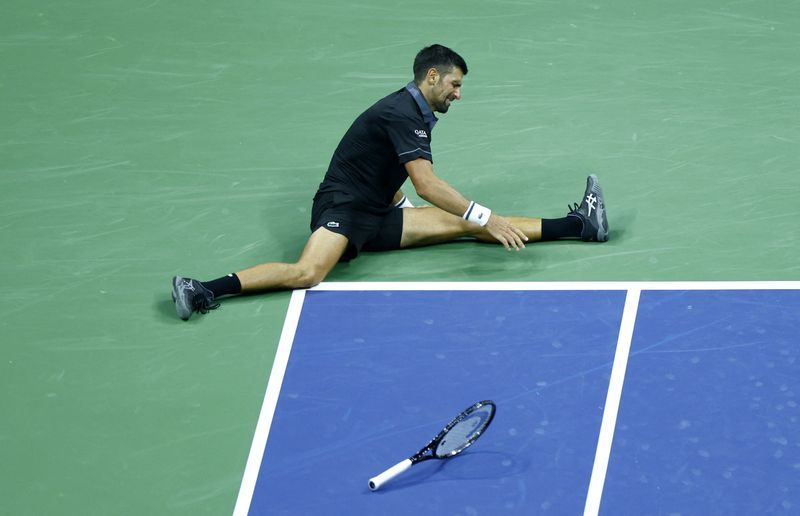
Novak Djokovic's pursuit of history has come to an unexpected halt at Flushing Meadows. The Serbian champion suffered a stunning first-round elimination at the US Open on Sunday, defeated by unseeded Argentine Mariano Navone in a five-set marathon that stretched beyond four hours. The scoreline of 7-6(5), 5-7, 4-6, 6-2, 6-1 represents a significant upset, with the world number 49 claiming a scalp few anticipated at the tournament's outset.
The result marks a dramatic reversal of fortune for the 39-year-old Djokovic, who had arrived at his 20th US Open appearance as the fourth seed with designs on becoming the first player to claim 25 Grand Slam singles titles. However, the Serb's trajectory into the tournament had already shown troubling signs. A defeat at the hands of Thiago Agustin Tirante in Cincinnati just a fortnight earlier had raised questions about both his competitive form and physical readiness for the rigours of a major championship contested over multiple rounds.
The match unfolded under challenging conditions at the Arthur Ashe Stadium, where humidity hung oppressively over the court. Djokovic initiated proceedings with characteristic authority, establishing an early 3-0 advantage in the opening set that suggested his experience might prove decisive. Yet the weather intervened when rainfall prompted officials to close the court's retractable roof, and during this interruption the momentum shifted perceptibly. Navone seized the opportunity to stabilise his position, drawing level at 4-4 and subsequently forcing the set into a tiebreak that he controlled with impressive composure, drawing audible recognition from spectators.
The Argentine's breakthrough first set injected genuine belief into what had appeared an uneven contest. Djokovic, despite showing discomfort throughout these opening exchanges, managed to reassert authority in the second set to level the match. The third set proved psychologically crucial—after a moment in which the champion was visibly unwell, vomiting into a courtside container, he appeared to regain equilibrium. A break of serve gave Djokovic a 5-4 advantage, and he consolidated this position to edge ahead, seemingly gathering momentum for a potential comeback.
Yet Navone demonstrated the mental fortitude required to challenge elite opponents. The 25-year-old Argentine claimed the fourth set decisively, capitalising on Djokovic's increasingly evident physical limitations. Back discomfort became the overriding factor in the match, with the Serb's previously reliable service becoming a source of vulnerability rather than strength. As his delivery faltered, Navone pressed his advantage with disciplined aggression, refusing to permit his illustrious opponent the momentum shifts that have characterised Djokovic's finest comebacks throughout his career.
The fifth set became a procession, with Navone converting his opportunities into a resounding 6-2 scoreline. The total duration of four hours and 36 minutes underscored the physical toll exacted by the match, but the Argentine emerged with an impressive victory that will resonate throughout the professional tennis calendar. For Djokovic, the defeat represents more than a mere first-round exit—it signals potential vulnerabilities that rival camps will scrutinise intently.
This upset carries implications extending beyond the personal disappointment for one of tennis's greatest champions. The result exemplifies how physical condition fundamentally determines outcomes at Grand Slam level, where tournament formats demand consecutive multi-set performances across fortnight-long competitions. Djokovic's back issues proved manageable at certain junctures but ultimately proved decisive, particularly in the match's latter stages when accumulated fatigue compounds every physical challenge. The performance raises legitimate questions about his preparation protocols and whether the eight-week interval since his last significant tournament appearance provided adequate conditioning time.
For Southeast Asian tennis enthusiasts accustomed to following Djokovic's dominance, this outcome may surprise. The region has long recognised his sustained excellence and the remarkable longevity he has maintained at an age when most professionals have retired. His presence in tournaments typically guarantees compelling contests and serves as inspiration for aspiring competitors throughout the continent. The abrupt nature of this departure from the championship underscores how even historical champions remain vulnerable to the unpredictable variables that sport consistently introduces.
Navone's triumph represents a significant career achievement for the Argentine competitor. Breaking through against one of tennis's most accomplished players provides both confidence and ranking points that will advance his standing considerably. His display of tactical intelligence—exploiting Djokovic's physical vulnerabilities while maintaining composure during moments when his opponent threatened to establish dominance—demonstrated the calibre of emerging talent challenging the sport's established hierarchy. For younger players throughout the circuit, this result provides tangible evidence that elite champions can indeed be overcome through combination of tactical execution and determined mental resilience.

