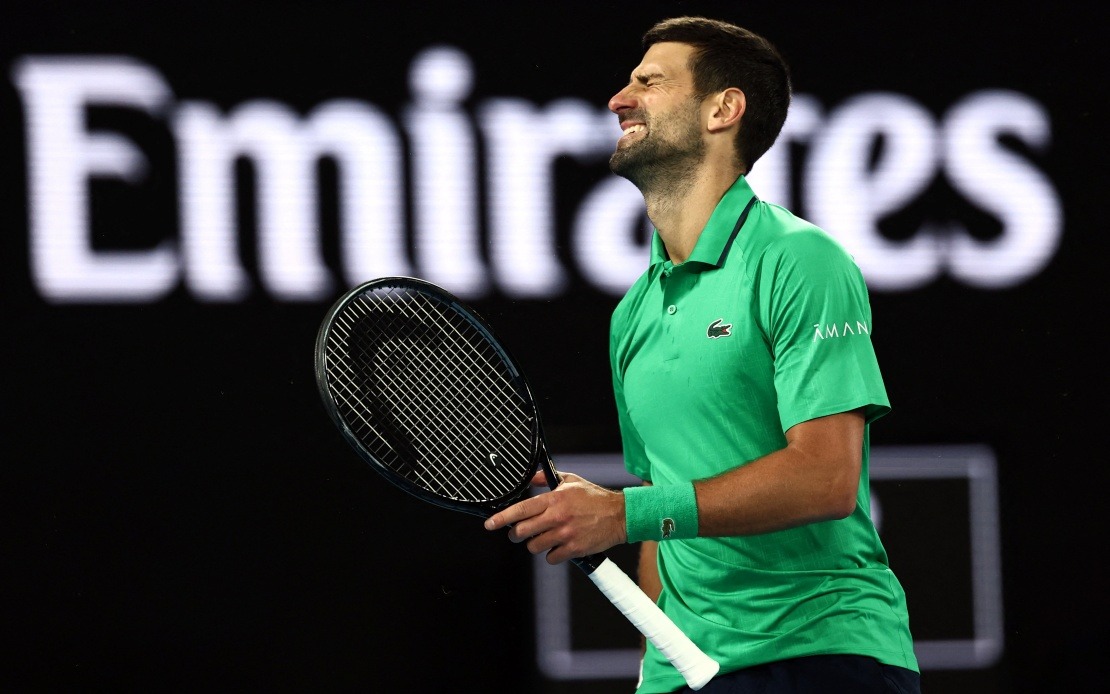
Novak Djokovic has etched his name deeper into tennis history by matching Roger Federer's extraordinary record of 105 men's singles match victories at Wimbledon, a milestone the Serbian champion reached Friday with a hard-fought four-set victory over France's Arthur Rinderknech. The momentous achievement underscores Djokovic's remarkable longevity and consistency at the All England Club, where he has now contested the fourth round on 18 separate occasions—a remarkable feat that speaks to his sustained excellence across multiple decades of competition.
The gripping Centre Court encounter lasted three hours as Djokovic, now 39 years old, navigated past the 25th seed with a scoreline of 7-5, 6-4, 1-6, 7-6 (7-4). The Serbian's path to this historic parity was not without drama, as Rinderknech mounted a spirited challenge that forced a tiebreak in the final set and extended the contest to its limit. Despite the competitive resistance, Djokovic's experience and tactical mastery proved decisive, demonstrating why he remains a formidable force even at an age when most players have long since retired from professional competition.
Joking about the achievement during his post-match interview, Djokovic proposed a peculiar solution to breaking what he jokingly termed a stalemate. "I propose a match between me and Roger for 106! Whoever wins it, gets it. Let's just stop this here and let's call him down," he said with characteristic dry humour. The comment reflected the levity with which the 24-time Grand Slam champion approaches such milestones, though his more reflective remarks underscored the weight of achievement. "To be able to make history in this sport is a huge honour and a huge privilege," Djokovic stated, his tone shifting to genuine reverence as he acknowledged the significance of equalling Federer's tally.
For Djokovic, Wimbledon holds singular importance in his professional journey. The grass-court championship has represented a lifelong aspiration since childhood, and his sustained success there demonstrates the depth of his commitment to the tournament. Rather than fixating on breaking Federer's record, Djokovic adopted a philosophical approach, emphasising that his focus remains concentrated on daily performance rather than cumulative statistics. "I'm not thinking about whether it's going to be 105 or 106, but I'm just thinking about trying to win that match on a given day," he explained, encapsulating the mentality that has sustained his career longevity.
Looking ahead, Djokovic faces Russian qualifier Roman Safiullin in the fourth round, with a potential quarter-final berth on the line. The trajectory of his campaign suggests that additional history-making is possible, particularly given the apparent vulnerability of some seeded contenders throughout the early rounds. Meanwhile, defending champion Jannik Sinner demonstrated his credentials for back-to-back titles by dismissing American Jenson Brooksby with emphatic precision, advancing 6-4, 6-3, 6-4 in a dominant display of controlled aggression.
Sinner's performance extended an extraordinary streak within Grand Slam competition. The Italian world number one improved his Open Era record in third-round Grand Slam matches to a perfect 20 victories, an unmatched standard that highlights the consistency with which he translates his elite ranking into results when the tournament pressure intensifies. The home crowd provided visible encouragement, with Sinner acknowledging the importance of their support in maintaining his momentum through the match. This crowd dynamic reflects how psychological factors at Wimbledon, where British audiences show considerable enthusiasm for international competitors, can influence match outcomes.
On the women's side, the championship is developing fascinating narratives as defending expectations clash with resurgent ambitions. Aryna Sabalenka, the top seed and world number one, advanced past former French Open champion Jelena Ostapenko with a convincing 6-4, 6-4 victory that positioned her to continue her quest for an elusive first Wimbledon title. The Belarusian has dominated other Grand Slams but has repeatedly fallen short on grass, making her pursuit of the crown particularly pointed for those following her career trajectory.
Sabalenka's path now leads toward a compelling confrontation with four-time Grand Slam champion Naomi Osaka, who has returned to competitive prominence and made an impressive grass-court statement. Osaka reached the Wimbledon fourth round for the first time in her career following a commanding 6-1, 6-3 dismantling of Daria Kasatkina, indicating that her game has adapted successfully to the unique demands of grass-court tennis. The Japanese player's serve and court positioning appear particularly well-suited to the surface, and her striking tennis generated the kind of clean scoreline that suggests sustained confidence.
Analysing the matchup objectively, both competitors bring distinctive tactical weapons that will generate compelling tennis. Sabalenka's characteristic power tennis and aggressive baseline dominance contrast markedly with Osaka's precision serving and net-rushing capacity. The Belarusian acknowledged the challenge forthrightly, remarking that "Another aggressive player. Another very powerful match," before adding that she was "ready to fight and do whatever it takes to get through." This sentiment underscores the competitive intensity building throughout this Wimbledon fortnight.
For Malaysian and Southeast Asian tennis enthusiasts, the ongoing tournament demonstrates the sport's continued evolution and global competitive depth. While no regional representatives featured prominently in these particular matches, the emergence of diverse champions and the longevity demonstrated by players like Djokovic offer instructive lessons for developing tennis infrastructure and talent pathways across the region. The grassroots investment in junior development programmes and international tournament exposure remains critical for cultivating world-class players capable of competing at Wimbledon's elite level.

