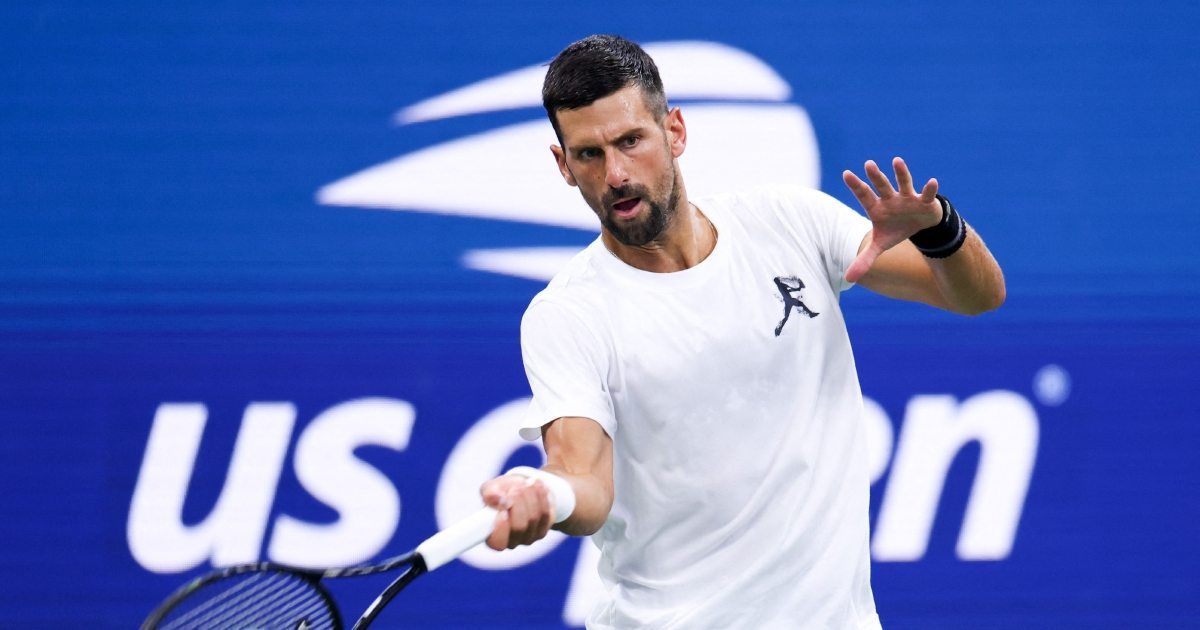
Novak Djokovic is targeting a historic breakthrough at the US Open, where he seeks to capture his 25th Grand Slam championship and etch his name alone atop tennis's all-time major titles list. Since securing the 2023 US Open crown to draw level with Margaret Court's longstanding record of 24 Grand Slam victories, the Serbian tennis icon has maintained unwavering focus on the singular objective of reaching 25.
The pursuit of this elusive milestone represents far more than mere statistical achievement for Djokovic. Breaking Court's record would fundamentally reshape the conversation around his legacy and cement his status as the dominant force in men's tennis across three decades. At an age when many champions have long since retired, Djokovic continues to demonstrate the hunger and technical mastery that have defined his extraordinary career, making his quest for record number 25 the central narrative of his final competitive chapters.
Djokovic's declaration that he is thoroughly prepared underscores his confidence in his current physical and mental condition. The Serbian champion has navigated considerable challenges in recent seasons, including health concerns and periods of uncertainty about his capacity to compete at the highest levels. Yet he has repeatedly returned to the stage with renewed determination, suggesting a resilience that transcends the typical athlete's trajectory. His willingness to declare readiness at this juncture indicates not merely tactical optimism but genuine belief in his capacity to perform when it matters most.
The US Open environment specifically favors players of Djokovic's caliber. The hard-court surface at Flushing Meadows has historically suited his aggressive baseline game and explosive serve. Moreover, the tournament's intense metropolitan setting and heavyweight competition create the kind of pressure-laden atmosphere where Djokovic has historically thrived, turning adversity into motivation. His previous US Open victories, including the 2023 triumph, demonstrate his comfort competing in this particular venue against the world's elite opposition.
However, Djokovic faces a notably more formidable landscape than in previous years. A new generation of exceptional players has risen through the professional ranks, bringing fresh tactical approaches and physical capabilities that challenge even his proven mastery. These emerging competitors possess the athleticism and adaptability required to exploit any momentary lapse in focus or slight physical diminishment, however negligible. The margin for error has compressed significantly, meaning that Djokovic cannot afford the lapses that might have been forgiven against weaker opposition in earlier eras.
The psychological dimension of chasing a singular historical record cannot be understated. The burden of expectation, particularly in a Grand Slam tournament, can weigh heavily even on seasoned champions. Djokovic must balance the weight of historical significance with the requirement for present-moment focus that competitive tennis demands. This mental balancing act has proven challenging for various elite athletes throughout history, and Djokovic's ability to compartmentalize these competing pressures will substantially influence his tournament performance.
From a Southeast Asian perspective, Djokovic's continued prominence at tennis's highest level maintains global interest in the sport and generates substantial media attention across regional markets. The tournaments where Djokovic competes command significantly higher viewership and sponsorship engagement than events without his participation, reflecting his status as one of professional sports' most bankable personalities. His presence at the US Open ensures elevated coverage and audience engagement throughout the tournament.
The broader context of Grand Slam competition in the modern era reveals how the surface and format-specific nature of tennis success has evolved. Djokovic's challenge differs fundamentally from earlier champions who built dominance through versatility across varying conditions. His 25th Grand Slam would represent accumulation across a remarkably consistent period, distinguishing his record from those achieved through dominance in a particular era or surface specialty. This makes the achievement potentially more impressive from a consistency and longevity standpoint.
The stakes at the US Open extend beyond Djokovic's personal milestone. A victory would provide a conclusive answer to ongoing debates about his standing in tennis history relative to rivals Roger Federer and Rafael Nadal. These three champions have fundamentally reshaped professional tennis and how audiences understand competitive excellence. Djokovic's record-breaking achievement would definitively resolve a conversation that has captivated global sports audiences for nearly two decades, providing historical closure to an unprecedented era of dominance.
Djokovic's preparation heading into this tournament represents the culmination of considerable strategic planning and physical conditioning. His team has clearly analyzed the contemporary competitive landscape and positioned him to address the specific challenges posed by current rivals and tournament formats. The Serbian champion's readiness declaration therefore carries weight beyond mere psychological positioning, suggesting genuine tactical and physical preparation designed to maximize his chances against formidable opposition.
Looking forward, whether Djokovic achieves his 25th Grand Slam will likely define how future generations regard this particular competitive period. A successful campaign would validate his claim to unparalleled greatness and provide a fitting capstone to a remarkable career. Conversely, if other champions prevent his advancement toward this record, the narrative around his legacy will necessarily shift, emphasizing his extraordinary consistency while acknowledging the limitations even champions ultimately encounter.

