Novak Djokovic enters the U.S. Open with perhaps his most favourable circumstances in years for capturing a record 25th Grand Slam title. The collision of opportunity and adversity has reshaped the landscape of men's professional tennis heading into the sport's final major of 2024. With Jannik Sinner sidelined by knee injury and Carlos Alcaraz attempting to return from an extended absence due to a wrist problem, the Serb finds himself in an enviable position despite being 39 years old and operating with limited tournament preparation.
The quest to eclipse Margaret Court's all-time record of 24 major titles has defined Djokovic's recent career, but that pursuit has been systematically thwarted by the emergence of Alcaraz and Sinner as the dominant forces in men's tennis. Over the past six Grand Slams, these two young rivals have combined to defeat Djokovic five times, underscoring the generational challenge he faces. More strikingly, they have captured ten of the last eleven major championships between them, establishing themselves as the sport's true heavyweights. Djokovic's most recent opportunity came at this year's Australian Open, where Alcaraz overpowered him in the final, a defeat that would have felt particularly painful given the proximity to his historic goal.
Djokovic's perseverance, however, remains underpinned by a psychological resilience grounded in his cultural heritage. In a documentary screened before the year's final major, the veteran articulated a distinctly Serbian concept that sustains his competitive drive. The term "inat" captures a force of stubborn determination that emerges precisely when doubt surrounds an athlete. It represents not merely confidence but a defiant commitment to proving sceptics wrong, a mentality Djokovic credits as widespread among Serbian people. This intrinsic stubbornness appears to be the invisible engine driving a player who has accumulated more major titles than any man in history, yet still hungers for one more.
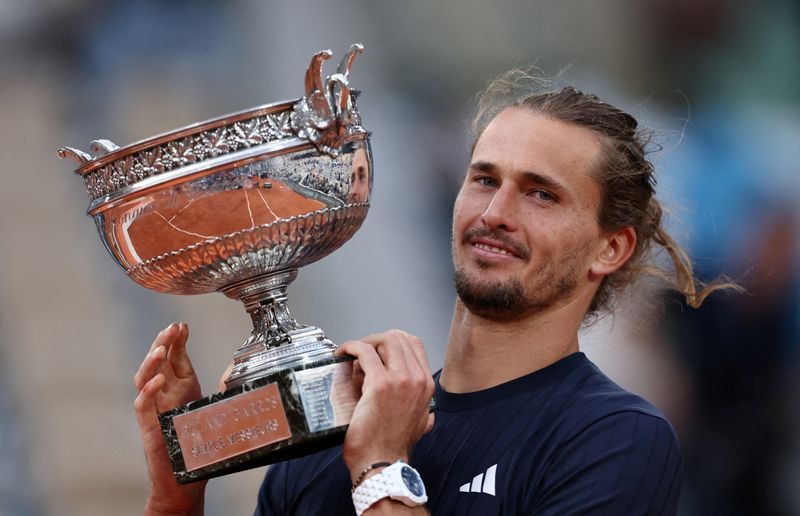
Alexander Zverev has emerged as the most credible impediment to Djokovic's ambitions. The German finally broke through at the French Open earlier this year, capturing his maiden Grand Slam title after years of near-misses and criticism regarding his inability to convert opportunities on tennis's biggest stages. His subsequent run to the Wimbledon final further validated his status as a serious contender, demonstrating that his breakthrough was neither accident nor fleeting achievement. At Flushing Meadows, where conditions favour his powerful baseline game, Zverev represents a fundamentally different challenge from the youthful dynamism of Alcaraz or the precision of Sinner.
Alcaraz's four-month absence from competition introduces genuine uncertainty into his prospects at the U.S. Open. While the defending champion has built an impressive reputation for elevating his game on sport's grandest occasions, questions linger about whether he can rediscover his rhythm and sharpness after such an extended layoff. The wrist injury that necessitated his absence remains a variable that cannot be easily dismissed, particularly given that the U.S. Open's hard courts demand explosive lateral movement and powerful serving. Nevertheless, the 21-year-old's pedigree as a major winner who has already captured multiple Grand Slams suggests he should not be written off despite the legitimate concerns surrounding his readiness.
Roger Federer, the Swiss tennis legend who comprehends deeply the mentality required to sustain excellence across decades, has cautioned against underestimating Djokovic. Speaking with reporters in New York, Federer acknowledged that whenever Djokovic enters a tournament, particularly a major championship, he must be considered a genuine contender. The eight-time U.S. Open champion has witnessed firsthand Djokovic's capacity to produce exceptional tennis across different eras and surfaces, establishing a track record that transcends momentary form or circumstance. Federer's perspective suggests that Djokovic's continued participation itself reflects a genuine belief in his capacity to achieve the historic milestone he pursues.
America's tennis community has mobilised substantial firepower heading into the year's final major. Canadian Open champion Ben Shelton headlines a promising American contingent seeking to capture the trophy, alongside Cincinnati runner-up Frances Tiafoe and Taylor Fritz, who reached last year's final. The prospect of ending a 23-year drought without a homegrown men's U.S. Open champion—a title last claimed by Andy Roddick in 2003—has animated national interest. Shelton's impressive title run in Montreal demonstrated his capability on high-pressure stages, though questions persist about his consistency across an entire major tournament following an early exit at Wimbledon.
Roddick himself, speaking on his podcast, identified a critical vulnerability in Shelton's game that could prove decisive at Flushing Meadows. The former champion noted that Shelton must navigate the initial rounds successfully to emerge as a realistic contender in the tournament's latter stages, an area where the young American has historically struggled at major championships. The upside, however, remains substantial. Shelton has accumulated four titles across different surfaces, establishing himself as a versatile competitor with genuine Grand Slam potential. Whether he can synthesise this raw talent into sustained excellence over the fortnight in New York remains one of the tournament's intriguing subplots.
Beyond the established hierarchy, younger talents including Arthur Fils and Rafael Jodar will seek to announce themselves on the grand stage, while Felix Auger-Aliassime, who reached the semi-finals last year, aims to build on his career-best major run. This depth of talent across the draw demonstrates the genuine competitive uncertainty that has characterised men's tennis following the transition from the Federer-Nadal-Djokovic dominance. Yet despite the presence of multiple credible challengers, the narrative arc of the tournament appears predetermined to centre on whether the 39-year-old Serb can deliver the singular achievement that has eluded him: a record-breaking 25th major title that would conclusively establish his legacy as the greatest champion in Grand Slam history.

