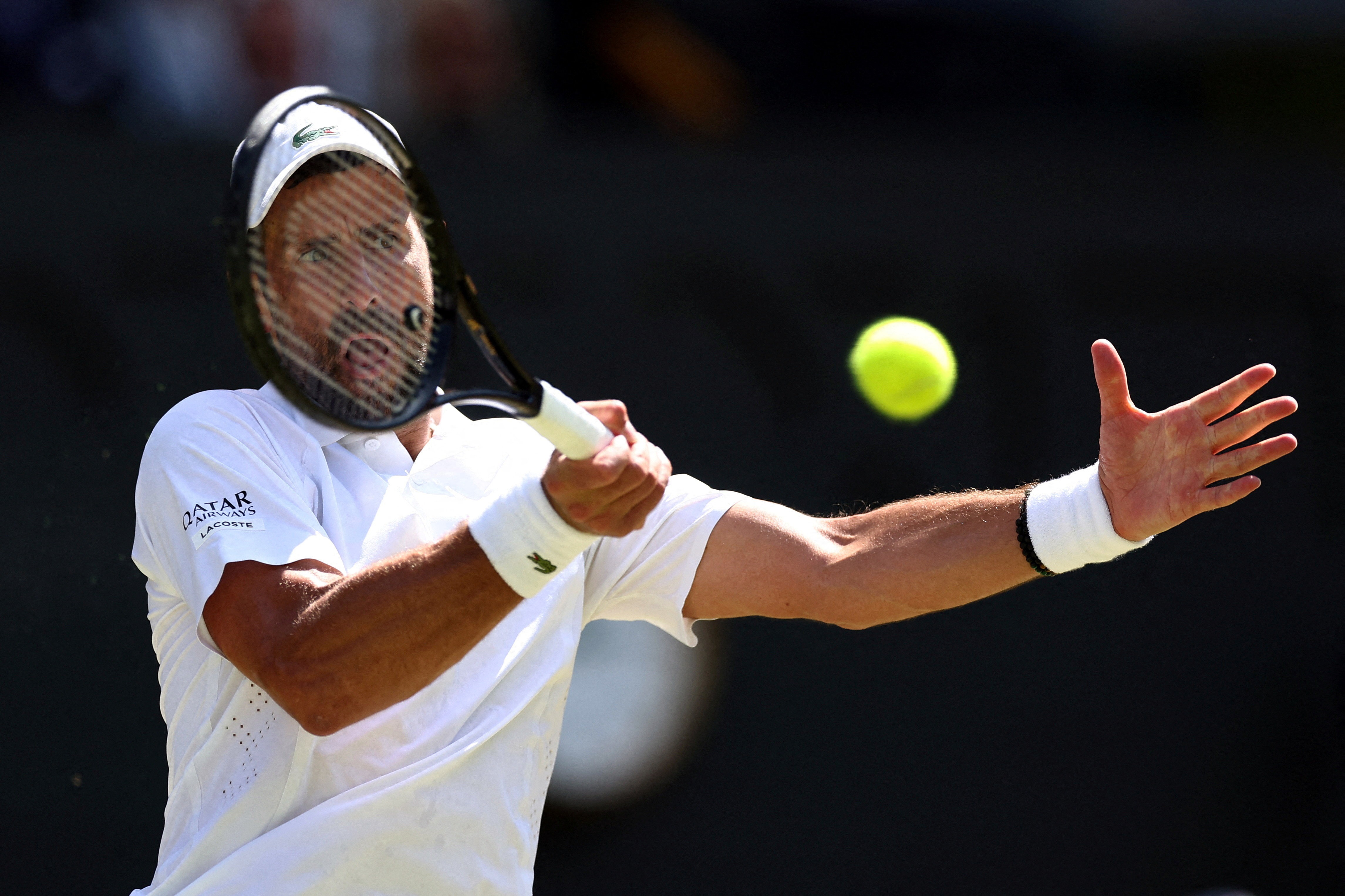
Novak Djokovic has secured passage to the Wimbledon semifinals following an extraordinary marathon match that tested not only his physical endurance but also his composure when confronted by tournament officials. The 39-year-old Serbian overcame Canada's Felix Auger-Aliassime in a quarterfinal that stretched five hours and 15 minutes, establishing a new record for the longest quarterfinal match in Wimbledon history. The final set tally of 7-6 (12-10), 3-6, 6-3, 6-7 (4-7), 7-6 (10-4) underscores the competitive equilibrium that defined this encounter, with both players refusing to concede ground until Djokovic ultimately prevailed in the decider's first-to-10 tiebreak format.
The match concluded mere minutes before Wimbledon's 11 pm curfew, illustrating the razor-thin margin between completion and postponement that governed proceedings throughout the evening. This proximity to the tournament's strict scheduling requirements became the catalyst for a confrontational moment that momentarily overshadowed the athletic excellence on display. The flashpoint centred on Djokovic's vigorous objection to tournament referee Denise Parnell's decision to close the Centre Court roof when the score reached one set apiece at approximately 7.40 pm.
Djokovic's frustration centred on what he perceived as arbitrary application of closure protocols. The 24-time Grand Slam champion argued forcefully that sufficient daylight remained to complete another entire set without artificial lighting, characterising the decision as inconsistent with precedent established earlier in the tournament. He referenced his first-round encounter against Wu Yibing, where he contended the roof had remained open until nearly 8.30 pm, substantially later than the time at which Parnell sought to close it during the quarterfinal. His exasperation manifested in pointed critiques of tournament governance, questioning whether officials truly adhered to the rules they prominently promoted.
Parnell's rationale for the closure directive stemmed from operational concerns rooted in recent match experience. She explained that Jannik Sinner's fourth-round encounter against Shintaro Mochizuki had necessitated mid-set roof closure due to deteriorating light conditions, a situation the referee sought to prevent recurring. This preventative approach, though rooted in legitimate operational concerns, collided with Djokovic's reading of the situation and his competitive calculus regarding the implications of indoor versus outdoor play at this stage of the tournament.
Djokovic's reaction betrayed underlying tactical considerations. The Canadian challenger, Auger-Aliassime, possesses a well-documented reputation as a formidable indoor player, and at 25 years of age represents a generational advantage in terms of physical recovery and sustained athleticism. The roof closure thus carried real implications for match dynamics, potentially negating certain advantages Djokovic sought to maintain in deteriorating outdoor conditions. His passionate interjection, dismissing concerns about Sinner's match with the declaration "With Jannik, I don't care what happens," revealed the intensity with which he approached the strategic dimension of the contest.
The physical demands of the encounter had already surfaced earlier, as Djokovic required medical attention towards the end of the opening set following what appeared to be a left calf strain. Despite grimacing noticeably with each serve, he persevered through the first-set tiebreak, which itself required 12 points for resolution. This injury concern necessarily influenced his interpretation of how extended play might unfold, adding another layer to his resistance to the roof closure.
Auger-Aliassime proved a worthy adversary throughout, demonstrating the kind of competitive resilience expected of a third-seeded player. Remarkably, he had surrendered his serve only once during the entire fortnight prior to this encounter, testament to the consistency he brought to the tournament. Djokovic finally penetrated this defensive wall by breaking him to love during the third set, a breakthrough that shifted momentum decisively. However, the Canadian recovered by winning the fourth set through its tiebreak format, extending the contest toward its denouement.
The deciding set evolved into a first-to-10 tiebreak shootout, reflecting the contemporary rules adopted at the championships for final-set resolution. Djokovic ultimately claimed victory through superior execution in this crucible moment, demonstrating the mental fortitude and technical capability that have sustained his relevance at the sport's apex for nearly two decades. His advancement sets up a semifinal confrontation with Jannik Sinner, the tournament's defending champion, establishing a potentially compelling narrative thread for the tournament's final stages.
Reflecting on the gruelling encounter, Djokovic attributed success to emotional regulation and psychological resilience rather than technical perfection alone. He described the match as embodying precisely the moments that continue to motivate him to compete at the highest levels, despite the accumulated physical toll evident throughout the evening's proceedings. His explicit recognition that such matches represent his primary competitive motivation offers insight into the mentality required to sustain excellence across four decades in professional sport.
For Southeast Asian tennis enthusiasts, Djokovic's continued presence in the tournament remains significant given his influence on global tennis culture and his historical success at Wimbledon, where he seeks an eighth championship title. The intensity of his dispute with match officials also illustrates the complex intersection of athletic competition, rules enforcement, and the human element that characterises contemporary professional tennis. His progression ensures that the tournament's concluding stages will feature compelling narrative elements extending beyond pure sporting accomplishment.
The record-breaking duration of the quarterfinal also raises broader questions about player welfare and tournament scheduling in an era of increasingly demanding professional calendars. The near-midnight conclusion, occurring just six minutes before the curfew, underscores the tension between entertaining extended matches and managing competitor recovery across multiple tournaments annually. These structural considerations will likely inform ongoing discussions among tennis governance bodies regarding balance between spectacle and sustainability.

