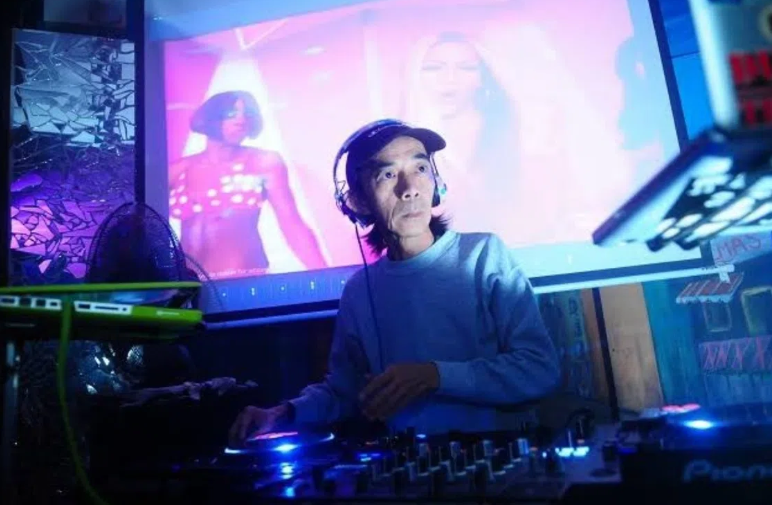
Andrew Chow, the renowned turntablist and DJ known professionally as DJ Wiz, has died following a battle with stomach cancer. He was 63 years old at the time of his death on August 3. The passing of Chow marks the end of an era for Singapore's vibrant nightlife scene, where he spent decades shaping the sound and culture of hip-hop, R&B, and turntablism across the island's most celebrated venues.
Chow's influence on Singapore's musical landscape extended far beyond his performances. Throughout the 1990s and into the early 2010s, he held the position of resident DJ at the iconic Zouk nightclub on Jiak Kim Street, one of Southeast Asia's most prestigious entertainment venues. His tenure during those formative years coincided with the rise of electronic music culture in the region and positioned him at the forefront of introducing and developing turntablism as a respected art form in Singapore. His consistent presence behind the decks helped establish the foundation upon which the nation's contemporary DJ culture would be built.
The accolades accumulated by Chow throughout his career underscore his technical mastery and influence within the professional DJ community. He captured the DMC Singapore title on three separate occasions during the 1990s and 2000s, cementing his status among the nation's elite turntablists. His achievements extended beyond national borders when he secured victory at the Singapore leg of the 1998 Technics World DJ Championships, a competition that attracted top talent from across the globe. These victories were not merely individual accomplishments but represented validation from his peers and the international DJ fraternity of his innovative approach to scratching, mixing, and musical interpretation.
Chow's commitment to nurturing the next generation of DJs and hip-hop enthusiasts remained evident throughout his later years. Just a few months before his passing, on May 24, he participated as both judge and performer at the DMC Warm-Up Battle event held at Kossa, a local nightclub. His willingness to contribute to emerging talent competitions demonstrated that his passion for the craft and the community surrounding it never diminished. More significantly, he was set to receive the DMC Legacy Award at the DMC Singapore event scheduled for September 6 at Rasa, recognition that would have honoured his sustained and transformative contributions to the discipline of DJing across multiple decades.
Fellow musicians and nightlife industry figures have articulated the profound impact Chow exerted on Singapore's entertainment landscape. Wayne Liu, performing under the stage name DJ KoFlow, expressed to media outlets that Chow's legacy permeates the entire contemporary hip-hop and turntablism community through his dedication to cultivating authentic culture within Singapore. At 45 years old, Liu represents a generation of DJs who came of age watching and learning from Chow's pioneering work. The transmission of knowledge, technique, and artistic vision from one generation to the next stands as perhaps Chow's most enduring contribution beyond the specific recordings or performances he created.
Kavan Spruyt, the 46-year-old founder of Rasa and himself a veteran of Singapore's nightlife sector, recalled his own formative experiences as a younger clubgoer witnessing Chow perform at Phuture, a venue operating within the Zouk complex during the height of the big beat electronic music era. Spruyt characterised Chow as a "hero to many", evoking the inspirational quality that extended beyond technical proficiency to encompass the manner in which Chow commanded the decks and engaged audiences. The visceral memory of Chow's performances—his ability to sustain high-energy dancing for extended periods—speaks to an entertainment value that transcended the mechanical aspects of DJing and entered the realm of artistic performance.
Eddie Chan, performing as DJ Small, brought a friendship spanning four decades to his assessment of Chow's character and abilities. Chan emphasised that Chow functioned simultaneously as a teacher and a brother figure within the community, characteristics that revealed the depth of respect accorded to him beyond his technical accomplishments. Chan's description of Chow as "a front runner in all music genres" with "flawless" mixing and scratching skills painted a portrait of an artist whose versatility and consistency set a standard for the profession. The description of his "incredible passion and deep knowledge" suggested that Chow's contributions emerged from genuine artistic commitment rather than commercial pursuit alone.
Chow's daughter Abby, 27, announced her father's passing through social media on August 3 and extended an invitation to friends, family, and fans to participate in honouring his memory. Rather than adhering to conventional funeral dress codes associated with solemnity and mourning, Abby requested that attendees wear "colourful and stylish" attire reflective of her father's personality and approach to life. In her words, "Daddy is a cool guy, so no strict dress code... We celebrate his life, his style, his mojo." This approach to farewell encapsulates the spirit with which Chow appears to have lived—one that prioritised authenticity, style, and the celebration of cultural expression over rigid convention.
The family arrangements reflected Chow's lifelong engagement with nightlife culture and artistic community. His wake was held at Block 406 Ang Mo Kio Avenue 10, with the funeral cortege departing on August 8 at 4:15 p.m. for cremation at Mandai Crematorium Hall 4, scheduled to commence at 5 p.m. Following his daughter's second social media statement, in which she expressed gratitude for the tributes and messages acknowledging her father's contributions, it became evident that Chow's influence had extended across generations and throughout Singapore's entire entertainment ecosystem. The warm reception of his legacy, articulated through the outpouring of appreciation from industry peers and fans alike, affirmed that his impact on Singapore's cultural development extended far beyond the technical mastery displayed behind the turntables.
For Malaysia and the broader Southeast Asian region, Chow's passing represents the loss of a figure who helped establish the legitimacy and artistic merit of DJing and turntablism as serious cultural pursuits during a period when electronic music and hip-hop culture were still developing roots in the region. His pioneering work in Singapore influenced how these musical forms were understood and practiced across the broader Southeast Asian landscape. The standards he set for technical excellence and artistic integrity continue to inform the expectations and aspirations of contemporary DJs working throughout the region today.

