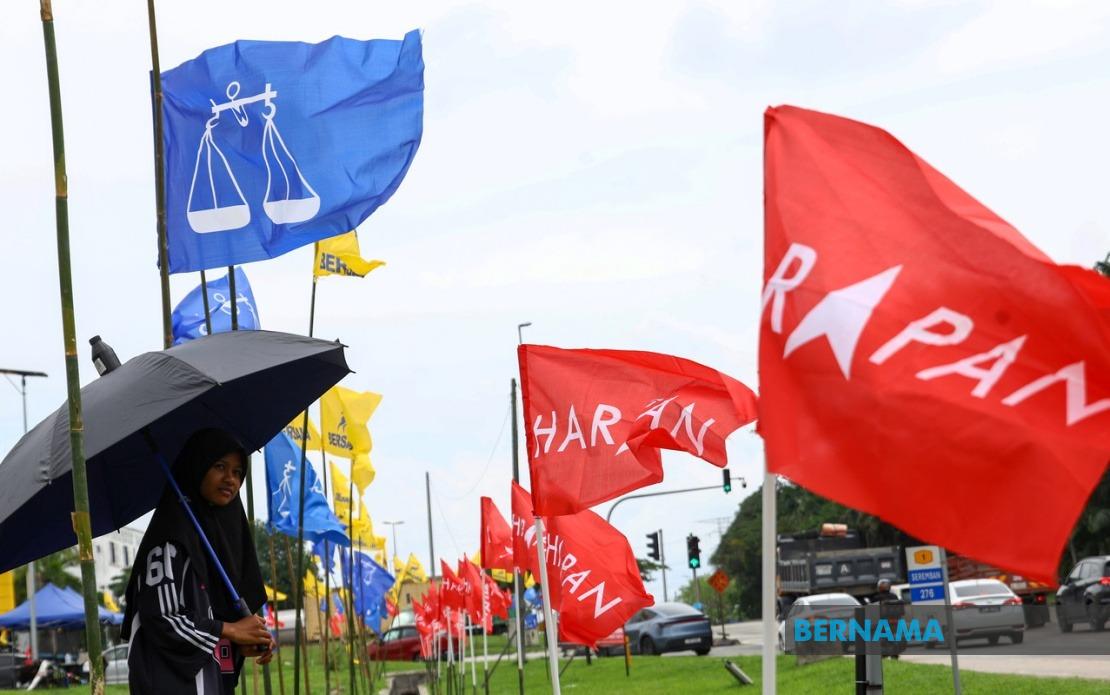
The second week of campaigning for Johor's 16th state election has crystallised a fundamental strategic divide between the two dominant political coalitions. Pakatan Harapan and Barisan Nasional, each contesting all 56 seats with 172 candidates across the ballot, are pursuing markedly different playbooks as they bid to control Malaysia's southern powerhouse ahead of polling day on July 11. The divergence reflects not merely tactical choices but deeper assumptions about what contemporary voters prioritise and how best to move them.
Pakatan Harapan's campaign architecture centres on substantive policy engagement. The coalition has positioned itself as offering concrete remedies to the material pressures facing ordinary Johoreans—the relentless squeeze on household budgets, wage stagnation relative to living costs, the inaccessibility of property ownership for young families, and concerns about employment quality and social safety nets. This emphasis on economic fundamentals underpins the coalition's manifesto, "Johor For All," which articulates an integrated vision for boosting domestic wages, ensuring that foreign investment translates into measurable improvements in worker welfare, and reshaping development metrics away from headline growth figures toward tangible household prosperity. The approach implicitly critiques decades of development rhetoric that celebrated investment inflows and GDP expansion while ordinary residents struggled with affordability and opportunity.
Dr Mohammad Tawfik Yaakub of Universiti Malaya, a keen observer of electoral dynamics, suggests that PH's strategy reflects a calculated judgment about voter sophistication. The coalition is banking on the premise that Johoreans have evolved beyond accepting development announcements at face value; they now demand to understand how regional prosperity will materially benefit them personally. This recalibration—from celebrating what is being built to detailing how citizens will live better—represents a substantive shift in how progressive coalitions are attempting to reshape electoral competition in Malaysia's larger states. The emphasis on affordability, wages, and economic distribution speaks to anxieties that transcend partisan affiliation, potentially allowing PH to reach beyond its traditional constituency.
Barisan Nasional has adopted a fundamentally different calculus, grounded in mobilising its organizational apparatus and leveraging the drawing power of prominent personalities. The coalition's campaign machinery is visibly animated by the return of two significant figures: Datuk Seri Hishammuddin Tun Hussein, the former UMNO vice-president, and Khairy Jamaluddin, erstwhile UMNO Youth chief, both of whom have rejoined the party through the "Rumah Bangsa" initiative. Their visibility at campaign rallies and ground operations represents a deliberate effort to remind voters of continuity, tradition, and established leadership within the BN framework. For a coalition that has faced credibility challenges and voter attrition in recent years, these returnees symbolise renewal and the restoration of familiar faces to the political stage.
The strategic calculus underpinning BN's approach reflects confidence that, in Johor particularly, traditional networks and recognisable personalities retain considerable mobilisational power. UMNO's deep roots in the state, built over decades of dominance, remain intact at the grassroots level. The coalition appears to be wagering that reasserting these organisational strengths, coupled with the symbolic return of respected figures, will reverse voter leakage and consolidate its traditional support base. This strategy acknowledges that for many voters, particularly those in rural areas and established urban communities, party affiliation and loyalty to recognisable leaders remain determinative factors in how they cast their ballots.
However, Dr Tawfik introduces a cautionary note about assuming that prominent personalities alone can determine electoral outcomes. Modern voters, he suggests, have grown considerably more discerning than previous generations. They no longer simply defer to charismatic speakers or well-known figures; instead, they evaluate whether parties offer coherent policy platforms, field credible candidates, and articulate solutions to concrete problems. This evolution in voter behaviour—what might be termed "critical consumption" of political messaging—means that personality politics, while still relevant, operates within a more demanding electrised environment where substance cannot be wholly displaced by celebrity or nostalgia.
Assoc Prof Dr Mohd Yusry Ibrahim of Ilham Centre and Universiti Malaysia Terengganu offers a more nuanced assessment of how specific personalities might influence particular voter segments. Hishammuddin's prominence in this campaign could prove pivotal in recovering UMNO supporters who have drifted away or grown disaffected with the party in recent years. His standing in Johor remains robust, and his active campaigning may revitalise grassroots enthusiasm among voters who remember his earlier prominence. Simultaneously, his presence could reassure voters anxious about party stability and leadership clarity. Khairy's role appears specifically calibrated toward younger demographics, a cohort that has proven persistently challenging for BN to retain or persuade. Young Malaysians have consistently demonstrated markedly lower party loyalty compared to preceding generations; their voting patterns remain fluid and responsive to perceived competence, integrity, and relevance rather than inherited partisan affiliation.
Kairy's particular appeal lies in his consistent positive reception among younger voters and his capacity to represent UMNO and BN to a demographic that has largely tuned out traditional campaigning. Younger Johoreans gravitate toward public figures they encounter authentically, whose values seem aligned with contemporary concerns, and who demonstrate engagement with issues affecting their generation. In this context, Khairy represents a bridge between an ageing political establishment and electoral cohorts who otherwise regard mainstream politics with indifference or scepticism. His presence in the campaign signals BN's recognition that accessing youth votes requires more than rallies and handouts; it demands recognisable figures who embody modernity and connection to contemporary concerns.
The observation that young voters increasingly prioritise candidate quality and personal resonance over party machinery points toward a structural transformation in Malaysian electoral politics. This shift has profound implications not merely for Johor but for how competition will evolve nationally. If younger voters are truly unmoored from traditional party loyalties, then all coalitions face incentives to field candidates who project authenticity, demonstrate policy depth, and connect across demographic lines. The candidate factor is becoming increasingly decisive precisely because it provides a bridge between voter preference and party machinery—a personalised entry point in an era when party brands themselves command diminishing automatic allegiance.
The Johor election thus functions as a microcosm of broader tensions within Malaysian politics: whether electoral competition will increasingly centre on policy competition and substantive governance agendas, or whether traditional mechanisms of organisational strength and personality politics retain decisive power. Pakatan Harapan's emphasis on translating development into household welfare represents a challenge to old-style politics centred on distribution networks and personal followings. Barisan Nasional's mobilisation of recognisable figures and organisational depth represents a defence of mechanisms that have long served the coalition effectively. The outcome on July 11 will provide instructive clarity about which approach resonates more powerfully with contemporary Johor voters and, by extension, about the trajectory of competitive dynamics across Malaysia's electoral landscape.

