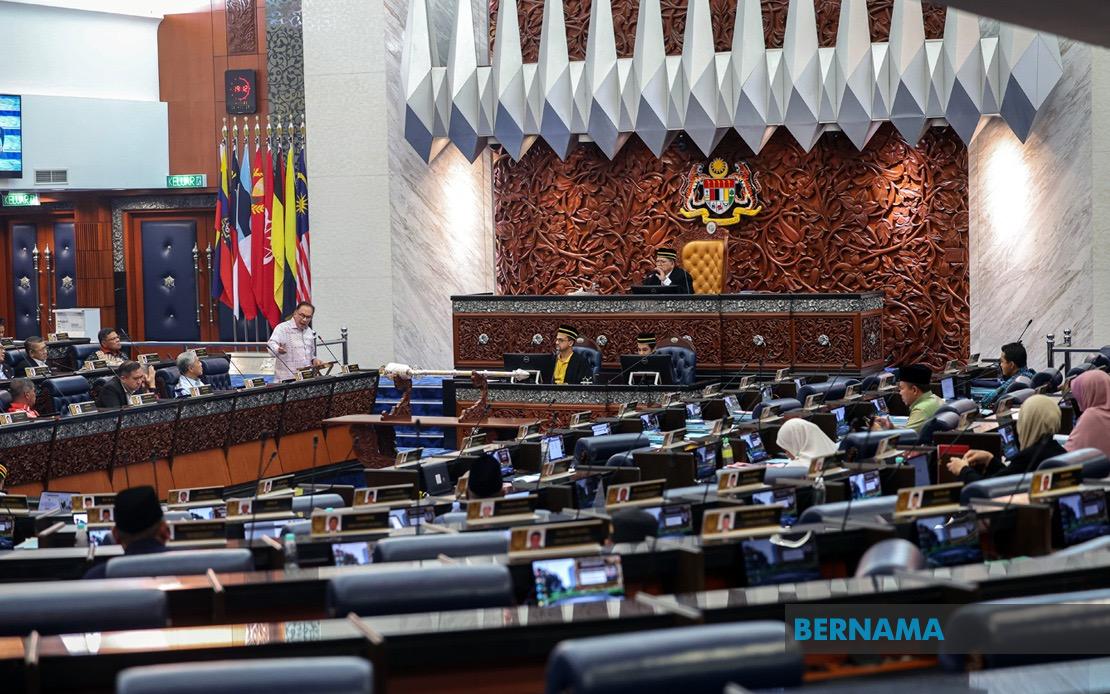
Parliament has moved decisively to strengthen compliance mechanisms within Malaysia's employment insurance ecosystem, approving amendments to the Employment Insurance System (Amendment) Bill 2025 that introduce a tiered penalty structure targeting employers who fail to notify the Social Security Organisation (PERKESO) of job openings. The measure, which passed the Dewan Rakyat on June 30 through majority voice vote, reflects parliament's intent to enhance job matching efficiency and labour market transparency across the nation.
The legislative framework establishes three escalating penalty levels designed to encourage compliance while avoiding excessive financial hardship. First-time offenders now face fines of RM1,000, while repeat violations incur penalties of RM3,000 and RM5,000 respectively for second and third or subsequent infractions. This progressive approach emerged following the Dewan Negara's approval of amendments to Clause 11, specifically Subsection 45F(4), on March 12, representing a deliberate calibration between enforcement rigour and commercial practicality.
The amendments arrived in parliament only after extensive stakeholder consultation that fundamentally shaped their final form. The government substantially modified its original penalty proposal, reducing the maximum fine from RM10,000 to RM5,000 following feedback from employers navigated through engagement and advocacy sessions coordinated by PERKESO across multiple economic sectors nationwide. This iterative approach underscores how parliamentary processes can incorporate ground-level business concerns into legislative design, though it also raises questions about whether reduced penalties might adequately incentivise compliance across Malaysia's diverse employer base.
Deputy Human Resources Minister Datuk Khairul Firdaus Akbar Khan emphasised during the debate's conclusion that the amendments prioritise education and voluntary compliance rather than punitive measures, positioning the framework as supportive rather than adversarial. The government intends to issue compliance notices before imposing any financial penalties, affording employers opportunity to rectify reporting deficiencies. This graduated enforcement approach acknowledges that many business operators, particularly smaller enterprises, may require guidance to navigate administrative obligations rather than immediate financial consequences.
The legislative debate attracted input from members representing both government and opposition constituencies, with 13 MPs participating in substantive discussion of employment policy implications. Azahari Hasan from Padang Rengas underscored the necessity for straightforward and efficient reporting mechanisms, arguing that accurate job vacancy data proves essential for effective labour market matching, unemployment reduction, and the formulation of responsive employment policies. His intervention highlights how parliamentary scrutiny can surface systemic considerations that transcend partisan divisions, focusing instead on practical outcomes affecting Malaysian workers.
Rural and regional employment capacity emerged as a secondary concern throughout parliamentary deliberations. Nurul Amin Hamid representing Padang Terap welcomed the penalty reduction but flagged awareness deficits among rural businesses unfamiliar with statutory requirements, suggesting that mere legal penalties prove ineffective without corresponding education campaigns and capacity-building support. This observation carries particular significance for Malaysia's development agenda, where rural employment generation remains strategically important but faces distinct administrative and informational challenges compared to urban commercial centres.
Transparency in job advertising mechanisms attracted parliamentary attention as another dimension of broader labour market reform. Syerleena Abdul Rashid from Bukit Bendera advocated for leveraging government portals to ensure transparent vacancy announcements, ensuring equitable access to employment opportunities across Malaysian society. Her intervention points toward a vision of employment insurance reform extending beyond compliance penalties into proactive institutional design that promotes labour market accessibility and reduces information asymmetries between employers and job seekers.
The legislative context reflects Malaysia's evolving approach to employment regulation within an increasingly complex labour market featuring microenterprises, informal sector operators, and multinational corporations simultaneously. PERKESO's notification requirements serve broader national labour statistics collection and workforce planning functions beyond individual compliance metrics. The penalty framework therefore functions as an enforcement tool for systemic information gathering that enables evidence-based policymaking across government agencies responsible for employment, training, and economic development.
Implementation challenges will significantly determine whether these amendments achieve intended compliance outcomes. The government's commitment to guidance sessions and compliance notice procedures suggests awareness that enforcement credibility depends on proportionate, consistent application rather than strict penalty imposition. Malaysian employers, particularly medium and small enterprises forming the backbone of the economy, will require clear communication about reporting timelines, submission procedures, and data requirements to transition smoothly toward systematic vacancy notification practices.
The approval of these amendments positions Malaysia alongside other Southeast Asian economies implementing proactive employment regulation frameworks. Singapore and Thailand maintain sophisticated job vacancy reporting systems supporting government-assisted labour market matching, though comparative analysis of penalty structures and compliance rates across the region remains limited in public discourse. Malaysia's experience implementing this framework could generate valuable insights for regional policy coordination on employment insurance and labour market governance.
Longer-term implications for Malaysia's employment ecosystem remain contingent on implementation execution and stakeholder adaptation. If compliance rates improve substantially through education-focused approaches, the framework could enhance PERKESO's capacity to match jobseekers with opportunities systematically, potentially reducing unemployment duration and improving workforce utilisation. Conversely, if awareness gaps persist particularly in rural areas and smaller enterprises, the penalty structure may generate compliance only among larger, administratively sophisticated employers, potentially skewing job notification coverage toward established commercial sectors.
The parliamentary approval process itself demonstrated constructive engagement between government and opposition members around shared employment policy objectives, suggesting potential for future bipartisan collaboration on labour market modernisation initiatives. As Malaysia navigates post-pandemic economic recovery and positioning for higher-value economic activities, employment insurance frameworks strengthening job market transparency may facilitate smoother workforce transitions and more efficient human capital allocation across expanding sectors.

