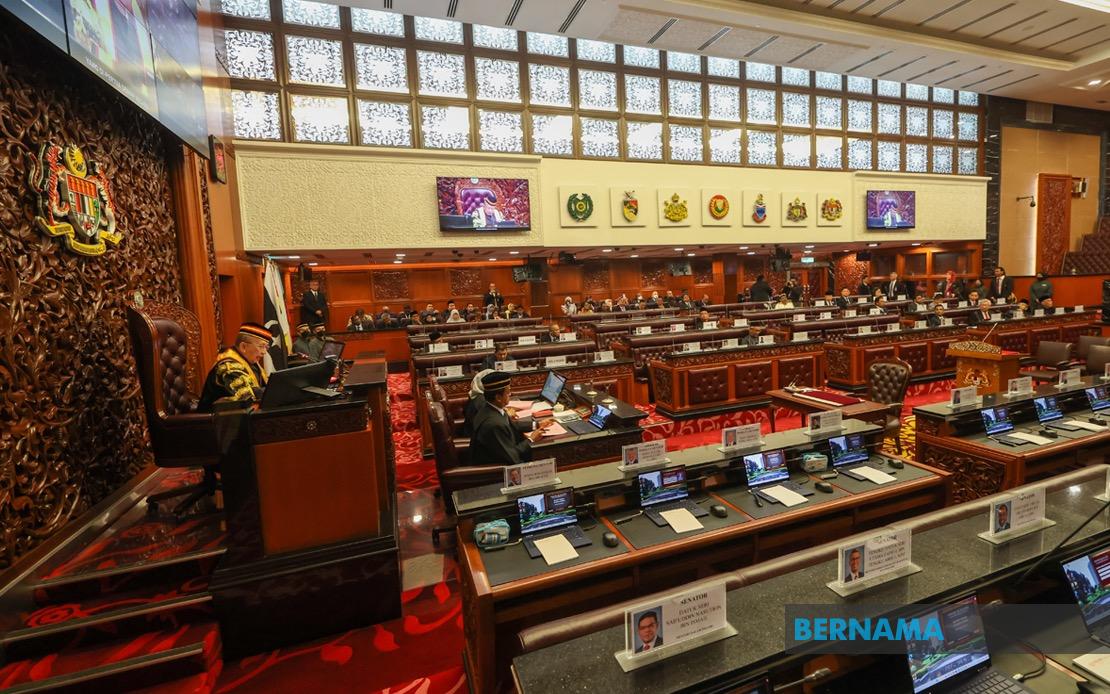
Malaysia's Dewan Negara has wrapped up the second meeting of the fifth session of the 15th Parliament with the successful passage of two legislative measures aimed at strengthening the nation's administrative and economic frameworks. The National Trust Fund (KWAN) Bill 2026 and the Statistics Bill 2026 were both endorsed during the ten-day sitting that began in July, representing the upper house's commitment to modernising governance structures across key institutional areas.
The National Trust Fund Bill, tabled by Deputy Finance Minister Liew Chin Tong, seeks to introduce stricter oversight mechanisms and clearer protocols governing fund withdrawals. This legislative initiative reflects broader government efforts to enhance fiscal discipline and transparency in managing public financial assets. The Statistics Bill, meanwhile, presented by Deputy Economy Minister Datuk Mohd Shahar Abdullah, establishes contemporary legal scaffolding for data collection and analysis at the national level, recognising the critical importance of robust statistical infrastructure in evidence-based policymaking across government and the private sector.
Throughout the sitting, parliament's attention remained firmly fixed on measures designed to fortify Malaysia's economic resilience amid global uncertainties. The government outlined its strategy to shield citizens' welfare while sustaining growth, particularly in response to geopolitical instability in West Asia. Specific measures highlighted included safeguarding the availability of essential commodities, restraining inflationary pressures, providing targeted support to affected industries, and fortifying broader economic foundations against external shocks.
Prime Minister Datuk Seri Anwar Ibrahim addressed concerns regarding the Retirement Fund (Incorporated) (KWAP), contextualising its reported net profit of RM12.9 billion within a framework of balanced assessment. His intervention underscored the government's recognition that pension fund performance requires nuanced evaluation, particularly when discussing high-profile investments such as eFishery, which the government characterised as yielding instructive insights for calibrating future investment strategies. This measured approach signals an attempt to reconcile institutional accountability with the realities of capital deployment in emerging sectors.
State postal services featured prominently in parliamentary deliberations, with discussions centring on Pos Malaysia's turnaround strategy. The company intends to curtail cumulative losses through systematic reduction of its physical distribution footprint, simultaneous expansion of digital service channels, and disciplined financial stewardship. Complementing these internal measures, the government is exploring establishment of a dedicated Postal Service Fund, conceptualised as a sustainable financing mechanism to support long-term operational viability without perpetual reliance on budgetary allocations.
Energy security emerged as a critical parliamentary theme, reflecting Malaysia's vulnerability to global energy price volatility and supply chain disruptions. Lawmakers were briefed on government deliberations regarding creation of a strategic petroleum reserve, with officials noting that such a decision must account for budgetary implications, technical operational demands, institutional governance arrangements, and lessons from international practitioners. Separately, parliament received notification of a recently concluded two-decade fuel supply pact with Russia encompassing petrol, diesel, crude oil and gas, which the government characterised as complementary to the National Energy Transition Roadmap's objectives, thereby balancing near-term energy stability with longer-term decarbonisation commitments.
Foreign direct investment remained a focal point for optimism. Japanese capital inflows into Malaysia's electrical and electronics sector totalled RM10.5 billion across 46 projects between 2021 and 2025, with projections indicating generation of 9,009 employment opportunities. These figures underscore Malaysia's continued attractiveness as a manufacturing destination for technology-intensive industries, particularly as companies reassess regional supply chain footprints. This sector performance contributes substantially to the government's broader competitiveness agenda, with Deputy Economy Minister Mohd Shahar noting Malaysia's trajectory toward inclusion within the world's twelve most competitive economies by the conclusion of the 13th Malaysia Plan, supported by improved positioning in the 2026 World Competitiveness Ranking.
Financial sector modernisation proceeded apace, with Bank Negara Malaysia preparing to implement a revised Performance Measurement Framework for Development Financial Institutions commencing July 1, 2027. This framework promises more sophisticated evaluation of these entities' development mandate fulfilment, developmental impact, governance standards, and operational performance, reflecting the central bank's commitment to ensuring that development-oriented financial vehicles operate with both developmental purpose and institutional rigour.
The electric vehicle transition, a defining feature of Malaysia's long-term industrial strategy, continued advancing primarily through private sector initiatives rather than heavy-handed government intervention. The government affirmed its commitment to market-driven EV ecosystem development, explicitly ruling out government-imposed price controls on public charging infrastructure. As of May 31, a cumulative 6,416 public charging stations had been deployed nationwide, progressively normalising EV adoption among Malaysian motorists and fleet operators. This pragmatic approach contrasts with more interventionist models, reflecting confidence in market mechanisms to drive technological diffusion.
Fiscal consolidation remained a centrepiece of parliamentary discussions, with the Finance Ministry reporting that the federal budget deficit had contracted for the fifth consecutive year following implementation of coordinated economic and fiscal reforms. Federal debt remained comfortably within statutory thresholds, indicating that Malaysia's macroeconomic stabilisation efforts were bearing fruit without necessitating destabilising austerity measures. Deputy Finance Minister Liew highlighted that spending restraint measures implemented during the first half of the year generated nearly RM5 billion in expenditure savings while preserving service delivery for critical public programmes, demonstrating that improved fiscal outcomes need not accompany service degradation. These achievements carry particular significance for regional observers, as Malaysia's fiscal trajectory offers a counternarrative to prevailing concerns about uncontrolled government spending across Southeast Asia.

