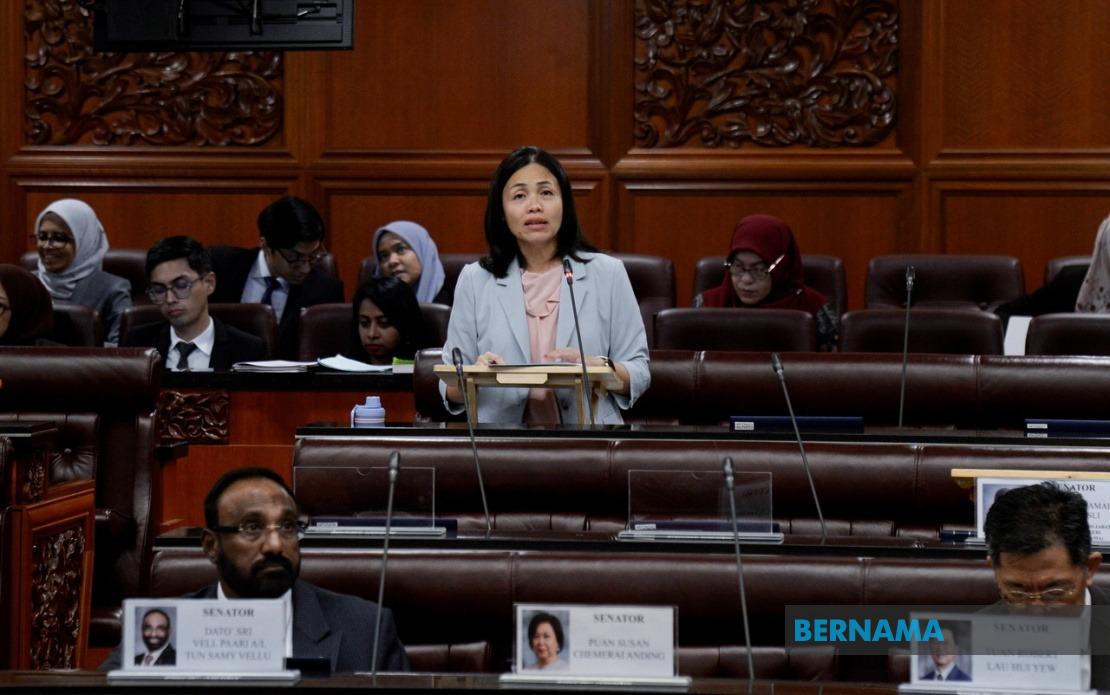
Malaysia's upper house of Parliament has endorsed the Communications and Multimedia Commission (Amendment) Bill 2026, a legislative move designed to broaden the powers and independence of the country's communications watchdog as digital infrastructure becomes increasingly central to national security and economic development. The Dewan Negara approved the measure following deliberations among 11 senators, signalling broad consensus on the need for more robust regulatory oversight of a sector that has evolved far beyond commercial considerations into a domain of strategic importance.
Deputy Minister of Communications Teo Nie Ching, presenting the government's position during the debate's conclusion, highlighted the tangible enforcement gains already achieved under the updated regulatory framework. The Malaysian Communications and Multimedia Commission (MCMC) removed more than 222,000 pieces of online gambling content during the first seven months of 2026, a striking demonstration of intensified digital enforcement operations. This enforcement momentum reflects a dramatic scaling-up of capacity and coordination between the regulator and technology platforms, a shift that underscores how digital regulation has matured from ad-hoc responses to systematic intervention.
The data presented by Teo revealed the acceleration of platform cooperation over recent years. In 2022, social media operators removed only two pieces of gambling-related content upon MCMC requests, a figure that expanded to 18,814 items in 2023, jumped to 189,484 in 2024, and reached 289,486 in 2025 before topping 222,000 within just seven months of the current year. This exponential growth suggests both improved technical capacity within MCMC and increased willingness from global platforms to comply with Malaysian removal demands, reshaping the practical landscape of digital governance in the region. Additionally, authorities have blocked approximately 6,982 gambling websites over the four-year period since 2022, creating multiple layers of disruption against illegal digital gaming operations.
A critical distinction drawn during the debate emphasised the respective roles of different agencies in combating online gambling. While the Royal Malaysia Police hold primary jurisdiction over gambling activities as criminal matters, MCMC functions as an essential supporting infrastructure, providing technical expertise, digital forensic analysis, and executing access-blocking orders based on formal requests from law enforcement partners. This division of labour reflects a sophisticated understanding that effective regulation requires coordination between agencies with distinct mandates, a model increasingly adopted across Southeast Asia as governments grapple with the cross-border nature of digital crimes.
Perhaps most significantly, the amended bill introduces structural safeguards designed to insulate the MCMC leadership from political pressure and patronage. The new provisions explicitly prohibit politicians from serving as the commission's chairman, barring members of Parliament and state assemblies from holding the position. Teo articulated the government's reasoning: limiting ministerial discretion in appointments ensures that only properly qualified individuals lead the regulator, reducing the risk of politicisation that might compromise the agency's ability to enforce standards impartially. This governance reform addresses longstanding concerns about regulatory capture, where political appointees prioritise government interests over public welfare or industry health.
Senator Datuk Abdul Halim Suleiman contextualised the amendment within the broader strategic significance of communications infrastructure. He argued that the sector has transcended its earlier identity as merely an economic domain and now qualifies as critical national infrastructure, comparable in importance to energy, water, or transportation networks. This reframing has profound implications for how Malaysia approaches digital governance, justifying stronger regulatory authority and greater insistence on independence. As communications infrastructure underpins everything from financial systems to emergency services, protecting it from political manipulation becomes a matter of national resilience rather than merely technical administration.
Senator Muhammad Hasbie Muda introduced a complementary concern, emphasising that expanding MCMC's powers must be accompanied by rigorous standards for appointing commissioners. He cautioned that reform amounts to hollow gesture if the commission gains authority without mechanisms ensuring transparent, effective, and accountable exercise of that authority. His intervention highlights a tension inherent to regulatory expansion: greater powers prove counterproductive without corresponding improvements in competence, transparency, and democratic accountability. This perspective reflects growing regional recognition that strong regulators require not just legal authority but institutional cultures prioritising merit over connection.
The amendment bill encompasses 17 clauses restructuring MCMC's operational framework. A key provision amends Section 16 of Act 589, clarifying and broadening the regulator's functions in developing and establishing standards for digital infrastructure and platforms. This language shift from implicit to explicit authority gives MCMC stronger legal footing when requiring technology companies to adopt particular technical standards or security protocols, facilitating proactive standard-setting rather than reactive enforcement. The clarification recognises that effective regulation increasingly requires pre-emptive standard-setting rather than pursuing companies only after problematic conduct materialises.
The bill's passage through the Dewan Rakyat on July 15 preceded its upper house approval, suggesting smooth coordination between the two chambers despite their different compositions and functions. The relatively swift progress through Parliament indicates government priority and broad political support, though the debates reveal substantive disagreement about implementation details and safeguards. For Malaysia, the amendment represents a significant statement about the priority accorded digital governance as the country positions itself as a regional technology hub while managing security threats inherent to digital prominence.
The reform carries implications extending beyond Malaysia's borders. Singapore, Indonesia, and Thailand face similar challenges in regulating digital infrastructure while preventing regulatory capture, and Malaysia's approach to governance independence may influence how neighbouring countries structure their own digital regulators. The prohibition on political leadership of MCMC establishes a regional precedent for insulating communications regulators from partisan influence, potentially establishing standards that other Southeast Asian nations might emulate as they upgrade their own digital governance frameworks. As the region becomes increasingly central to global digital commerce and geopolitics, stronger, more independent regulators strengthen not only individual nations but the broader region's capacity to shape its digital future.
Looking forward, the real test of the amendment's success will depend on implementation. Competent commissioners, adequate funding, technological capacity to match sophisticated actors, and political will to enforce standards impartially all remain essential. Senator Hasbie's caution that formal authority means little without effective implementation deserves particular attention as MCMC operationalises the expanded mandate. The coming months will reveal whether the amendment translates into more robust digital governance or merely provides legal cover for practices that remain compromised by resource constraints or political pressure.

