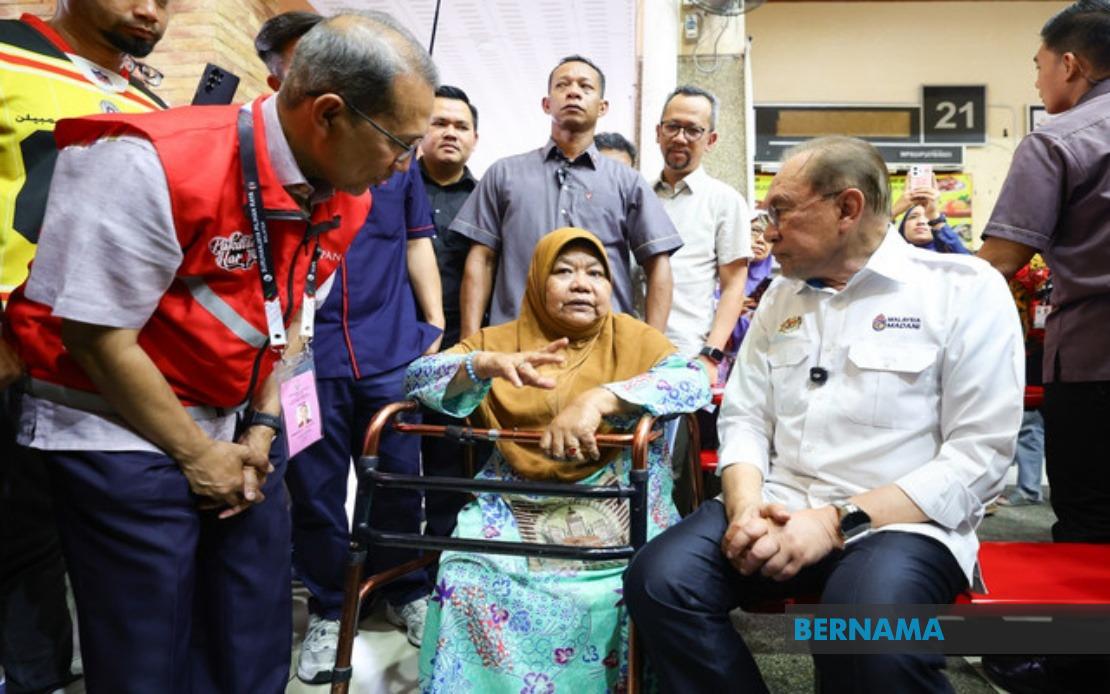
In Seremban, a chance encounter between Malaysia's Prime Minister and a determined woman with disabilities underscored the personal connections that drive political engagement at the grassroots level. Jumaah Mohd Alif, 68, traversed the distance from Kampung Gedung Lalang to Benteng Ampangan on her three-wheeled motorcycle despite drizzling rain, driven by the opportunity to meet Datuk Seri Anwar Ibrahim in person. For this resident of Negeri Sembilan, the moment represented the realisation of a longstanding aspiration that had seemed improbable only days earlier.
Jumaah's physical circumstances made her journey particularly noteworthy. Having lost her left leg in an accident three and a half decades ago, mobility challenges have shaped her daily existence. Yet news that the Prime Minister would be campaigning in Ampangan prompted her to undertake the ride, accepting the weather conditions as a minor obstacle to achieving something she valued deeply. Her willingness to brave inclement weather for this encounter illustrates how personal investment in political processes extends beyond mere voting or passive observation.
The significance of this meeting lay largely in its personal dimension for Jumaah. Throughout her life, her contact with the nation's leadership had been limited to distant glimpses or mediated through television broadcasts. The prospect of direct conversation with the country's leader represented something qualitatively different from these remote experiences. Speaking to reporters after the encounter, Jumaah expressed profound emotion about finally achieving this face-to-face interaction, suggesting it would remain a treasured memory for the remainder of her life.
Anwar's presence in the state formed part of broader political activity as the Pakatan Harapan coalition campaigned to consolidate support during the ongoing Negeri Sembilan state election cycle. His role as both Prime Minister and PH chairman positioned him centrally in efforts to strengthen the coalition's electoral prospects. Such campaign visits typically involve engagements with various community segments, though encounters with individual citizens like Jumaah often provide the most memorable and human dimensions to these political events.
For persons with disabilities in Malaysia, the visibility of national leadership can carry particular weight. Jumaah used her interaction with the Prime Minister to advocate for sustained government attention to the welfare needs of seniors and disabled citizens. Her plea reflected concerns shared across the disability community regarding adequate healthcare, social support, and economic security. By articulating these priorities directly to the nation's chief executive, Jumaah exemplified how grassroots engagement can channel specific community concerns into the political discourse.
The timing of Jumaah's journey coincided with an intensifying electoral calendar in Negeri Sembilan. The Election Commission had designated July 28 for early voting, with the main polling day scheduled for August 1. This compressed timeline reflected the urgency that political parties felt in reaching voters and building momentum. Anwar's campaign activities during this period represented standard practice for coalition leaders seeking to influence electoral outcomes through personal appearances and direct voter contact.
Jumaah's story carries broader implications for political participation among marginalised communities in Malaysia. Persons with disabilities, particularly elderly individuals, often face structural barriers to political engagement, ranging from physical accessibility challenges to limited representation in policy conversations. When such individuals overcome these obstacles to participate actively—as Jumaah did through her determined motorcycle journey—they challenge assumptions about who belongs in political spaces and who should be heard in decision-making processes.
The encounter also illustrates the continued relevance of direct personal connection in an era of mass media and digital communication. Despite the availability of television coverage, social media updates, and official communications, Jumaah prioritised the opportunity for in-person interaction with the Prime Minister. This preference suggests that for many Malaysians, particularly those in older age groups, unmediated face-to-face contact retains distinctive value and emotional significance that technological alternatives cannot fully replicate.
From a disability rights perspective, Jumaah's initiative demonstrates both the capabilities and resilience of persons with disabilities and the potential for greater inclusion in civic life. Her successful navigation of the journey on a three-wheeled motorcycle, adapted specifically for her mobility needs, showcased how appropriate assistive technology can enable fuller participation. Yet her experience also highlighted the ongoing need for systemic improvements in accessibility and support that would make such journeys less dependent on individual determination and physical hardship.
The practical implications for political parties are equally noteworthy. Encounters like Jumaah's with the Prime Minister generate authentic human interest stories that resonate with voters far more powerfully than scripted campaign messaging. Such organic moments, when captured and shared, can communicate a party's engagement with real citizens and real challenges more effectively than formal pronouncements. For Anwar and the PH coalition, Jumaah's testimony about meeting the Prime Minister likely influenced how family members and community contacts perceived the party's accessibility and responsiveness.
Looking forward, Jumaah's example raises questions about how Malaysia's political leadership can more systematically engage with persons with disabilities and elderly citizens. While campaign visits necessarily involve selective encounters, the depth of engagement that Jumaah experienced could inform broader strategies for disability inclusion in political processes. This might encompass more structured consultation mechanisms, improved physical accessibility at campaign venues, and dedicated communication channels through which marginalised communities can articulate policy priorities.
The story also reflects the democratic health of Malaysia's political system, wherein ordinary citizens retain the capacity and willingness to engage directly with national leaders. Jumaah's motorcycle journey, undertaken despite personal physical limitations and adverse weather, testified to her faith in democratic participation and her belief that her voice mattered to the country's leadership. Such engagement, regardless of electoral outcome, reinforces the fundamentals of democratic citizenship and the principle that governance should remain responsive to the needs of all population segments.

