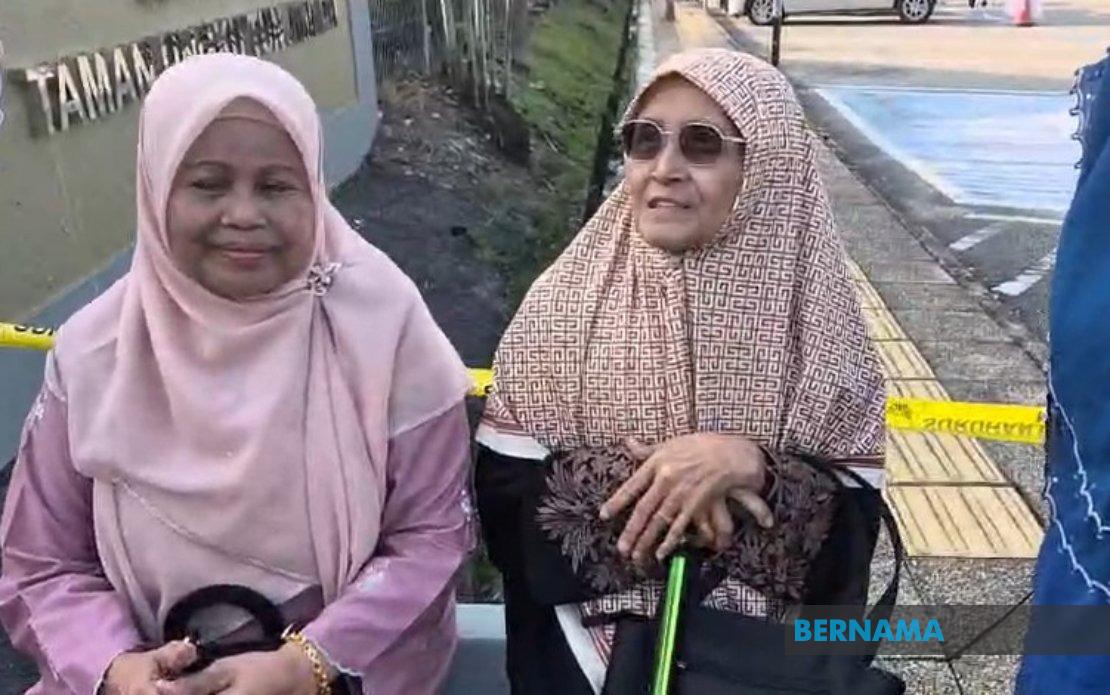
Across Johor, voters aged well into their eighties and nineties made their way to polling stations in the early morning hours of the 16th State Election, demonstrating a civic commitment that transcended weather obstacles and physical challenges. Many of these elderly citizens, some requiring wheelchairs for mobility, had already queued at venues before the 7am opening, their presence underscoring a generation's understanding of the electoral process as a fundamental responsibility. The early arrival pattern, particularly noticeable among senior voters at multiple polling centres throughout the state, reflected both strategic planning to avoid congestion and a deeper cultural conviction about participation in democracy.
Incentives to arrive before dawn were practical as well as principled. At SJKC Kulai Besar in the Bukit Batu constituency, 70-year-old Gan Hin reached the polling centre at 6:40am, having negotiated time off from his farm work in Indahpura to fulfil what he described as a consistent personal practice. His employer's accommodation of this civic duty illustrates how some Malaysian workplaces still recognise election day as a moment warranting workplace flexibility. For voters like Gan, the morning departure represented an integration of multiple responsibilities—work obligations, family commitments, and electoral participation—managed through careful timing and community support.
The emotional and social dimensions of voting also emerged as significant motivators, particularly for voters experiencing isolation or reduced engagement with public life. Sapiah Abdul Rahman, 74, characterised her early arrival at Taman Ungku Tun Aminah Community Hall as driven by excitement, deliberately comparing the polling centre atmosphere to the festive energy of Hari Raya. Her description reveals how the voting process itself, beyond its political outcome, provided elderly residents an opportunity for social connection and reaffirmation of community belonging. For many senior citizens with limited mobility or restricted social calendars, election day represented a legitimate occasion to venture out, encounter neighbours, and participate in a collective civic ritual.
The experience of Rohani Sohod, 84, who navigated the polling centre in a wheelchair at SK Seri Melati in Johor Bahru, demonstrates both the accessibility challenges senior voters face and their determination to overcome them. Her early arrival, like that of many wheelchair users, reflected practical necessity—avoiding peak crowds reduced both physical exhaustion and potential disruptions to the voting process. Such experiences also raise important questions about polling centre design and assistance mechanisms, particularly in a region with an ageing demographic that will increasingly comprise the electorate across Malaysian states.
Weather proved a significant but ultimately surmountable challenge. Heavy rain in Muar intensified around 7:30am after an earlier false start, yet voters continued arriving at facilities like SMK Seri Muar undeterred. Private sector retiree P. Gunasekaran, 63, woke at 4am in anticipation of the weather and departed by 6am, having witnessed rain disrupt the previous state election and determined to avoid a repeat experience. His preemptive strategy—leaving home before the heaviest downpour—reflected both meteorological awareness and accumulated voting experience. The willingness to navigate wet conditions, particularly among older voters with health vulnerabilities, indicates the priority many Malaysians assign to electoral participation regardless of environmental conditions.
Rokiah Yunos, 80, integrated her voting into her religious routine by departing after dawn prayers, thereby combining spiritual practice with civic duty. This pattern, evident among several Muslim voters, reveals how Malaysia's multicultural society often weaves electoral participation into the fabric of daily religious and communal life. Her observation that she arrived to immediate voting—the gates opened precisely as she entered—suggests efficient poll management, though anecdotal evidence from individual voters provides limited insight into system-wide capacity and organisation.
Salma Wahid, reflecting on voting in every election since 1981, articulated a concern that transcends her personal civic commitment. Her hope that younger Malaysians would participate more substantially addresses a recurring anxiety in Malaysian electoral politics: intergenerational participation gaps. Her assertion that youth perspectives are vital to Johor's future development introduces a tension in voting behaviour analysis—while senior citizens demonstrated remarkable turnout, questions persist about mobilising younger cohorts whose policy priorities may differ substantially from older voters.
The 16th Johor State Election involved 2.7 million registered voters selecting representatives across 56 state seats through 1,076 polling centres. The participation of such substantial numbers of elderly voters, distributed across geographically dispersed constituencies from Kulai to Muar to Johor Bahru, suggests both institutional accessibility and deep cultural norms favouring electoral participation among senior citizens. This turnout pattern, replicated across multiple constituencies, indicates that senior voter engagement in Malaysian state elections operates at higher levels than demographic projections alone might predict.
The experiences documented across Johor polling centres raise broader implications for Malaysian electoral administration and demographic change. As the nation's population ages, electoral systems must increasingly accommodate voters with mobility limitations, health vulnerabilities, and transportation constraints. The early-morning queuing pattern suggests that current polling hours and procedures, while functioning, may generate unnecessary stress for elderly voters managing physical limitations. Infrastructure improvements—enhanced accessibility, shortened walking distances within polling centres, and dedicated assistance—might further facilitate senior participation while reducing the physical ordeal currently required.
Beyond administrative considerations, the widespread early arrival of senior voters reflects a generational distinction in electoral participation. Having experienced Malaysia's post-independence political transitions and multiple democratic cycles, older voters often display consistent engagement patterns regardless of contemporary political polarisation or disengagement trends affecting younger cohorts. Their presence at dawn, in rain, with mobility challenges overcome through determination, illustrates a democratic citizenship practice embedded across decades of lived experience. This commitment, while admirable, coexists with legitimate questions about whether Malaysian electoral processes adequately serve all voter demographics or whether current participation rates among senior citizens mask underlying accessibility deficits.
The 16th Johor State Election ultimately revealed a pattern of extraordinary civic engagement among its oldest voters, transcending practical obstacles and external conditions. Yet this very visibility of elderly participation, contrasted with persistent concerns about youth engagement and electoral accessibility, suggests that Malaysia's democratic vitality depends not only on maintaining the remarkable turnout demonstrated by senior citizens but on developing systems that equally facilitate participation across all age groups and physical capacities.

