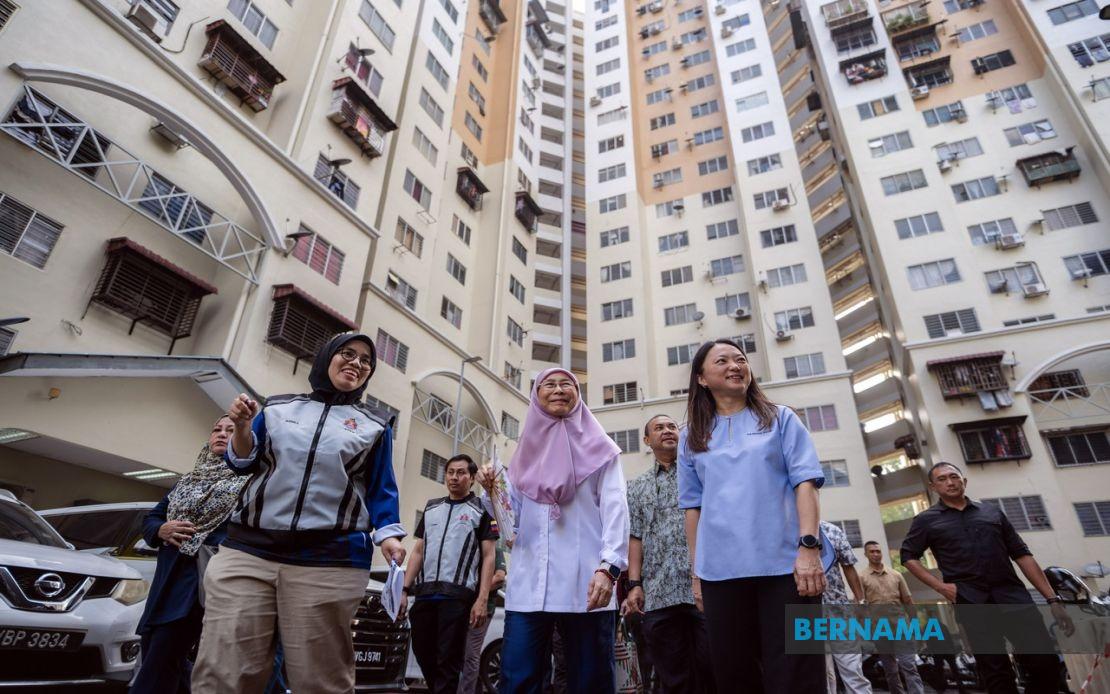
The Desa Tun Razak People's Housing Project has crossed an important milestone with the completion of its systematic upgrading programme, costing RM9.6 million and benefiting over 8,000 residents in the housing scheme that has been operational since 1998. The project marks a significant step forward in the Malaysian government's broader initiative to revitalise public housing across the capital, with 22 schemes now finished out of a total 61 PPR properties earmarked for overhaul in Kuala Lumpur.
Minister in the Prime Minister's Department (Federal Territories) Hannah Yeoh described the completion as evidence of a coordinated approach to maintaining the nation's public housing stock, distinguishing this effort from previous piecemeal maintenance approaches. Speaking during an inspection of the finished works, Yeoh emphasised that a structured maintenance strategy was essential for protecting both resident safety and the longevity of these facilities. She stressed that without dedicated funding mechanisms, even well-constructed developments can deteriorate rapidly, compromising the living standards of inhabitants who depend on affordable public housing options.
The government's commitment to this transformation became clear when policymakers allocated an additional RM300 million this year specifically for PPR upgrades across Kuala Lumpur. Yeoh explained that this decision had secured the backing of all Members of Parliament representing the capital, reflecting broad political consensus that public housing deserves systematic investment rather than ad hoc repairs. This collaborative approval underscores recognition among elected representatives that such housing schemes serve vulnerable populations requiring reliable infrastructure and safe living environments.
The work undertaken at Desa Tun Razak addressed multiple infrastructure challenges that had accumulated over the facility's operational lifespan. Electrical wiring was replaced throughout the complex, responding to aging systems that pose fire hazards. Road surfaces were completely resurfaced to improve both safety and accessibility, while fire safety infrastructure received substantial upgrades—a priority following several fire incidents reported at the location during the previous year. These comprehensive interventions reflect lessons learned from past emergencies and demonstrate a proactive rather than reactive approach to resident protection.
Kuala Lumpur Mayor Datuk Fadhlun Mak Ujud provided detailed breakdown of how funds were deployed during the Desa Tun Razak upgrading initiative. Repainting work consumed RM7 million of the total budget, addressing aesthetic deterioration and protecting structural elements from weathering. Fire prevention systems and electrical wiring upgrades accounted for RM1.68 million, directly addressing safety concerns. Road resurfacing required nearly RM1 million, while additional resources went toward upgrading the fire riser system and drainage infrastructure—critical elements for managing emergencies and wastewater in high-density residential settings.
The comprehensive nature of these improvements reflects an understanding that public housing maintenance encompasses more than cosmetic renewal. Fire riser systems ensure rapid water supply during emergencies, while properly functioning drainage prevents water accumulation that breeds disease and undermines structural integrity. Combined with renewed electrical systems and improved road conditions, these upgrades create an environment where residents can live with greater confidence in their safety and the durability of their homes.
Fadhlun projected that all 61 PPR upgrading projects funded under the RM300 million allocation would reach completion by year's end, representing an ambitious but achievable timeline for addressing infrastructure deficits across Kuala Lumpur's public housing portfolio. This scheduling suggests government agencies are working methodically through the capital's schemes, prioritising based on need and resource availability. The successful completion of Desa Tun Razak and 21 other projects demonstrates that this pace is being maintained.
Parking shortages emerged as a persistent challenge at Desa Tun Razak, with the local authority acknowledging that the facility's design does not accommodate all residents' vehicles. Fadhlun indicated that Kuala Lumpur City Hall would identify nearby vacant land for conversion to temporary parking areas, offering practical relief while longer-term solutions are evaluated. This flexibility suggests authorities are responsive to emerging issues as physical upgrades progress and residents voice operational concerns.
Bandar Tun Razak Member of Parliament Datuk Seri Dr Wan Azizah Wan Ismail seized the completion ceremony to appeal to residents for stewardship of the newly upgraded facilities. Her remarks highlighted a critical dimension often overlooked in public housing discourse: the responsibility of occupants to preserve common property and maintain civic standards. She advocated for fostering a culture where residents view upgraded infrastructure as community assets deserving care, rather than entitlements to be damaged or neglected. This cultural shift represents an essential companion to capital investment, as deterioration through misuse can quickly reverse physical improvements.
The Desa Tun Razak upgrading reflects broader regional patterns of Southeast Asian governments investing in public housing modernisation as urbanisation accelerates and housing affordability pressures intensify. Malaysia's systematic approach contrasts with ad hoc interventions and demonstrates commitment to treating public housing as permanent infrastructure deserving sustained maintenance funding. For Malaysian policymakers and residents, the project illustrates how coordinated investment, cross-party political support, and comprehensive planning can transform aging housing stock while preserving affordability for vulnerable populations.
The completion of 22 projects with 39 remaining represents a substantial undertaking that will reshape living conditions across Kuala Lumpur's public housing landscape over coming months. Beyond the immediate physical improvements, the initiative signals that government recognises its obligation to maintain adequate housing for lower-income residents and is willing to commit substantial resources to that goal. As the programme progresses, outcomes at Desa Tun Razak and similar schemes will provide valuable evidence about whether systematic investment and resident engagement can sustainably reverse the deterioration that had characterised many older PPR facilities.

