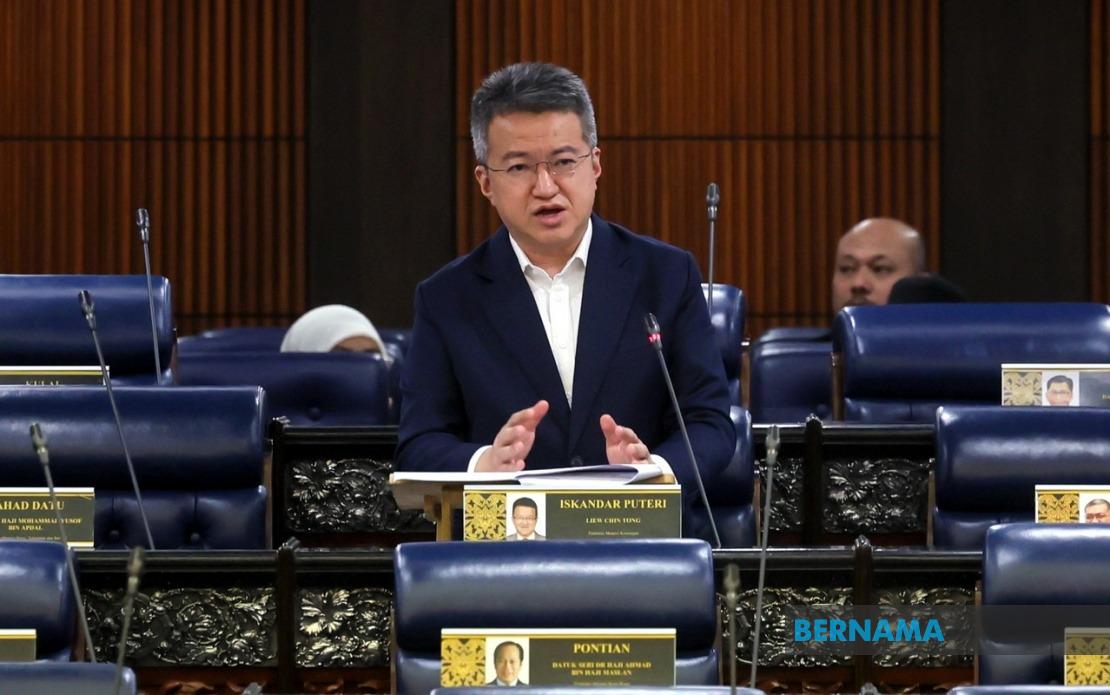
Deputy Finance Minister Liew Chin Tong has firmly rejected allegations that Low Taek Jho, the fugitive businessman commonly known as Jho Low, secretly entered Malaysia last year as part of a Chinese delegation to hold negotiations regarding the sprawling 1Malaysia Development Berhad scandal. When questioned in the Dewan Rakyat, Liew provided a terse denial without elaborating further on the specific claims that had circulated in media reports describing purported late-year meetings aimed at structuring a financial settlement of the 1MDB matter.
The allegation surfaced during parliamentary proceedings when Syed Saddiq Syed Abdul Rahman, representing MUDA-Muar, posed a supplementary question referencing published accounts of the alleged clandestine gathering. These reports had suggested that Jho Low attended a secret meeting on Malaysian soil to negotiate a comprehensive repayment package that would have involved the Ministry of Finance. The timing and nature of the alleged negotiations, if they had occurred, would have raised significant questions about the government's approach to resolving one of the country's most consequential financial scandals.
Liew's response came during his formal reply to an earlier parliamentary inquiry from Chong Chieng Jen of PKR-Stampin concerning the current status of 1MDB's outstanding obligations and the government's success in recovering funds that had been misappropriated through the scheme. The deputy minister emphasised that the administration remains committed to pursuing aggressive asset recovery through multiple legal channels, deploying both criminal prosecutions and civil lawsuits against those implicated in the fraud.
Among the significant developments in the recovery efforts is the High Court's sentencing of former Prime Minister Datuk Seri Najib Tun Razak on December 26, 2025, to a 15-year prison term and an RM11.38 billion financial penalty. Najib was convicted on 25 distinct charges spanning money laundering and the abuse of executive power to solicit bribes connected to the 1MDB scheme, representing a landmark judgment in Malaysia's efforts to hold senior officials accountable for the massive fraud.
Parallel civil proceedings have targeted other individuals connected to the scandal. The government is pursuing a separate lawsuit against Datin Seri Rosmah Mansor, the former Prime Minister's wife, with the objective of recovering approximately US$380 million, equivalent to roughly RM1.56 billion in damages. These funds allegedly derived from 1MDB accounts and were used to acquire high-value luxury items including designer handbags and jewellery, illustrating the extravagant personal enrichment that characterised the misappropriation.
Jho Low himself remains at the centre of multiple legal actions despite his absence from Malaysia. Liew noted that both criminal and civil proceedings are advancing against the businessman, who is widely regarded as the principal architect orchestrating the 1MDB embezzlement scheme. The civil claim being pursued against Jho Low carries a valuation of US$3.78 billion, approximately RM15.4 billion, underscoring the magnitude of financial losses that authorities attribute to his role in engineering the fraud.
The 1MDB scandal has inflicted multifaceted damage to Malaysia that extends well beyond the direct monetary losses recovered or sought through legal action. Liew identified four distinct categories of harm resulting from the fraud. These include the immediate financial losses removed from public coffers, the opportunity costs associated with funds that could have been invested in development projects, irrecoverable losses that cannot be remedied through asset recovery, and profound reputational damage to Malaysia's standing in the international community and among foreign investors.
The reputational dimension remains particularly consequential for a country seeking to position itself as an attractive hub for foreign direct investment and international business. The exposure of such extensive fraud at the highest levels of government inevitably generates scepticism about institutional oversight and financial governance, with potential lingering effects on investor confidence and Malaysia's creditworthiness in global capital markets. International regulatory bodies and financial institutions have intensified scrutiny of transactions originating from or transiting through Malaysian entities.
The government's multi-pronged approach to recovery reflects recognition that pursuing justice through criminal channels alone would prove insufficient. Civil litigation enables authorities to pursue asset seizure and financial restitution without requiring the same burden of proof demanded in criminal proceedings, allowing the state to recover funds that might otherwise remain beyond reach. The combination of criminal convictions and civil claims creates complementary pressure on those implicated in the scandal, limiting their ability to shield assets or claim immunity.
Jho Low's continued evasion of Malaysian jurisdiction represents an ongoing complication for law enforcement authorities. His fugitive status has not prevented the advancement of legal proceedings against him, as civil suits can proceed in absentia and international cooperation mechanisms enable certain enforcement measures. However, the practical challenges of apprehending and extraditing the businessman have drawn attention to gaps in cross-border legal cooperation and the techniques employed by sophisticated financial actors to evade accountability.
The Liew's categorical denial of Jho Low's alleged return to Malaysia occurs against the backdrop of broader diplomatic and financial pressures surrounding the 1MDB resolution. Any negotiations involving the alleged mastermind would necessarily raise questions about the government's negotiating position, the terms being contemplated, and whether settlement discussions might compromise the criminal convictions already secured or undermine ongoing asset recovery efforts. The government's emphasis on aggressive prosecution suggests a preference for pursuing maximum accountability rather than negotiated settlements that might yield lesser financial recoveries.

