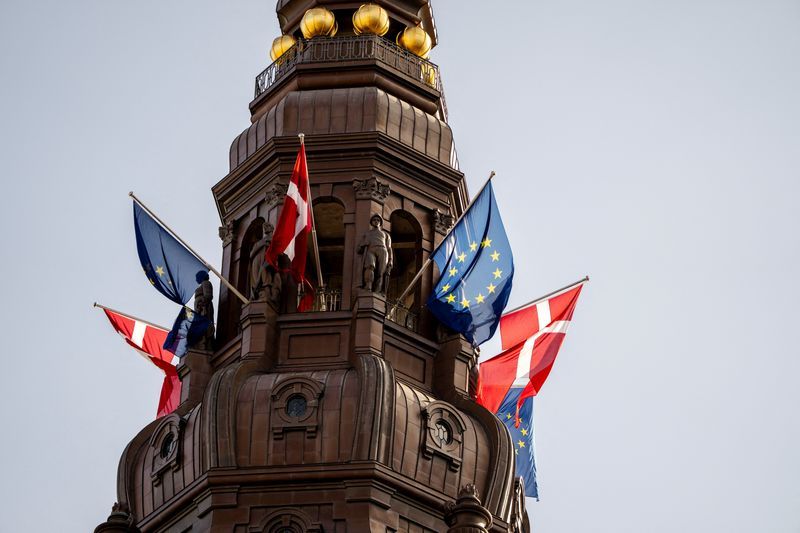
Denmark has stepped into a high-stakes European Court of Justice battle between technology companies and Belgium's government, throwing its diplomatic and legal weight behind efforts to strengthen press publishers' rights in the digital age. The Danish government filed a written intervention in the case on Monday, signalling that the dispute extends far beyond Belgium's borders and touches on fundamental questions about how major platforms should treat journalistic content. The Culture Ministry confirmed that Denmark will participate in oral arguments scheduled for July 6–7, reinforcing Copenhagen's commitment to preserving media compensation frameworks across the European Union.
At the heart of this legal showdown lies a 2023 lawsuit filed by Streamz, Google, Meta, Spotify, and Sony against the Belgian authorities. These technology and entertainment companies argue that Belgium's application of Article 15 of the Digital Single Market Directive contravenes EU law and their commercial interests. Article 15, a cornerstone of European copyright reform, grants publishers specific rights to compensation when their content appears on digital platforms—a provision that has become increasingly contentious as tech giants rely on news articles and other editorial material to drive user engagement and advertising revenue. The Belgian government's interpretation and enforcement of these rules has prompted the tech companies to challenge the legal foundations of the directive itself.
Denmark's decision to intervene represents a coordinated response from a member state worried about the implications of a ruling against publishers. Danish Culture Minister Zenia Stampe articulated the government's position with stark clarity: allowing technology companies to exploit media content without compensation would undermine press freedom and democratic discourse. Stampe warned that weakening publishers' rights would damage Danish media economics and, by extension, the information ecosystem that underpins democratic societies. This framing elevates the dispute beyond a narrow copyright dispute into a question of national interest and societal resilience.
The Danish intervention focuses on several concrete objectives. Most prominently, Copenhagen will urge the European Court of Justice to establish a clear legal definition of what publishers' rights entail under the DSM Directive and to specify the corresponding financial obligations that technology platforms must discharge. Denmark seeks clarity on when and how tech companies must compensate news organisations whose articles, headlines, or excerpts appear on their services. This precision matters enormously because the current legal landscape remains contested; tech companies argue they are merely linking to or displaying snippets, while publishers contend that algorithmic curation and content promotion constitute a form of commercial exploitation requiring payment.
The stakes are particularly high because a ruling favouring the technology companies could eviscerate the protections that Article 15 was designed to provide. If the European Court invalidates or severely narrows Belgium's implementation, other member states would face pressure to reconsider their own frameworks, potentially unravelling a significant achievement of the 2019 Copyright Directive. For smaller European media markets like Denmark's, the financial impact could prove devastating. News organisations already compete against global platforms with vastly greater resources; stripping away compensation mechanisms would leave them with fewer tools to sustain journalism and invest in quality reporting.
Denmark is not acting unilaterally on this front. The Danish procedural delegation participating in the case represents a broader governmental commitment to defending media interests at the European level. This coordinated approach reflects recognition that individual member states cannot adequately protect their publishers against multinational technology corporations without EU-wide legal clarity and enforcement. By intervening alongside Belgium, Denmark amplifies its voice in a forum where smaller nations often struggle to influence outcomes.
The Streamz case is not Denmark's only engagement with digital copyright disputes. The country has also participated in a separate landmark proceeding concerning whether technology companies, particularly Google, may lawfully use press content to train artificial intelligence systems without explicit permission or compensation. This second case addresses an emerging frontier in the conflict between technological innovation and creator rights. As AI development accelerates, publishers fear that their archived content will fuel machine learning systems that ultimately compete with or diminish their value. Denmark's involvement in both cases signals a comprehensive strategy to shape EU regulation of how technology platforms interact with protected content across multiple dimensions.
The broader European context amplifies the significance of Denmark's intervention. Several member states, including France, Germany, and Spain, have implemented Article 15 provisions and negotiated licensing agreements with major platforms. These arrangements have generated measurable payments to news organisations, though publishers argue the amounts fall short of their actual contribution to platform value. A European Court ruling that undermines these frameworks would represent a major setback for the regulatory model that EU lawmakers constructed to balance innovation and creator protection. Conversely, a ruling affirming publishers' rights would strengthen negotiating positions across the continent and encourage member states to pursue more robust implementation strategies.
The technology companies challenging Belgium's framework contend that article snippets, headlines, and brief excerpts constitute fair use or newsworthy reporting that should not trigger compensation obligations. They also worry that expansive interpretations of publishers' rights could necessitate licensing agreements for linking and metadata display, fundamentally altering how the web functions. These concerns deserve serious consideration; excessive licensing requirements could indeed fragment digital information flows. However, the core disagreement reflects divergent views about whether modern platforms are neutral intermediaries or active participants in content distribution who should bear some responsibility for enabling publisher discovery and engagement.
From a Malaysian perspective, this European dispute carries instructive lessons. Southeast Asian media landscapes face their own pressures from technology platforms, yet the region has generally lagged Europe in developing statutory protections for press publishers. As digital platforms consolidate control over news distribution and advertising markets shift toward targeted digital channels, journalists and publishers across Asia face revenue erosion. The EU's Article 15 framework, whatever its imperfections, represents a deliberate choice to enshrine publisher rights in law rather than leaving compensation to voluntary market negotiations. Denmark's vigorous defense of this approach at the European Court suggests that Nordic and Northern European governments view press sustainability as a public good worth protecting through legal intervention.
The oral hearing scheduled for early July will provide technology companies and Belgium with opportunities to make their cases directly to the court. Denmark's participation, alongside other interested member states and stakeholder organisations, will shape the judges' understanding of the broader consequences at stake. A ruling is not expected immediately; the European Court typically takes months or years to issue decisions on complex cases. Nevertheless, the July hearing marks a critical moment when fundamental questions about digital rights, platform responsibility, and media sustainability come before Europe's highest court. How the judges respond could reverberate across the continent and influence how other democracies approach the challenge of sustaining independent journalism in an age of technological disruption.

