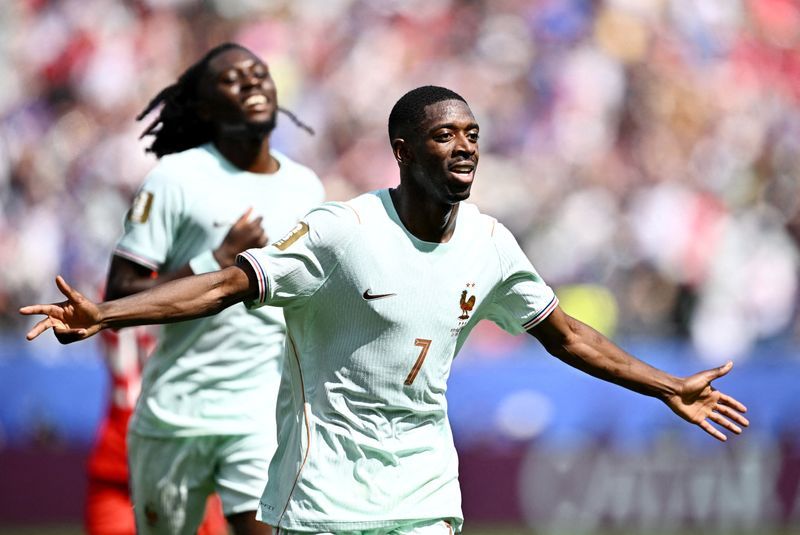
France demonstrated clinical finishing at Gillette Stadium in Foxborough, Massachusetts on Friday, dispatching second-string Norway 4-1 to claim first place in their World Cup group. Ousmane Dembele's explosive performance—three goals packed into a 25-minute span during the opening period—proved decisive, sending the tournament favourites into the Round of 32 with considerable momentum as they pursue their third consecutive final appearance.
The French squad carried particular motivation into this encounter beyond the routine objective of topping the standings. Didier Deschamps, their long-serving coach, had temporarily left the tournament to attend his mother's funeral in France, and the players publicly committed to delivering a victory as a symbolic gesture of respect and solidarity. Although Les Bleus had already secured qualification alongside Norway before kickoff, winning the group offered tangible strategic advantages within the tournament's geography, particularly regarding travel logistics across North America during the knockout phase.
Norway's preparations proved fundamentally different from France's intensity. Coach Stale Solbakken implemented extensive rotation, fielding a largely experimental lineup that excluded significant contributors from their Senegal match. The absence of Erling Haaland, the prolific Manchester City striker competing fiercely with Kylian Mbappé for the Golden Boot award, and captain Martin Odegaard stripped Norway of attacking dynamism and established leadership at the back. This strategic choice reflected Solbakken's judgment that group-stage advancement had been secured and prioritised squad rotation over competitive intensity in this final fixture.
From the opening whistle, France pressed aggressively and created danger with alarming regularity. Within seconds, Mbappé unleashed a testing angled effort that clipped the crossbar, signalling French intent immediately. The pattern continued relentlessly. In the sixth minute, Mbappé executed a precision cross-field pass that released Dembele into space down the left flank; the PSG forward twisted past a defender and arrowed his shot past goalkeeper Egil Selvik with clinical execution. Fourteen minutes later, Mbappé again found Dembele, whose composure and spatial awareness had created sufficient daylight to finish a dipping effort into the far corner.
Thelo Aasgaard briefly arrested France's momentum with a quick Norwegian response, yet the reprieve proved fleeting. In the 32nd minute, Dembele completed his hat-trick—only the third achieved by a French international at World Cup level, following Just Fontaine's legendary performance and Mbappé's own three-goal haul in previous tournaments. This latest achievement also represented the second-fastest hat-trick in World Cup history, behind Erich Probst's record-setting performance for Austria against Czechoslovakia in 1954, when he accumulated his three goals within 24 minutes.
The contrast between the two teams' approaches became increasingly pronounced as the match progressed. France's defensive vulnerabilities surfaced during the second half as Norway mounted occasional counterattacking forays that tested goalkeeper Mike Maignan. Oscar Bobb forced a save from the French custodian, while Jorgen Strand Larsen squandered a golden opportunity when Maignan parried his soft penalty effort. These moments suggested that had Norway fielded a full-strength side, the scoreline might have been considerably tighter, though France's attacking dominance and precision finishing would likely have prevailed regardless.
Désire Dué added a fourth goal in the closing stages, heading in a cross from substitute Bradley Barcola to provide a flattering final margin that extended France's goal tally to seven across their final two group matches. This offensive potency, combined with their underlying tactical discipline, positioned the tournament heavyweights as genuine contenders heading into knockout competition where intensity inevitably intensifies and defensive security becomes paramount.
The group-stage result carries direct implications for the knockout draw. By finishing first, France secured a more favourable Round of 16 matchup against Sweden, whereas second-placed Norway will face Ivory Coast. For Malaysian and Southeast Asian observers following the tournament, France's trajectory remains the benchmark against which other traditional powers are measured. Their consistent ability to blend creative attacking play with collective intensity demonstrates the standards required to progress through modern World Cup competition. Mbappé's continued brilliance alongside Dembele's opportunism confirms why France represents one of the tournament's most complete attacking units, regardless of lineup rotation decisions made by rival coaches attempting to manage squad fatigue.

