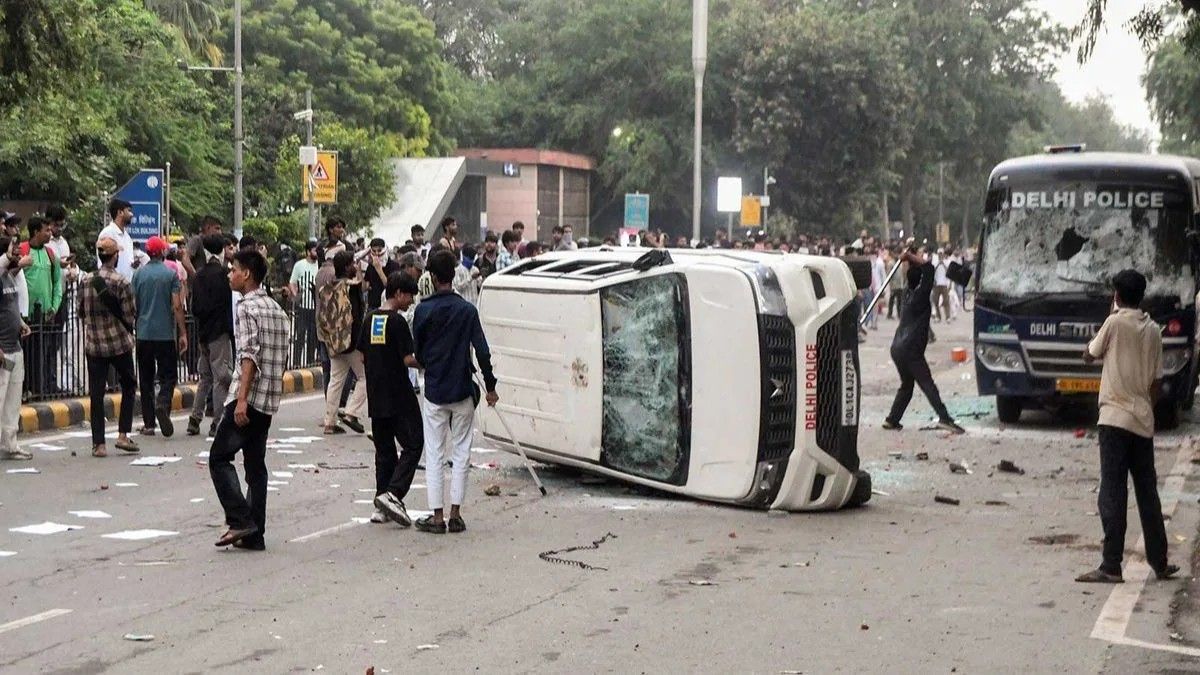
Law enforcement authorities in New Delhi have initiated formal legal proceedings against individuals involved in unrest surrounding the Cockroach Janta Party's "Sansad Chalo" march, with Delhi Police documenting 10 separate FIRs across multiple stations in the capital's central district. The filing of these cases represents the formal investigation phase following Monday's confrontations between demonstrators and security personnel during the party's push toward Parliament, where organisers sought to compel Union Education Minister Dharmendra Pradhan to step down amid allegations of examination administration failures.
The Delhi Police's New Delhi district office has distributed the cases strategically across six police stations to manage the investigation workload. Parliament Street station has absorbed four of the registered FIRs, while Connaught Place station holds three cases. The remaining three matters have been assigned to Mandir Marg, Barakhamba Road, and Kartavya Path stations respectively. Police officials stressed that investigations into each case remain ongoing, with officers examining the circumstances and individuals involved in specific incidents documented during the protest period.
Emergency personnel have faced particular vulnerability during the unrest, with one FIR specifically documenting an alleged life-threatening assault against a Rapid Action Force officer during Monday's demonstrations. Additionally, authorities have lodged charges concerning the unauthorised deployment of unmanned aerial equipment within New Delhi district boundaries during parliamentary proceedings, suggesting concerns about potential surveillance or intelligence-gathering activities at the protest site.
The legal charges invoked by police span multiple statutory frameworks designed to address different aspects of the alleged misconduct. Provisions drawn from the Bharatiya Nyaya Sanhita establish the foundation for several cases, while investigators have additionally employed the Arms Act to address weapon-related allegations and the Prevention of Damage to Public Property legislation to pursue cases involving destruction of public infrastructure. The breadth of applicable law demonstrates authorities' view that the protest involved coordinated and diverse forms of illegal conduct.
Disputes over what occurred at the demonstration site intensified when Delhi Police issued statements denying social media reports of fresh stone-throwing and police interventions on Tuesday, describing circulating videos as "false and misleading." The Police Commissioner's office explicitly cautioned citizens against relying on unverified digital content, appealing for public trust in official channels and government communications. This intervention reflects growing tensions between competing narratives on social media platforms regarding protest dynamics and law enforcement response.
According to police accounts, demonstrators exhibited what they characterised as "unruly, aggressive and violent behaviour" throughout Monday's march, despite security personnel issuing multiple formal warnings and enforcing prohibitory orders restricting assembly and unauthorised gatherings. The intensity of the alleged misbehaviour prompted authorities to retain an elevated security presence at Jantar Mantar, where protesters maintained their vigil on Tuesday following the removal of temporary structures by security teams overnight.
Investigative efforts have expanded significantly, with officers scrutinising more than 250 video recordings sourced from surveillance systems, bystander footage, and media documentation to identify specific individuals and ascertain whether orchestrated planning preceded the violence. This forensic examination of visual material aims to establish whether incidents represent spontaneous escalation or pre-conceived conspiracy, a distinction with substantial implications for legal classification and sentencing considerations.
CJP spokesperson Ashutosh Ranka has signalled the protest movement's determination to persist, declaring that the agitation will continue until the party achieves its central objective of securing Dharmendra Pradhan's resignation. The party's representatives have simultaneously presented counter-narratives to police accounts, alleging that numerous demonstrators including students and volunteer mobilisers sustained injuries during Monday's clashes, and asserting that female protesters underwent disrespectful treatment by security forces. These claims include references to Geetanjali J. Angmo, wife of environmental activist Sonam Wangchuk, allegedly experiencing mistreatment during the confrontations.
For Malaysian observers and regional analysts, the Delhi situation illustrates enduring tensions within South Asian democracies regarding protest rights, security responses, and information management in the digital age. The episode demonstrates how large-scale demonstrations can trigger rapid police mobilisation, coordinated legal action across multiple jurisdictions, and contested narratives competing for public credibility. The heavy reliance on video forensics and the explicit police warnings against social media misinformation reflect contemporary challenges facing law enforcement agencies attempting to maintain authoritative accounts amid fragmented information ecosystems.
The deployment of Rapid Action Force personnel alongside regular police, combined with the removal of protest infrastructure and sustained perimeter control, underscores how authorities approach managing sustained civil demonstrations. Southeast Asian governments implementing comparable security strategies will observe Delhi's experience managing the intersection of public order maintenance and protest accommodation. The legal framework employed—spanning multiple statutes addressing conspiracy, obstruction, assault, and property damage—provides a comprehensive toolkit that other jurisdictions have examined when developing protest-related legislation.
As investigations advance and video analysis continues, the trajectory of legal proceedings will likely establish precedents regarding how Indian courts balance protest rights against security imperatives. For regional policymakers considering similar legislative frameworks or security protocols, the Delhi Police's approach and the political response from CJP leadership offer instructive examples of institutional and activist dynamics within established democracies managing contentious political demands.

